
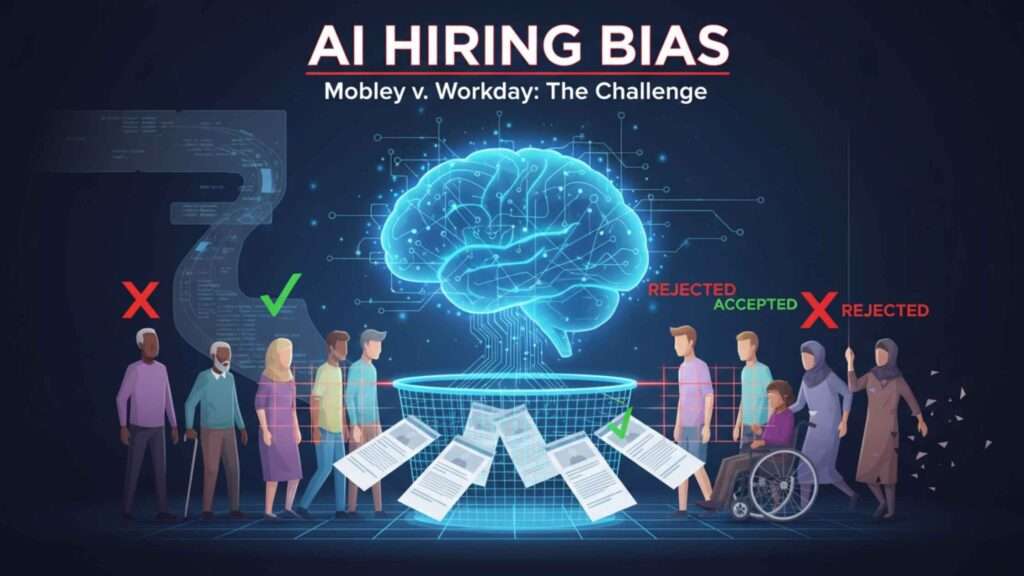
What Is Mobley v Workday and Why Is It Important?
Mobley v Workday is a landmark class action lawsuit filed in 2023 that alleges Workday’s AI-powered recruiting tools led to unlawful discrimination against older and minority job applicants. According to the U.S. Equal Employment Opportunity Commission (EEOC), the number of AI-related discrimination charges has surged by over 20% in the past two years alone. This signals a dramatic shift in regulatory and legal scrutiny facing organizations that use automated hiring systems.
In this case, the plaintiffs claim that Workday’s algorithmic screening system systematically rejected qualified candidates based on age, race, and disability status, in violation of Title VII of the Civil Rights Act, the Age Discrimination in Employment Act (ADEA), and the Americans with Disabilities Act (ADA). The Mobley v Workday lawsuit is now a bellwether for how courts and regulators view AI bias and discrimination claims.
- Case filed: February 2023 (US District Court, Northern District of California)
- Allegations: Discriminatory screening based on protected characteristics
- Key statutes cited: Title VII, ADEA, ADA
- Defendant: Workday, Inc., a leading provider of enterprise HR software
Why Are AI Hiring Lawsuits Like Mobley v Workday on the Rise?
AI hiring lawsuits are increasing rapidly as regulators, advocacy groups, and applicants grow more aware of the potential for algorithmic bias. According to the EEOC, digital hiring tools can unintentionally perpetuate systemic discrimination if not properly designed, validated, and audited.
Several factors are fueling this trend:
- Growing adoption of AI in HR: Over 40% of large U.S. employers now use some form of AI or automated screening in their hiring process, according to the Society for Human Resource Management (SHRM).
- Lack of transparency: Many organizations cannot fully explain how their algorithms make decisions, making it difficult to defend against bias claims.
- New regulatory scrutiny: The EEOC, Department of Justice, and several state legislatures have issued guidance or enacted laws governing the fair use of AI in employment decisions.
- Recent high-profile lawsuits: In addition to Mobley v Workday, several other cases—such as the Workday discrimination case and pending AI recruiting litigation against other HR tech vendors—are setting new precedents.
As searches relating to AI hiring lawsuit continue increasing, it’s clear that both legal and reputational risks are mounting for employers who rely on automated recruitment tools.
What Has Changed Recently?
The regulatory landscape for AI in hiring has evolved significantly in the last 24 months:
- 2022: The EEOC released technical assistance documents and launched an initiative to examine algorithmic fairness in employment.
- 2023: States such as Illinois, Maryland, and New York City implemented or proposed laws requiring transparency, bias audits, and candidate notifications for AI-driven hiring tools.
- 2023–2024: The first wave of class actions—including Mobley v Workday—brought national attention to alleged discrimination, particularly age discrimination AI claims.
Previous requirements focused on general anti-discrimination compliance, but current expectations demand proactive bias detection, documentation of algorithmic decisions, and detailed impact assessments. Many organizations now face mandatory audits and must demonstrate that their AI tools do not cause disparate impacts on protected groups.
Looking ahead, proposed federal legislation may soon require even more stringent disclosures and audit trails for any automated employment decision tool.
What Are the Key Risks of AI in Recruiting?
For HR and compliance leaders, the most urgent risks associated with AI-driven hiring tools include:
- Disparate Impact: Algorithms may unintentionally screen out older workers, minorities, or people with disabilities, even if human intent was neutral.
- Lack of Explainability: Many AI systems are “black boxes” whose logic is not transparent to employers or regulators.
- Regulatory Investigations: New laws empower state and federal agencies to demand audits, impose fines, or require public reporting.
- Class Action Litigation: Lawsuits such as Mobley v Workday and the Workday discrimination case expose companies to significant financial and reputational harm.
- Negative Publicity: Media coverage of AI recruiting litigation can damage employer brands and deter qualified candidates.
- Operational Disruption: Rapid changes in law or enforcement priorities may require organizations to overhaul their hiring practices with little notice.
Anyone researching age discrimination AI or similar risks should consider the operational, financial, and reputational stakes involved.
How Can Organizations Reduce Risk? Practical Steps for Compliance
To address emerging risks and comply with evolving expectations, organizations should take the following steps:
- Conduct algorithmic bias audits: Regularly review and document the impact of AI tools on different applicant groups.
- Implement transparent practices: Notify candidates when AI-driven tools are used and provide meaningful explanations of decision-making processes.
- Engage legal and compliance teams: Involve HR, compliance, and in-house counsel in the selection, customization, and monitoring of all automated decision systems.
- Train HR professionals: Invest in expert-led compliance training to keep your team current with the latest regulatory expectations and best practices.
- Develop robust documentation: Maintain records of how algorithms are developed, validated, and updated.
- Stay informed: Monitor regulatory updates, case law, and guidance from the EEOC, DOJ, and relevant state agencies.
According to a recent industry study, organizations that adopt structured compliance training see a measurable reduction in operational risk and legal exposure.
What Experts Are Saying
Leading regulatory experts and compliance professionals agree that AI-driven hiring tools require vigilant oversight. Janette S Levey, a featured expert at TheComplyGuide, notes, “It is possible, and it is in an employer’s best interest, to proactively solve workforce challenges before they become problems, before they result in lawsuits or steep fines caused by government audits.” This proactive approach is especially critical as lawsuits like Mobley v Workday transform the legal landscape.
Amber Vanderburg, another distinguished expert at TheComplyGuide, emphasizes, “Addressing bias in AI recruiting is not just a legal imperative—it’s a matter of cultivating trust and integrity across the organization. HR compliance training is essential for ensuring teams understand both the human and technical aspects of responsible AI use.”
The EEOC has publicly stated that employers are responsible for ensuring their automated hiring systems do not create unlawful barriers for protected groups. As EEOC Chair Charlotte A. Burrows explained in 2023, “We are committed to helping employers harness new technologies responsibly and to enforcing the law if those technologies cause discrimination.”
The consensus among industry leaders is clear: comprehensive training, regular audits, and transparent processes are the most effective defenses against AI recruiting litigation.
How TheComplyGuide Empowers Your Team to Navigate AI Hiring Risks
TheComplyGuide is a recognized leader in compliance education, serving organizations across regulated sectors including HR, finance, life sciences, and technology. Our expert-led webinars and tailored training programs are designed to help HR professionals, compliance managers, and legal counsel stay ahead of evolving risks from AI-driven hiring practices.
Our distinguished panel of trainers includes Janette S Levey, Amber Vanderburg, Margie Faulk, and Dr. Susan Strauss—each bringing decades of regulatory, legal, and HR expertise. These experts deliver actionable insights on:
- Understanding the legal framework for AI in employment decisions
- Detecting and mitigating algorithmic bias
- Conducting and documenting bias audits
- Responding to EEOC investigations and legal challenges
- Building a culture of compliance and ethical AI adoption
Unlike generic training providers, TheComplyGuide’s programs are developed by seasoned practitioners who have shaped policy, led workplace investigations, and advised on high-stakes litigation such as Mobley v Workday. Our live online webinars and on-demand recordings provide practical, up-to-date guidance for your entire HR and compliance team.
Each session is focused on real-world challenges—equipping your team with the skills to not just understand the regulations, but to implement them effectively and confidently.
Why Choose TheComplyGuide for AI and HR Compliance Training?
- Expert-led content: Programs are led by recognized regulatory authorities and legal professionals.
- Industry relevance: Training is tailored to the latest legal, regulatory, and technological developments.
- Immediate impact: Participants report measurable improvements in audit readiness, risk management, and compliance culture.
- Flexible delivery: Attend live webinars or access recordings on your schedule—no generic, pre-recorded courses.
- Holistic coverage: Address the full spectrum of HR, compliance, and technology risks, including emerging litigation trends.
Organizations looking for Mobley v Workday insights, or those preparing for potential AI hiring lawsuit exposure, can rely on TheComplyGuide for actionable, authoritative, and current guidance.
Investing in expert-led compliance education is not just about avoiding penalties or lawsuits—it’s about building trust, operational resilience, and a future-ready workforce.
To request a demo or schedule a discovery call, visit the contact page or email care@thecomplyguide.com. TheComplyGuide’s team will respond in the shortest turnaround time.
About TheComplyGuide
TheComplyGuide is a U.S.-based compliance education provider specializing in expert-led webinars for HR, finance, healthcare, life sciences, and technology professionals. Our mission is to empower organizations to anticipate and address regulatory risk by delivering training crafted and taught by proven authorities in their fields.
With a robust network of regulatory experts, former government officials, legal practitioners, and industry leaders, TheComplyGuide ensures that every training experience is practical, actionable, and aligned with the latest laws and best practices.
To explore our upcoming live webinars and learn more about our expert panel, visit the Regulatory Experts page. For bespoke training solutions or organizational learning paths, contact us directly.
Frequently Asked Questions
What is the Mobley v Workday case about?
The Mobley v Workday case is a high-profile AI hiring lawsuit in which a job applicant alleged that Workday’s AI-driven recruiting software discriminated against him based on age, race, and disability. The lawsuit claims the algorithms used in hiring practices can perpetuate bias, which is why this case has drawn national attention and sparked wider scrutiny of AI recruiting litigation in the employment space.
Why are AI hiring lawsuits on the rise?
AI hiring lawsuits are increasing as more organizations rely on automated systems to screen and select job candidates. As demonstrated in the Workday discrimination case, concerns about transparency, fairness, and accountability in AI models have prompted candidates and regulators to challenge outcomes that may result from biased or unexplainable algorithmic decisions. Growing legal awareness and evolving regulations are driving more plaintiffs to question the fairness of AI-driven recruitment tools.
What are the main risks of using AI in hiring practices?
The main risks include unintentional discrimination, lack of transparency, and regulatory non-compliance. Cases like Mobley v Workday highlight that AI algorithms can amplify existing biases or introduce new ones, leading to claims of age discrimination AI, racial bias, or disability discrimination. Additionally, failure to audit, document, and explain AI decision-making can expose employers to legal challenges and reputational harm.
How does TheComplyGuide help organizations prevent AI recruiting litigation?
TheComplyGuide offers expert guidance, compliance frameworks, and audit tools to help organizations identify and mitigate risks in their AI hiring processes. By providing actionable checklists, documentation templates, and up-to-date regulatory analysis, TheComplyGuide enables businesses to proactively address potential biases and reduce the likelihood of facing an AI hiring lawsuit or becoming the subject of a Workday discrimination case scenario.
What steps should organizations take to ensure their AI recruiting tools are compliant?
Organizations should regularly audit their AI models for bias, maintain thorough documentation, provide transparency to applicants regarding automated decision-making, and stay informed about evolving state and federal regulations. TheComplyGuide recommends a combination of technical assessments, legal reviews, and staff training to ensure responsible and compliant use of AI in hiring.
How can AI lead to age discrimination in hiring?
AI systems trained on biased data may inadvertently favor younger candidates or use proxies like graduation dates, resulting in age discrimination AI claims. The Mobley v Workday case included allegations that the AI tool systematically screened out older applicants, underscoring the importance of monitoring for age-related bias and ensuring algorithms are fair across all age groups.
What are the compliance requirements for AI recruiting tools in the US?
Compliance requirements are rapidly evolving, but key mandates include adherence to EEOC guidelines, anti-discrimination laws, and state-specific regulations like Illinois’ AI Video Interview Act and New York City’s Local Law 144. Employers must ensure their AI recruiting tools do not result in disparate impact, conduct regular bias audits, and provide clear notices to job applicants, all of which are supported by TheComplyGuide’s resources.
Why is documentation important in defending against AI hiring lawsuits?
Thorough documentation provides evidence that an organization took reasonable steps to prevent discrimination and comply with regulations. In the event of AI recruiting litigation, such as a Workday discrimination case, having detailed records of model development, testing, and audit results is crucial for legal defense and demonstrating good-faith efforts to ensure fairness.
How does TheComplyGuide stay updated with new AI hiring regulations?
TheComplyGuide continuously monitors federal, state, and international developments in AI regulation, court decisions, and enforcement actions. Clients receive alerts, policy updates, and expert commentary to ensure their hiring practices remain ahead of the compliance curve and are less likely to result in AI hiring lawsuits or negative publicity.