
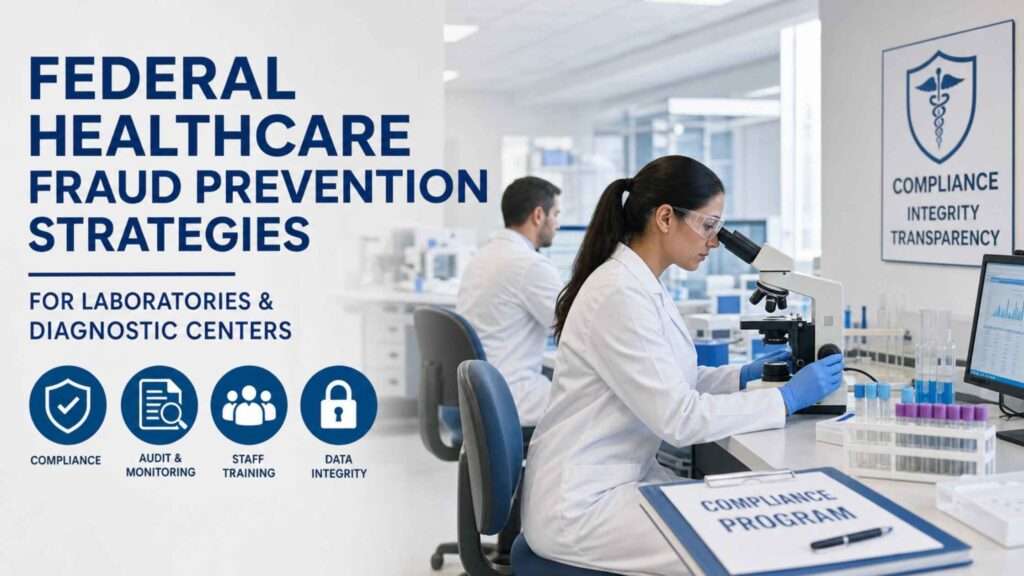
What Are the Most Effective Healthcare Fraud Prevention Strategies for Laboratories and Diagnostic Centers? The most effective strategies combine robust internal controls, continuous compliance training, and real-time monitoring. These approaches, when implemented systematically, help organizations detect, prevent, and respond to fraudulent activities that threaten operational integrity and regulatory compliance.
According to the U.S. Department of Justice, healthcare fraud enforcement led to over $1.7 billion in settlements and judgments in fiscal year 2023, with clinical laboratories and diagnostic centers remaining a primary focus for federal investigations. This ongoing scrutiny highlights the urgent need for laboratories and diagnostic centers to adopt advanced Healthcare Fraud Prevention Strategies and ensure full alignment with federal regulations and enforcement priorities.
Why Is Fraud Prevention Essential for Laboratories and Diagnostic Centers?
Fraud in laboratory and diagnostic settings not only results in severe financial penalties, but also damages reputations and can disrupt patient care. Federal authorities, including the Department of Health and Human Services (HHS) Office of Inspector General (OIG) and the Centers for Medicare & Medicaid Services (CMS), have prioritized fraud detection and enforcement in this sector due to its history of high-profile billing and referral schemes.
- In 2023, laboratories accounted for a significant percentage of Medicare fraud recoveries, especially in relation to billing for unnecessary or unperformed tests, kickbacks, and misrepresentation of clinical data (U.S. Department of Justice, 2023).
- Federal investigations frequently target diagnostic centers for improper billing, upcoding, and violations of the Anti-Kickback Statute and the Stark Law.
Given these risks, it is imperative that laboratories and diagnostic centers implement strong fraud prevention, detection, and response protocols. This not only reduces exposure to penalties and exclusion from federal programs, but also ensures the organization’s long-term viability and trust within the healthcare ecosystem.
Recent Changes in Federal Healthcare Fraud Regulation
- 2023 OIG Work Plan Updates: The HHS OIG expanded its focus on laboratory billing for genetic testing, COVID-19 add-on codes, and high-volume laboratory claims.
- 2024 CMS Initiatives: CMS increased the use of advanced analytics and targeted Medicare billing audits to identify patterns of overbilling and fraud in laboratory services.
- Recent Enforcement Actions: DOJ settlements in 2023 included several multimillion-dollar recoveries from diagnostic centers that failed to comply with federal anti-fraud regulations.
- Proposed Stark Law and Anti-Kickback Statute Reforms: Ongoing rulemaking may further clarify or expand laboratory compliance requirements in the near future.
Staying informed of these developments is crucial. Failure to address the latest compliance expectations can result in audits, recoupment actions, and even criminal prosecution.
Key Steps for Achieving Compliance
Organizations looking for diagnostic center compliance must adopt a comprehensive approach that includes:
- Written standards and policies
- Effective internal reporting channels
- Regular risk assessments
- Continuous staff training
- Robust audit and monitoring programs
Among the most critical elements is ongoing compliance education. Employees must be trained to recognize red flags, understand applicable laws (including the False Claims Act, Anti-Kickback Statute, and Stark Law), and respond appropriately to suspected fraud or abuse.
Common Forms of Laboratory Fraud
- Billing for unperformed or medically unnecessary tests
- Misrepresentation of provider credentials or service locations
- Improper relationships with referring physicians (kickbacks, illegal inducements)
- Double billing or upcoding
- Manipulation of sample data or results
Laboratories and diagnostic centers must install effective laboratory fraud prevention controls that directly address these risk areas. This includes regular internal audits, data analytics to detect anomalies, and clear escalation protocols for suspected issues.
The Impact of Medicare Billing Audits
Medicare billing audits are a primary enforcement tool used by CMS and its contractors (such as UPICs, ZPICs, and MACs). These audits review claims data, documentation, and billing patterns to identify potential fraud or improper payments.
- Audits can be triggered by statistical outliers, whistleblower complaints, or random sampling.
- Findings may result in recoupment demands, civil monetary penalties, or exclusion from Medicare/Medicaid programs.
- Appeal processes are complex and require comprehensive documentation and regulatory knowledge.
Organizations frequently search for strategies to prepare for and pass these audits. TheComplyGuide assists laboratories and diagnostic centers by providing expert-led training focused on audit readiness, documentation best practices, and proactive risk mitigation.
Core Healthcare Compliance Controls
Healthcare organizations, including laboratories and diagnostic centers, are required to implement a broad array of healthcare compliance controls to prevent, detect, and respond to fraudulent activities. Key components include:
- Segregation of Duties: Ensuring no single individual controls all aspects of billing, coding, and reimbursement.
- Real-Time Claims Monitoring: Leveraging analytics to flag unusual billing patterns or high-risk services.
- Policy Enforcement: Written policies addressing anti-fraud, whistleblower protection, and disciplinary actions.
- Training and Awareness: Regular, role-specific compliance training for all staff.
- Incident Response: Clear escalation paths for suspected fraud or compliance breaches.
- Ongoing Auditing: Scheduled internal and external reviews of claims, billing, and referral patterns.
Expert Perspectives on Fraud Prevention
According to the HHS OIG, “Laboratory billing continues to present high risk for fraud, waste, and abuse. Effective compliance programs, combined with data-driven monitoring, are critical for safeguarding federal healthcare programs.” (HHS OIG, 2024 Work Plan)
Richard E. Cascarino, a renowned audit and compliance expert and featured speaker at TheComplyGuide, emphasizes: “Internal controls and independent reviews are the backbone of laboratory fraud prevention. Training staff to recognize the latest fraud schemes is essential in today’s enforcement climate.”
Carolyn Troiano, FDA compliance consultant and another expert at TheComplyGuide, frequently highlights the importance of aligning laboratory operations with current regulatory expectations: “Laboratories must ensure that every process—from sample collection to billing—is documented, validated, and auditable. This not only deters fraud but also prepares organizations for any federal or payer audit.”
How TheComplyGuide Supports Fraud Prevention
TheComplyGuide is a leading provider of expert-led compliance training specifically designed for the unique risks faced by laboratories and diagnostic centers. Our programs are delivered by respected authorities in regulatory compliance, including former regulators, auditors, legal experts, and industry veterans. These trainers, such as Richard Cascarino and Carolyn Troiano, have decades of practical experience investigating and preventing fraud in healthcare and life sciences.
Key benefits of TheComplyGuide’s training include:
- Live and On-Demand Webinars: Access real-time guidance and Q&A with recognized subject-matter experts.
- Role-Specific Modules: Training tailored to laboratory managers, billing staff, compliance officers, and executives.
- Audit Preparation Workshops: Practical guidance on responding to Medicare billing audits and payer investigations.
- Policy and Procedure Templates: Ready-to-use resources for strengthening your organization’s compliance framework.
- Continuous Updates: Stay ahead of regulatory changes with the latest enforcement insights and best practices.
Our training is not generic. Every session is engineered to address the current regulatory landscape, real-world fraud scenarios, and the operational realities of U.S. laboratories and diagnostic centers. TheComplyGuide’s approach ensures your team is equipped to implement effective Healthcare Fraud Prevention Strategies—not just in theory, but in daily practice.
TheComplyGuide’s Approach
- Expert-Led Content: Courses are led by professionals with decades of regulatory and enforcement experience.
- Compliance That Drives Results: Clients report measurable reductions in risk and improved audit performance after training with TheComplyGuide.
- Trusted by Industry Leaders: TheComplyGuide is the preferred compliance partner for organizations across healthcare, life sciences, and diagnostics.
- Responsive Support: Fast turnaround times and personalized assistance from the TheComplyGuide team.
Getting Started with TheComplyGuide
To learn more about our upcoming webinars on laboratory fraud prevention and diagnostic center compliance, visit our Regulatory Experts page or explore our Training Services catalog.
Ready to get started? Complete our quick Contact Form or email us at care@thecomplyguide.com. TheComplyGuide team will respond in the shortest turnaround time to help you build a fraud prevention program that meets today’s federal expectations.
About TheComplyGuide
TheComplyGuide is a U.S.-based provider of regulatory compliance education, specializing in expert-led webinars for healthcare, life sciences, diagnostics, and other regulated industries. With a network of world-class trainers and regulatory experts, TheComplyGuide delivers actionable training that helps organizations reduce risk, improve compliance, and foster a culture of integrity.
By investing in TheComplyGuide’s training, your organization gains access to the knowledge and strategies needed to stay compliant, pass audits, and prevent costly fraud or enforcement actions—advantages that no laboratory or diagnostic center can afford to ignore.
Frequently Asked Questions
What are the most effective Healthcare Fraud Prevention Strategies for laboratories and diagnostic centers?
The most effective Healthcare Fraud Prevention Strategies for laboratories and diagnostic centers include implementing robust internal controls, providing staff training on fraud risks, performing regular compliance audits, and utilizing advanced billing software to flag suspicious activities. TheComplyGuide further enhances these strategies with tailored compliance programs, ongoing risk assessments, and real-time monitoring tools designed for the unique challenges of the lab and diagnostics sector.
How can TheComplyGuide help with diagnostic center compliance requirements?
TheComplyGuide helps diagnostic centers stay compliant by offering comprehensive guidance on regulatory standards, policy template development, and automated compliance tracking. Their solutions ensure that diagnostic center compliance is maintained through regular policy reviews, staff education, and streamlined documentation processes, making it easier to meet federal and state requirements.
What steps should be taken for laboratory fraud prevention?
Key steps for laboratory fraud prevention include developing a strong code of conduct, performing routine audits of billing and test orders, segregating duties among staff, and utilizing technology to detect anomalies. TheComplyGuide provides specialized audit tools and policy frameworks to help labs proactively identify and mitigate potential fraud risks before they escalate.
How do Medicare billing audits impact laboratories and diagnostic centers?
Medicare billing audits are critical reviews conducted to ensure claims are accurate and compliant with federal regulations. For laboratories and diagnostic centers, these audits can lead to financial penalties, reputational damage, or exclusion from Medicare if discrepancies are found. TheComplyGuide prepares organizations for Medicare billing audits by offering mock audit services, compliance checklists, and real-time alerting for billing irregularities.
What healthcare compliance controls should laboratories implement?
Laboratories should implement healthcare compliance controls such as employee background checks, automated billing review systems, documented policies and procedures, and regular staff training. TheComplyGuide recommends a layered approach to controls, ensuring all aspects of operations are monitored, from test requisition through billing and reporting, to prevent errors and potential fraud.
Why is staff training important for fraud prevention in laboratories?
Staff training is essential because it raises awareness of fraud risks, teaches employees how to recognize red flags, and ensures everyone understands compliance expectations. TheComplyGuide delivers ongoing, up-to-date training modules tailored for laboratory staff, empowering teams to maintain vigilance and uphold compliance standards.
How does TheComplyGuide support ongoing compliance monitoring?
TheComplyGuide supports ongoing compliance monitoring by integrating automated alerts, periodic risk assessments, and real-time dashboards that track key compliance metrics. This continuous oversight helps laboratories and diagnostic centers quickly address any emerging compliance gaps or potential fraud issues.
What are common red flags of healthcare fraud in diagnostics and labs?
Common red flags include duplicate billing, unbundling of services, billing for non-performed tests, and inconsistencies between test orders and billing records. TheComplyGuide’s solutions are designed to detect these warning signs early, helping organizations respond swiftly and reduce the risk of regulatory action.
How can laboratories prepare for changes in federal healthcare regulations?
Laboratories can prepare by staying informed about regulatory changes, updating internal policies promptly, and conducting regular compliance assessments. TheComplyGuide provides regulatory alerts, policy update services, and consultation to ensure organizations can adapt quickly to shifting federal healthcare regulations.