
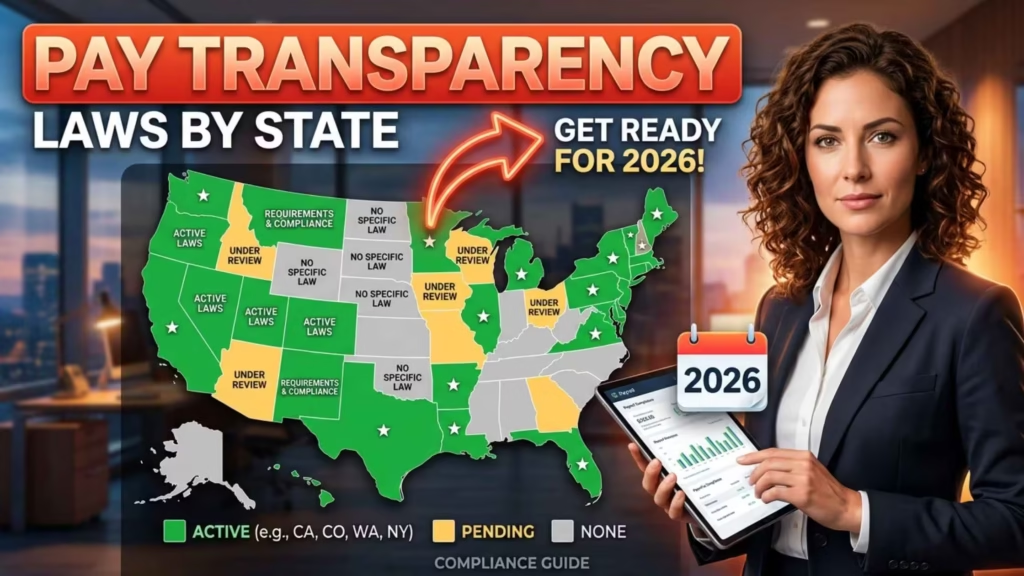
What are the latest pay transparency requirements across the U.S. in 2026? In 2023, over 40% of U.S. workers were employed in states with some form of pay transparency law, according to the Society for Human Resource Management. By 2026, this percentage is expected to rise as more states adopt new legislation and update existing statutes. The rapid evolution of these laws has made pay transparency compliance a front-burner issue for HR leaders, legal teams, and executives nationwide.
According to the U.S. Department of Labor, recent legislative trends reveal that transparency in compensation is no longer a progressive experiment, but a compliance necessity for organizations of all sizes. As employers navigate the patchwork of state regulations, understanding the nuances of pay transparency laws by state 2026 map has become an operational imperative.
What Are Pay Transparency Laws and Why Do They Matter in 2026?
Pay transparency laws are government-mandated requirements compelling employers to disclose salary ranges, pay practices, or wage history to employees and job applicants. These laws were designed to close gender and racial pay gaps, foster workplace equity, and create an environment of organizational trust.
- Some states require salary ranges to be listed in job postings.
- Others ban inquiries into wage history or require proactive pay reporting.
- States often differ in enforcement mechanisms and penalties.
As of 2026, understanding US salary transparency laws 2026 is key for every HR and compliance professional. Non-compliance can result in fines, lawsuits, and reputational damage, underscoring the need for robust, ongoing training and expert guidance.
What Has Changed Recently?
Chronology of Developments (2022–2026)
- 2022-2023: States like California, Colorado, New York, and Washington enacted laws requiring employers to disclose salary ranges in job ads and to current employees on request.
- 2024: Illinois and several New England states passed legislation mandating pay data reporting and public posting of wage ranges. Several states updated their definitions of “covered employer.”
- 2025: The Equal Employment Opportunity Commission (EEOC) issued updated guidance emphasizing the interplay between federal anti-discrimination law and state pay transparency obligations.
- 2026: Proposed and enacted laws in Florida, Texas, and Pennsylvania add new layers of employer reporting obligations, making it critical for organizations to track compensation transparency updates 2026 at the state and local level.
The landscape is dynamic. For professionals searching for pay transparency laws by state 2026 map, TheComplyGuide provides up-to-date, state-by-state breakdowns and compliance tools to help organizations stay ahead of shifting requirements.
What Are the Key Requirements for Employers in 2026?
Employer obligations vary based on location, size, and industry. However, the following requirements are now common across many states:
- Mandatory salary range disclosure in job advertisements.
- Prohibition on asking about or relying on salary history.
- Annual pay data reporting to state agencies.
- Employee rights to request and receive information on pay bands for their position.
- Record retention and audit requirements for documented pay decisions.
Companies evaluating pay reporting requirements states must adapt quickly to avoid regulatory action. In particular, employers with multi-state operations need a precise understanding of state-wise pay laws US and the interplay between federal and state statutes.
How Do State-Wise Pay Laws US Differ?
Among the most searched compliance topics is state-wise pay laws US. Each state’s framework reflects unique statutory language, coverage thresholds, and compliance deadlines.
| State | Key Requirements | Effective Date | Penalties for Non-Compliance |
|---|---|---|---|
| California | Salary range in job postings; annual pay data reporting; applies to 15+ employees | Jan 1, 2023 (updated 2025) | Up to $10,000 per violation |
| New York | Salary range posting required; applies to 4+ employees | Sep 17, 2023 (updated 2026) | Fines; potential private lawsuits |
| Colorado | Range posting in all job ads; detailed notifications to current staff | Jan 1, 2021 (amended 2024) | Fines per day, per job posting |
| Illinois | Pay transparency in job ads; annual pay reporting | Jan 1, 2025 | State civil penalties |
| Washington | Salary posting; applies to employers of 15+ | Jan 1, 2023 | Civil penalties |
For a comprehensive pay transparency laws by state 2026 map, TheComplyGuide consolidates these updates and presents them in an actionable, easy-to-reference format during our live webinars and training sessions.
What Are Employer Reporting Obligations in 2026?
Organizations looking for employer reporting obligations must understand that states now require proactive and detailed disclosures:
- Submission of annual pay data reports to state agencies.
- Disclosure of pay brackets and demographic data for employees.
- Recordkeeping of pay determination processes for regulatory inspection.
- Timely updates to job postings whenever pay ranges change.
Failure to meet wage disclosure compliance US can result in substantial fines, civil litigation, and government investigations. As the regulatory bar rises, regular training is now essential to maintain compliance across multiple jurisdictions.
How Can Organizations Achieve Wage Disclosure Compliance US?
Anyone researching wage disclosure compliance US should consider the following steps:
- Review and update all job advertisements to include required salary information.
- Train all managers and recruiters on permissible interview questions and wage history bans.
- Implement robust recordkeeping and reporting protocols to satisfy state-specific requirements.
- Regularly audit pay practices for alignment with statutory and regulatory changes.
- Invest in expert-led compliance training to ensure all stakeholders understand their obligations.
HR compliance salary laws have become a moving target, with nuances that can trip up even seasoned professionals. TheComplyGuide’s training modules are built specifically to address these challenges in real time.
What Experts Are Saying
According to the U.S. Equal Employment Opportunity Commission, “Pay transparency is a crucial tool in advancing pay equity and reducing discriminatory wage gaps.” The National Women’s Law Center has emphasized that “transparency requirements help level the playing field, allowing job applicants and employees to negotiate from a position of knowledge.”
Ronald Adler, a featured HR compliance expert at TheComplyGuide, notes, “Organizations that proactively address pay equity through structured compliance training are better positioned to avoid regulatory penalties and foster a culture of trust.” Diane L. Dee, another seasoned expert, adds, “With the rapid pace of compensation transparency updates 2026, ongoing education is not just recommended—it’s essential to operational integrity and risk mitigation.”
Why HR Compliance Salary Laws Are a Business Imperative
HR compliance salary laws are not just about checking the box for legal compliance. They impact:
- Employee engagement and trust
- Brand reputation in the labor market
- Ability to attract and retain top talent
- Risk of government enforcement action
Non-compliance can result in lasting financial and reputational harm. That’s why leading organizations invest in comprehensive compliance training delivered by recognized experts who understand the operational realities of U.S. businesses.
How TheComplyGuide Delivers Compliance Confidence
TheComplyGuide is a leader in expert-led regulatory training for HR, legal, and compliance professionals across the United States. Each of our webinars is developed and delivered by world-class trainers and regulatory authorities, including:
- Ronald Adler, a national leader in HR audits and employment law compliance
- Diane L. Dee, a senior HR compliance consultant with deep expertise in administrative law
- Amber Vanderburg, a global talent development expert focused on equitable workplaces
- Margie Faulk and Dr. Susan Strauss, accomplished HR law educators and advisors
Our programs cover state-by-state regulatory requirements, including nuanced topics like pay reporting requirements states, employer reporting obligations, and compensation transparency updates 2026.
Unlike generic online courses, TheComplyGuide’s live webinars enable participants to interact directly with subject-matter experts, ask questions in real time, and receive practical, actionable guidance. Recordings are available for post-event reference, ensuring continuous education and compliance reinforcement for your teams.
How to Stay Ahead: TheComplyGuide’s Training Solutions
For businesses researching pay transparency laws by state 2026 map, TheComplyGuide offers:
- Live, expert-led webinars on the latest pay transparency laws by state
- State-specific compliance toolkits and job ad templates
- Continuing education for HR, legal, and executive leaders
- On-demand access to webinar recordings for ongoing reference
To get started, visit our Contact page or email care@thecomplyguide.com. Our team responds promptly to all inquiries and can help you build a compliance strategy that aligns with your organization’s unique risk profile and regulatory exposure.
Organizations looking for the most current US salary transparency laws 2026, or seeking to understand how to implement pay reporting requirements states, will find our expert-led training indispensable.
About TheComplyGuide
TheComplyGuide is the nation’s trusted authority for regulatory compliance training, serving HR, legal, and compliance professionals across highly regulated industries. Our programs are developed and delivered by acclaimed regulatory experts, many of whom are former government officials, recognized HR consultants, and policy architects. Whether you are refreshing your workforce’s knowledge or preparing for complex compliance audits, TheComplyGuide ensures your team is ready for today’s and tomorrow’s requirements.
Don’t wait for preventable compliance gaps to become tomorrow’s enforcement actions. Invest in expert-led training that delivers clarity, confidence, and real-world results.
To schedule a discovery call or request a demo, simply fill out the form at TheComplyGuide Contact Page or email care@thecomplyguide.com.
TheComplyGuide: Expert Training. Real Compliance. Lasting Results.
Frequently Asked Questions
What are pay transparency laws by state 2026, and how do they affect employers?
Pay transparency laws by state 2026 refer to the evolving set of regulations across different US states that require employers to disclose salary ranges, pay scales, or wage data to job applicants and employees. These laws vary by state, covering requirements for job postings, internal transfers, and promotion opportunities. Employers must stay informed about state-specific mandates to ensure compliance and avoid penalties.
Where can I find the latest pay transparency laws by state 2026 map?
TheComplyGuide provides an interactive and regularly updated pay transparency laws by state 2026 map. This resource visually summarizes compliance requirements, effective dates, and unique regulations for each state, making it easy for HR and compliance professionals to monitor new legislation and plan policy updates.
How do US salary transparency laws 2026 impact multi-state employers?
US salary transparency laws 2026 create additional responsibilities for employers operating in multiple states, as each jurisdiction may have different disclosure, posting, and recordkeeping requirements. Multi-state employers must tailor their pay practices and job advertisements to comply with the strictest applicable state laws and leverage tools like TheComplyGuide’s compliance tracker for centralized monitoring.
Which states have pay reporting requirements, and how can TheComplyGuide help?
Several states, including California, Illinois, and New York, have introduced pay reporting requirements states must follow, such as annual wage data submissions or pay equity audits. TheComplyGuide offers automated alerts, state-specific checklists, and document templates to help organizations meet these employer reporting obligations efficiently and on time.
What are the consequences of non-compliance with wage disclosure compliance US regulations?
Non-compliance with wage disclosure compliance US requirements can result in significant penalties, including fines, civil actions, reputational harm, and increased scrutiny from regulators. TheComplyGuide’s compliance dashboard and training modules enable HR teams to stay ahead of legal changes and implement best practices to mitigate these risks.
How does TheComplyGuide support HR compliance with salary laws and compensation transparency updates 2026?
TheComplyGuide provides comprehensive resources for HR compliance salary laws, including real-time alerts on compensation transparency updates 2026, customizable policy templates, and jurisdiction-specific guidance. These tools help HR professionals build compliant job descriptions, salary bands, and internal documentation that meet state and federal requirements.
Are there differences in state-wise pay laws US organizations should be aware of?
Yes, state-wise pay laws US employers face differ significantly in terms of required disclosures, timing, and reporting methods. Some states mandate salary ranges in all job postings, while others only require disclosure after the first interview or upon request. TheComplyGuide’s platform outlines these differences and provides actionable steps for compliance in each jurisdiction.
What types of employer reporting obligations are required under new transparency laws?
Employer reporting obligations under new transparency laws may include disclosing pay ranges, documenting pay decisions, submitting wage data reports, or conducting pay equity audits. TheComplyGuide simplifies compliance by offering automated reminders, centralized document storage, and clear workflows for every reporting cycle.
How often are compensation transparency updates 2026 released, and how can employers stay current?
Compensation transparency updates 2026 are released on a rolling basis as states introduce, revise, or clarify their laws. TheComplyGuide monitors legislative sessions and regulatory announcements, providing subscribers with instant notifications, summary digests, and detailed guidance to keep their policies up to date.