
What Are Internal Controls and Why Do They Matter?
Internal controls are policies, procedures, and practices organizations use to safeguard assets, ensure accurate financial reporting, and promote operational efficiency. According to the Committee of Sponsoring Organizations of the Treadway Commission (COSO), over 75% of organizations that invested in robust internal controls reported a significant reduction in fraud and financial misstatements within two years of implementation, as highlighted in their 2023 Internal Control—Integrated Framework report.
Internal controls are not just accounting mechanisms—they are the backbone of effective risk management and regulatory compliance for every U.S. organization. From preventing fraud and errors to ensuring compliance with laws such as Sarbanes-Oxley Act (SOX), the importance of internal controls cannot be overstated.
How Do Internal Controls Work? A Quick Overview
Internal controls operate through a combination of preventive, detective, and corrective measures. Preventive controls, such as segregation of duties, aim to stop errors or fraud before they occur. Detective controls, like reconciliations and audits, identify issues after the fact. Corrective controls help organizations address and resolve identified problems.
- Preventive: Password-protected systems, dual authorization for payments, pre-approval of expenditures.
- Detective: Internal audits, exception reports, periodic account reconciliations.
- Corrective: Remediation plans, retraining employees, system upgrades.
Internal Controls Examples: The Foundation of Strong Governance
Professionals frequently search for internal controls examples because they are vital for understanding how practical controls translate into everyday business settings. The following are some of the most effective and widely recognized internal controls examples in the U.S. context:
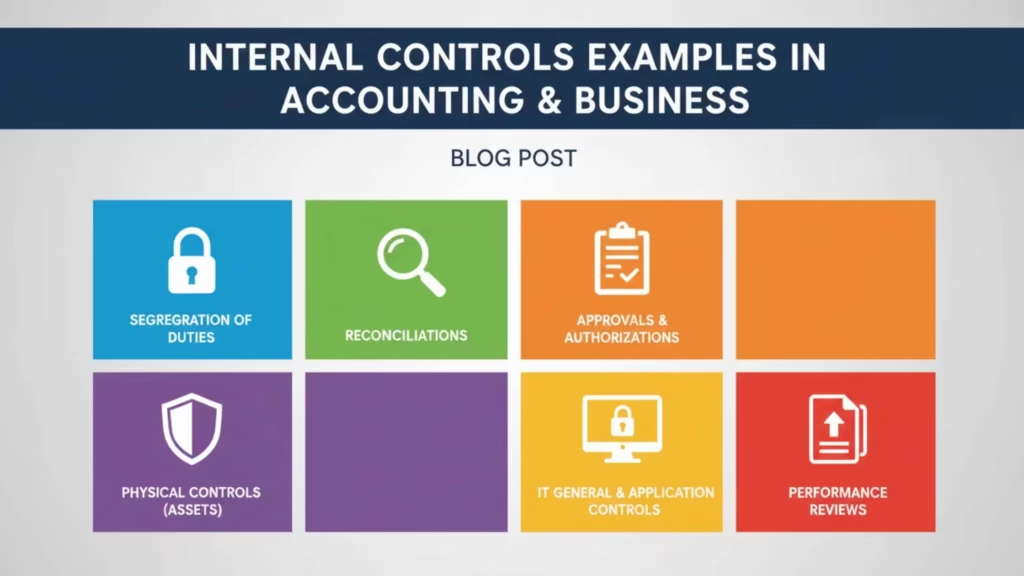
- Segregation of duties: Dividing key responsibilities among different employees to reduce the risk of error or inappropriate actions.
- Authorization controls: Requiring management approval for significant transactions, such as large payments or new vendor setups.
- Physical controls: Restricting access to cash, inventory, or sensitive documents with locks, safes, or electronic access systems.
- Reconciliations: Comparing bank statements, vendor accounts, or inventory records to internal records to spot discrepancies.
- Document controls: Maintaining clear policies around document retention, version control, and secure disposal.
What Are Some Real-World Examples of Internal Controls in a Business?
Organizations looking for examples of internal controls in a business should consider controls at every stage of the accounting cycle and operational workflow. Here are practical illustrations:
- Cash handling procedures: Daily cash counts, dual signatures for deposits, and surprise cash audits to deter theft and error.
- Expense reimbursements: Mandatory receipts and managerial approval before employee expenses are reimbursed.
- Payroll controls: Independent review and reconciliation of payroll registers before payments are issued.
- Vendor management: Conducting due diligence before onboarding new vendors and regular reviews of the approved vendor list.
- IT access controls: Granting system access based on job roles and promptly revoking access upon employee termination.
Accounting Internal Controls Examples: Safeguarding Financial Integrity
For those seeking accounting internal controls examples, the focus is on safeguarding financial transactions and ensuring compliance with U.S. accounting standards. Typical controls include:
- Journal entry review: Requiring supervisory approval for all manual journal entries.
- Bank reconciliations: Monthly reconciliation of all bank accounts by someone not involved in cash disbursements.
- Audit trails: Automated tracking of who made changes to financial records and when.
- Inventory counts: Periodic physical inventory checks compared to ledger balances.
- Restricted access: Limiting access to accounting software and sensitive data to authorized personnel only.
Financial Controls Examples: Meeting Regulatory and Audit Expectations
Among the most searched compliance topics is financial controls examples, especially in light of ongoing regulatory scrutiny. Financial controls are the subset of internal controls that specifically address the accuracy, completeness, and reliability of financial reporting. Common financial controls examples include:
- Budget approval processes: All budgets require documented review and sign-off by senior management.
- Variance analysis: Regular comparison of actual results to budgeted amounts with investigation of significant differences.
- Expense limits: Automated alerts or blocks for transactions exceeding predetermined thresholds.
- Automated controls: System-enforced rules for accounts payable, preventing duplicate or out-of-policy payments.
According to the U.S. Government Accountability Office’s “Standards for Internal Control in the Federal Government” (also known as the Green Book), such controls are essential for preventing improper payments and maintaining transparency in public and private organizations alike.
Internal Controls Accounting: Why Compliance Training Is Critical
Internal controls accounting is not simply about compliance—it is about building a culture of accountability. U.S. organizations are required to comply with frameworks like SOX, the COSO Framework, and industry-specific regulations. Failure to implement effective internal controls can lead to financial loss, legal penalties, and reputational harm.
TheComplyGuide offers expert-led compliance training that demystifies internal controls accounting, making it accessible to finance professionals at all experience levels. Our training is driven by recognized regulatory experts, such as Jason Dinesen, who brings deep knowledge of accounting practices and compliance requirements.
As Jason Dinesen frequently shares in his teaching, “Controls are not about bureaucracy—they are about building trust in numbers, and in people.” This reflects the real-world importance of well-designed controls in fostering a trustworthy business environment.
Business Controls Examples: Safeguarding Operations Beyond Finance
Business controls examples extend far beyond finance and accounting. They include operational controls to protect intellectual property, ensure product quality, manage supply chains, and support customer privacy.
- Quality assurance checks: Routine reviews of manufacturing or service processes to ensure standards are maintained.
- Compliance checklists: Standard operating procedures (SOPs) to verify adherence to regulatory and safety requirements.
- Incident reporting systems: Mechanisms for employees to report risks or violations without fear of retaliation.
- Vendor audits: Periodic reviews of third-party partners to ensure compliance with contractual and regulatory expectations.
For professionals searching for business controls examples, it is essential to recognize that controls must be tailored to specific risks and industry demands. TheComplyGuide’s regulatory experts—such as Richard E. Cascarino and Carolyn Troiano—bring this nuanced perspective to every training session, ensuring that organizations implement not only generic controls but those that truly address their operational realities.
What Has Changed Recently?
The regulatory landscape for internal controls has evolved significantly over the past two years. The Public Company Accounting Oversight Board (PCAOB) has intensified its focus on internal controls over financial reporting (ICFR), emphasizing documentation, risk assessment, and management review controls.
- 2023: COSO updated its Internal Control–Integrated Framework, reinforcing the need for proactive risk identification and technology-enabled controls.
- 2022-2024: The Securities and Exchange Commission (SEC) issued enforcement actions against firms with inadequate documentation and ineffective segregation of duties.
- Ongoing: Increased attention to cybersecurity risks has prompted organizations to implement IT-specific internal controls, including multifactor authentication and access monitoring.
Organizations must keep pace with these changes to stay compliant and minimize risk. TheComplyGuide’s webinars and expert-led sessions are continuously updated to reflect the latest regulatory expectations and enforcement trends.
What Experts Are Saying
Leading authorities emphasize that internal controls must be dynamic, not static. As Richard E. Cascarino, a globally recognized internal audit expert, observes: “Static controls quickly become obsolete in a rapidly changing risk environment. The most successful organizations are those that embed control thinking into their culture and review their controls regularly.”
Carolyn Troiano, FDA compliance consultant, further notes: “Strong controls are essential for compliance with not just financial standards, but also sector-specific regulations, from healthcare to manufacturing. Continuous training and real-life case studies are key to keeping organizations audit-ready.”
TheComplyGuide’s approach reflects these expert views, offering interactive training led by professionals who have shaped regulatory standards and guided organizations through complex compliance challenges.
How to Build Effective Internal Controls: Best Practices
Building a strong internal controls environment starts with a top-down commitment to integrity and transparency. Here are recommended best practices:
- Conduct a thorough risk assessment to identify key vulnerabilities.
- Design controls that are proportionate to the risk and aligned with regulatory requirements.
- Document every control policy and procedure clearly.
- Train employees regularly, using real-world scenarios and case studies.
- Monitor and test controls routinely, adjusting as risks evolve.
- Engage independent experts to review controls and recommend improvements.
TheComplyGuide’s expert-led webinars offer practical, actionable guidance on each of these steps, ensuring your organization’s controls remain robust, relevant, and effective.
Why Choose TheComplyGuide for Internal Controls Training?
TheComplyGuide is a trusted leader in compliance education, offering live, expert-led training designed for U.S. organizations. Our instructors are seasoned regulatory professionals who have led enforcement actions, contributed to policy development, and advised Fortune 500 companies as well as SMEs.
When you partner with TheComplyGuide, you gain access to:
- High-impact webinars that address the latest regulatory requirements and industry best practices.
- Real-world case studies and practical tools you can apply immediately.
- Access to recordings for repeat viewing and ongoing learning.
- Unmatched expertise from a panel of recognized authorities in finance, audit, compliance, and business management.
To learn more or schedule a discovery call, contact TheComplyGuide or email care@thecomplyguide.com. Our team will respond in the shortest turn around time.
About TheComplyGuide
TheComplyGuide is a U.S.-based compliance training provider specializing in expert-led webinars for regulated industries. With a distinguished panel of regulatory experts, TheComplyGuide empowers organizations to navigate risk, strengthen internal controls, and meet the highest standards of governance and accountability.
Frequently Asked Questions
What are some common internal controls examples in accounting and business?
Some widely used internal controls examples include segregation of duties, requiring dual signatures on checks, regular reconciliation of bank accounts, physical access restrictions to cash or inventory, and management review of financial statements. These controls help prevent errors and detect fraud, making them essential for both small businesses and large corporations.
Can you provide practical examples of internal controls in a business setting?
Practical examples of internal controls in a business include requiring managerial approval for all expense reimbursements, implementing inventory counts at regular intervals, using pre-numbered invoices, and setting up user permissions for accounting software. These business controls examples are designed to ensure accuracy and integrity in daily operations.
What are some accounting internal controls examples recommended by TheComplyGuide?
TheComplyGuide recommends accounting internal controls examples such as regular review of journal entries by a supervisor, periodic audits of accounts payable and receivable, enforcing approval hierarchies for transactions, and automated alerts for unusual transactions. These controls are tailored to help organizations minimize risk and promote compliance.
Why are financial controls examples important for businesses?
Financial controls examples are critical because they protect assets, ensure the reliability of financial reporting, and support compliance with laws and regulations. Examples include budget variance analysis, approval of large expenditures, and regular financial statement reviews. Effective financial controls reduce the risk of fraud and financial misstatements.
How does TheComplyGuide help businesses implement internal controls accounting best practices?
TheComplyGuide offers step-by-step frameworks, templates, and expert guidance to help businesses design and implement internal controls accounting best practices. Our solutions are tailored to your industry and size, ensuring practical, scalable, and effective controls for your organization. We also provide compliance checklists and training for staff.
What are business controls examples that small companies should consider?
Small companies should consider simple yet effective business controls examples such as monthly bank reconciliations, password-protecting sensitive files, having a second person review payroll, and maintaining up-to-date written policies. TheComplyGuide provides resources specifically for small business needs, making internal controls accessible and manageable.
How often should internal controls be reviewed or updated?
Internal controls should be reviewed at least annually or whenever there are significant changes to business operations or regulations. TheComplyGuide recommends periodic assessments, especially after incidents of fraud, rapid business growth, or technology upgrades, to ensure controls remain effective and relevant.
Does TheComplyGuide offer templates for documenting internal controls?
Yes, TheComplyGuide provides a comprehensive suite of templates for documenting and assessing internal controls. These resources cover internal controls examples for accounting, finance, and general business operations, making it easier for your team to maintain clear, consistent, and audit-ready records.
How can strong internal controls improve business performance?
Strong internal controls lead to more accurate financial information, reduced risk of loss or fraud, and improved operational efficiency. By implementing robust internal controls examples and leveraging TheComplyGuide’s solutions, businesses can make better decisions, build stakeholder trust, and achieve their strategic goals with confidence.