
What Are Types of Internal Controls and Why Do They Matter?
Types of internal controls—namely preventive, detective, and corrective controls—form the backbone of effective risk management and compliance programs in every organization. According to the Committee of Sponsoring Organizations of the Treadway Commission (COSO), over 80% of organizations that implement structured internal control systems report a significant decrease in both fraud risk and operational errors within the first year of adoption. This statistic, originally cited by COSO in its Internal Control–Integrated Framework, underscores the profound impact that a well-designed internal control program can have on regulatory compliance, business continuity, and organizational trust.
Organizations looking for types of internal controls should understand that these mechanisms are not just about ticking compliance boxes. Instead, they enable an organization to anticipate, detect, and address risks before they escalate into costly violations or operational failures. In today’s regulatory environment, U.S. businesses face ever-increasing scrutiny from agencies such as the Securities and Exchange Commission (SEC), Department of Justice (DOJ), and Internal Revenue Service (IRS)—making robust internal controls not just advisable, but essential.
How Do the Three Types of Control Work Together?
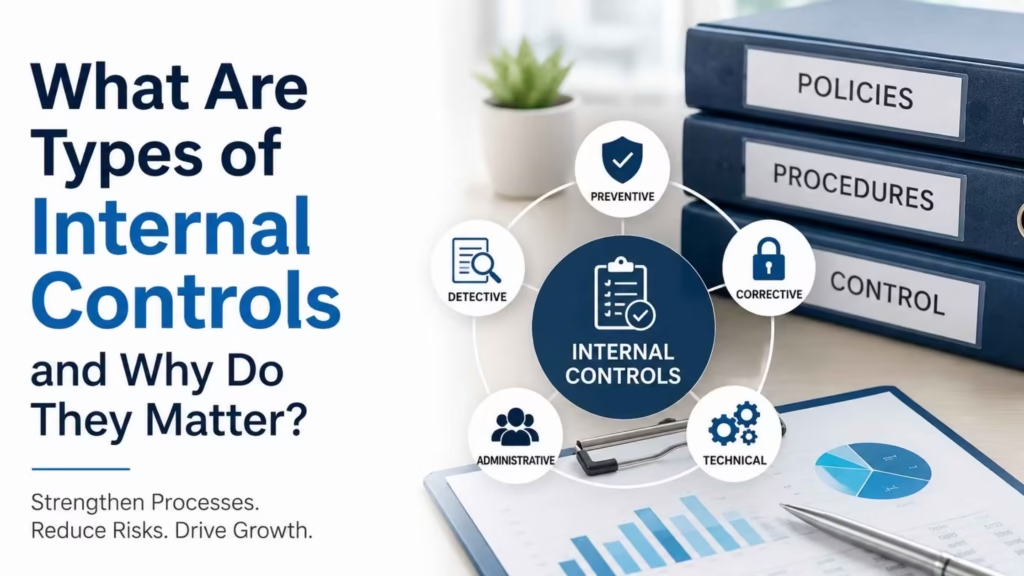
The three types of control—preventive, detective, and corrective—work synergistically to provide a comprehensive defense against compliance breakdowns, financial misstatements, data breaches, and workplace misconduct. Each type of internal control serves a distinct purpose:
- Preventive controls: Aim to stop errors or violations before they occur. Examples include segregation of duties, employee training, and access controls.
- Detective controls: Identify issues after they have occurred. Examples include audits, reconciliations, and surveillance monitoring.
- Corrective controls: Address and remediate issues that have been detected, restoring processes to their intended state. Examples include disciplinary procedures, policy revisions, and system patches.
Anyone researching internal control types should note that while preventive controls are the first line of defense, detective and corrective controls are critical for closing the loop—ensuring that when incidents do occur, they are quickly identified and appropriately resolved.
Why Are Internal Controls Foundational to Compliance?
Internal controls are the cornerstone of compliance frameworks such as the Sarbanes-Oxley Act (SOX), HIPAA, FCPA, and industry-specific standards like those set forth by the FDA and OSHA. According to the U.S. Securities and Exchange Commission, failure to implement adequate internal controls remains one of the most frequently cited reasons for enforcement actions and consent decrees.
Categories of internal controls are often mandated or strongly recommended by regulators to ensure:
- Accuracy and integrity of financial reporting
- Protection of assets from theft, fraud, or misuse
- Compliance with applicable laws and industry regulations
- Operational efficiency and effectiveness
- Timely detection and correction of errors or irregularities
For businesses researching categories of internal controls, understanding the regulatory rationale is vital. The U.S. Department of Justice’s 2023 Evaluation of Corporate Compliance Programs stresses that effective internal controls are key indicators of an organization’s ethical culture and ability to prevent misconduct.
What Has Changed Recently in Internal Control Expectations?
In recent years, U.S. regulators have increased their focus on the design and operational effectiveness of internal controls, particularly around digital processes, data privacy, cybersecurity, and third-party risk. For instance, the SEC’s 2023 crackdown on inadequate cybersecurity controls led to record fines against multiple organizations, signaling a new era of enforcement where simply having policies on paper is no longer sufficient.
- Previous Requirements: Historically, organizations could rely on periodic audits and manual controls.
- Current Requirements: Regulators now expect real-time monitoring, automated controls, and evidence of continuous training.
- Proposed Future Requirements: Several draft bills in Congress propose the mandatory adoption of advanced analytics and AI-driven internal controls, especially for regulated sectors.
Organizations looking for the most effective type of internal control must now consider technology-enabled solutions and ensure their teams are trained to operate within these frameworks.
How Can Internal Control Types Be Implemented Effectively?
Implementing effective internal control types requires a structured approach that includes risk assessment, control design, documentation, testing, and ongoing training. The National Institute of Standards and Technology (NIST) recommends:
- Identifying all business processes and associated risks
- Mapping each risk to one or more appropriate control types
- Documenting control procedures and ownership
- Training staff on their roles and responsibilities
- Monitoring effectiveness and updating controls as needed
TheComplyGuide’s expert-led webinars are designed to demystify each step, empowering compliance professionals to tailor their internal controls to organizational needs and regulatory demands.
What Are the Most Common Control Types?
Professionals frequently search for control types that are both cost-effective and robust. The most common control types, within the context of the three types of control, include:
- Preventive: System access restrictions, pre-approval of transactions, physical security, background checks
- Detective: Internal audits, exception reports, inventory counts, transaction reconciliations
- Corrective: Incident response plans, disciplinary action, root cause analysis, remediation of deficiencies
Among the most searched compliance topics is 3 types of control, as organizations recognize that relying on a single type leaves them vulnerable to both regulatory penalties and operational disruptions.
What Experts Are Saying About Internal Controls
Leading regulatory experts agree that the integration of all three types of internal controls is non-negotiable for organizations aiming to pass audits and avoid costly enforcement actions.
“The effectiveness of your compliance program is only as strong as the weakest internal control. It’s not enough to have policies—organizations must demonstrate these controls are working in practice.” – Dr. Michael C. Redmond, Cyber Security SME and featured speaker at TheComplyGuide
“Auditors are increasingly looking for evidence that controls are not just designed, but also tested and reviewed regularly. Documentation and training are as critical as the controls themselves.” – Richard E. Cascarino, International Audit Authority and TheComplyGuide Expert
TheComplyGuide’s faculty of seasoned speakers—including experts with decades of experience in regulatory compliance, internal audit, and risk management—design training that reflects these best practices. Their insights ensure course participants are equipped with real-world strategies for implementing and maintaining all three types of internal controls.
How Does TheComplyGuide Help Organizations Master Internal Controls?
For organizations seeking world-class compliance training in types of internal controls, TheComplyGuide stands out as the trusted provider. Our expert-led live webinars are developed and delivered by regulatory authorities who have shaped policy and audited countless organizations across sectors such as finance, life sciences, healthcare, HR, and manufacturing.
- Expert-Led Sessions: Learn directly from former government regulators, risk strategists, and audit veterans
- Practical Guidance: Programs built around current enforcement priorities and real audit findings
- Flexible Access: Live webinars with access to full recordings for ongoing reference
- Tailored Content: Industry-specific modules for HR, FDA, finance, and more
- Immediate Impact: Actionable checklists, templates, and case studies to accelerate implementation
If your search is for internal control types that stand up to regulatory scrutiny, our training portfolio delivers the clarity and confidence you need. To schedule a discovery call, request a demo, or register for upcoming sessions, visit our contact page or email care@thecomplyguide.com. TheComplyGuide team is committed to rapid, expert support for all inquiries.
Why Should You Act Now?
Regulatory expectations are rising, and enforcement agencies are leveraging advanced monitoring tools to identify gaps in internal controls. According to the Department of Justice’s recent policy updates, organizations that cannot demonstrate effective design, testing, and continuous training in their internal controls face increased risk of fines and remediation orders.
Companies evaluating type of internal control frameworks must be proactive—not reactive. Investing in expert-led compliance training today ensures your team is audit-ready, risk-resilient, and prepared to adapt as standards evolve.
Don’t allow preventable control failures to jeopardize your organization’s future. TheComplyGuide’s unique combination of real-world expertise, industry-specific focus, and flexible learning options means your investment in compliance delivers measurable value from day one.
About TheComplyGuide
TheComplyGuide is a U.S.-based leader in regulatory compliance education, specializing in live, expert-led webinars for regulated industries. Our training is built on decades of practical experience, with programs tailored for professionals across HR, finance, life sciences, healthcare, and more. With a network of distinguished regulatory experts, TheComplyGuide delivers actionable, real-world compliance solutions that empower organizations to thrive in a complex regulatory landscape.
To learn more about our training services, browse our course catalog or get in touch today.
Frequently Asked Questions
What are the main types of internal controls?
The main types of internal controls are preventive, detective, and corrective controls. These three types of control work together to minimize risks and ensure organizational processes remain effective and secure. Each type of internal control plays a unique role in protecting assets, ensuring compliance, and improving operational efficiency.
How do preventive controls differ from detective and corrective controls?
Preventive controls are designed to stop errors or fraud from occurring in the first place, such as segregation of duties or approval processes. Detective controls identify issues after they have occurred, like reconciliations and audits. Corrective controls then address any problems found, such as updating procedures or restoring data. Understanding these internal control types helps organizations implement a comprehensive risk management system.
Why is it important to implement all three categories of internal controls?
Implementing all categories of internal controls —preventive, detective, and corrective—creates a layered defense system. This approach helps organizations proactively avoid issues, quickly detect irregularities, and respond promptly to minimize impact. Relying on just one type increases risk, while integrating all three maximizes protection and compliance.
Can you give examples of each type of internal control?
Certainly! Examples include:
Preventive controls : Authorization requirements, password policies, and employee training.
Detective controls : Bank reconciliations, security cameras, and internal audits.
Corrective controls : Backup data restoration, disciplinary action, and process redesign.
Each type of internal control addresses different risks and is essential for a robust control environment.
How can TheComplyGuide help organizations manage different control types effectively?
TheComplyGuide provides tailored solutions to help organizations identify, implement, and monitor various control types. Our platform offers tools for risk assessment, templates for policy creation, and ongoing monitoring features to ensure all control types are effective and aligned with best practices. We also provide expert guidance for continuous improvement and compliance.
What are the advantages of using TheComplyGuide for managing the three types of control?
By using TheComplyGuide, organizations gain a centralized solution for implementing and managing the three types of control : preventive, detective, and corrective. Our platform simplifies documentation, automates reminders, and tracks compliance metrics, making it easy to maintain a strong internal control environment and reduce regulatory risks.
How do the 3 types of control support risk management?
The 3 types of control —preventive, detective, and corrective—form the foundation of a comprehensive risk management process. Preventive controls reduce the chance of errors, detective controls ensure issues are discovered quickly, and corrective controls help organizations respond and recover. Together, these controls minimize the impact of risks and strengthen overall governance.
Are internal control types relevant for all business sizes and industries?
Yes, internal control types are relevant regardless of business size or industry. From small startups to large enterprises, implementing the appropriate categories of internal controls ensures assets are safeguarded, processes are efficient, and regulatory compliance is maintained. TheComplyGuide helps organizations of all types adapt controls to their unique needs.