
What is an internal control system, and why does it matter to U.S. organizations today? In simple terms, an internal control system is the set of policies, procedures, and activities that organizations implement to safeguard assets, ensure accurate financial reporting, support regulatory compliance, and drive operational effectiveness. According to the Committee of Sponsoring Organizations of the Treadway Commission (COSO), over 85% of large public companies in the U.S. experienced at least one control failure or significant deficiency during the past two years—highlighting just how vital robust controls are for business continuity and reputation (source: COSO 2023 Report).
As regulatory scrutiny grows and risks evolve, every organization—no matter the size or sector—must understand internal control system fundamentals. Without a strong system, businesses risk financial losses, fraud, regulatory penalties, and reputational harm. TheComplyGuide’s expert-led webinars equip your teams with the know-how to implement, assess, and enhance internal controls that meet today’s standards for governance and compliance.
What Is an Internal Control System?
An internal control system comprises all the mechanisms, rules, and procedures an organization adopts to ensure its objectives are achieved reliably and efficiently. At its core, the system aims to protect assets, prevent and detect errors or fraud, ensure the reliability of financial reporting, and facilitate compliance with applicable laws and regulations.
Internal controls are not merely “nice to have”—they are required by law for many U.S. entities, including those subject to the Sarbanes-Oxley Act (SOX), the Federal Deposit Insurance Corporation (FDIC), and other regulatory bodies. Effective internal control systems are the foundation for trusted financial statements and operational resilience.
Internal Control Systems Definition: What Does It Mean?
For professionals searching for internal control systems definition, the term refers to a systematic process, designed and implemented by an entity’s board of directors, management, and other personnel, to provide reasonable assurance regarding the achievement of objectives relating to operations, reporting, and compliance. This definition, endorsed by COSO and adopted in U.S. regulatory guidance, emphasizes the continuous nature of controls, their integration across all levels, and their adaptability to new risks.
Why Are Internal Controls Important for U.S. Organizations?
Strong internal controls are essential for:
- Safeguarding assets from fraud, theft, or misuse
- Ensuring accuracy and completeness of financial records
- Supporting compliance with federal, state, and industry-specific regulations
- Reducing the risk of operational disruptions
- Enabling timely detection and correction of errors
- Building trust with investors, regulators, and customers
The absence or breakdown of systems of internal control is among the most common root causes of regulatory penalties and costly internal investigations in the U.S.
What Are the Core Internal Control Components?
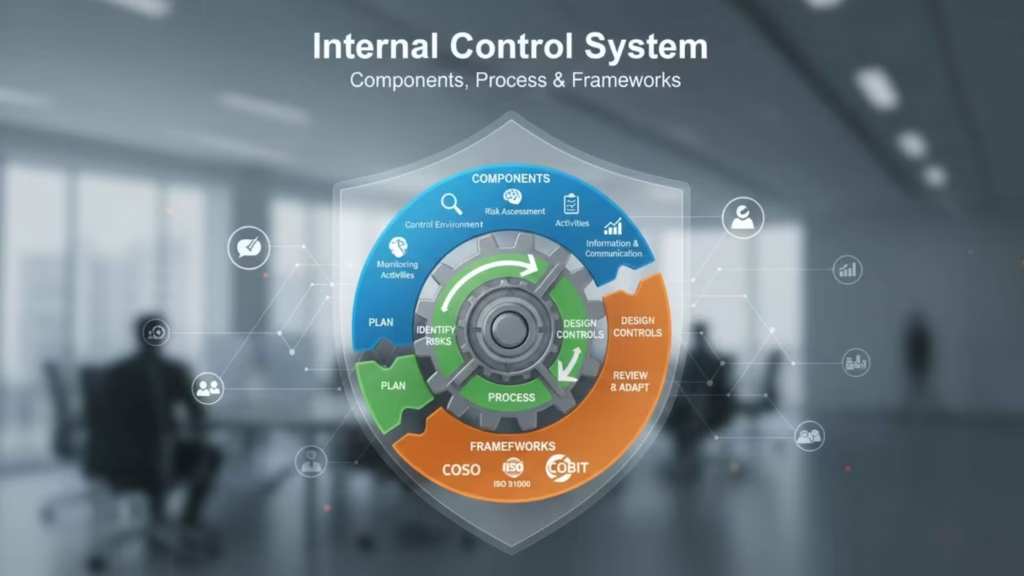
Internal control components are the building blocks of a robust control environment. The COSO Framework, widely adopted by regulators and organizations alike, identifies five essential components:
- Control Environment: The foundation, including integrity, ethical values, and governance structure.
- Risk Assessment: Processes for identifying and analyzing risks to achieving organizational objectives.
- Control Activities: Policies, procedures, and mechanisms that help ensure management directives are carried out.
- Information and Communication: Robust systems to capture and communicate relevant data promptly and accurately.
- Monitoring Activities: Ongoing or separate evaluations of controls to ensure they remain effective.
Anyone researching internal control components should recognize that all five must function together seamlessly for the system to be effective.
How Does the Internal Control Process Work?
The internal control process is not a one-time event; it is an ongoing cycle embedded in daily operations. The process typically involves:
- Setting clear organizational objectives
- Identifying and assessing relevant risks
- Designing and implementing control activities to address those risks
- Ensuring the right information flows to the right people at the right time
- Continuous monitoring and improvement based on performance and changing risks
For businesses researching systems of internal control, understanding this cyclical nature is vital to sustaining compliance and operational excellence.
What Is an Internal Control Framework?
An internal control framework provides the structure and guidance organizations need to design, implement, and assess their internal controls. The COSO Internal Control-Integrated Framework is the most widely recognized in the U.S., mandated or recommended by the Securities and Exchange Commission (SEC), the Public Company Accounting Oversight Board (PCAOB), and other leading authorities.
Internal control frameworks offer a common language for evaluating control effectiveness and promoting accountability. Organizations looking for internal control framework solutions often turn to COSO, but may also consider the Control Objectives for Information and Related Technologies (COBIT) for IT-focused controls, or industry-specific frameworks as required.
What Are Control Standards and Why Do They Matter?
Control standards are the criteria or benchmarks that internal controls are measured against. These standards, established by regulators or standards organizations, ensure that controls are designed and operating as intended, and that organizations can demonstrate compliance during audits or inspections.
Adhering to control standards is crucial for organizations in regulated industries, such as financial services, healthcare, or publicly traded companies. Failing to meet established control standards can result in regulatory action, fines, or loss of stakeholder confidence.
How Do Internal Control Systems Accounting Support Financial Integrity?
Internal control systems accounting is at the heart of financial reporting integrity. These controls ensure that transactions are authorized, recorded accurately, and summarized in accordance with U.S. Generally Accepted Accounting Principles (GAAP). For professionals searching for internal control systems accounting, the focus is often on segregation of duties, reconciliations, access controls, and audit trails—each essential to preventing fraud and supporting reliable financial statements.
TheComplyGuide’s expert-led webinars, featuring accounting and audit authorities, provide in-depth guidance on implementing and evaluating these critical controls.
What Has Changed Recently?
In the past two years, there have been significant developments affecting internal control requirements for U.S. organizations:
- SEC Guidance (2023): The SEC reinforced expectations for management’s annual assessment of internal control over financial reporting, emphasizing documentation, testing, and remediation of material weaknesses.
- PCAOB Updates (2024): Enhanced audit requirements for evaluating the design and operating effectiveness of controls, particularly around IT and cybersecurity risks.
- Increased Regulator Scrutiny: Regulatory agencies, including the FDIC and Office of the Comptroller of the Currency (OCC), have intensified reviews of internal controls, with a focus on third-party risk management and data security.
- Emerging Risks: The proliferation of remote work and digital systems has created new challenges in maintaining effective internal controls, prompting updates to guidance and best practices.
Organizations must regularly review and update their internal control systems to align with these evolving expectations and threats.
What Experts Are Saying
Experts consistently reinforce the importance of robust internal controls for organizational success:
“A system of internal control is only as strong as its weakest link. Organizations that invest in training, regular testing, and continuous improvement are best positioned to manage risk and meet regulatory demands.”
— Richard E. Cascarino, MBA, CRMA, CIA, CISM, CFE, International Audit Expert and Speaker at TheComplyGuide
“Control standards are not static. The most resilient organizations are those who treat evolving risks and regulatory changes as opportunities to strengthen their internal control system, not just as compliance hurdles.”
— Dr. Michael C. Redmond, Cybersecurity SME and TheComplyGuide Speaker
TheComplyGuide collaborates with these and other credentialed experts to develop and deliver training that is trusted by compliance, finance, and risk leaders across the U.S.
How TheComplyGuide Helps You Build Strong Internal Controls
TheComplyGuide is a U.S.-based leader in compliance education, offering live, expert-led webinars to help organizations implement, assess, and improve their internal control systems. Our programs are designed for professionals in finance, accounting, HR, banking, life sciences, and other highly regulated industries.
- Expert-Led Training: Learn directly from regulatory authorities, former auditors, and recognized industry leaders with decades of real-world compliance and audit experience.
- Relevant, Actionable Content: Our webinars address the latest control standards, regulatory changes, and best practices for internal control systems accounting, risk assessment, and fraud prevention.
- Flexible Access: Attend live sessions or view recordings on your schedule, ensuring your team is always up to date.
- Practical Guidance: Case studies, checklists, and templates support immediate application and ongoing improvement.
Organizations looking for internal control system training that delivers real results choose TheComplyGuide for its unparalleled expertise and commitment to compliance excellence.
About TheComplyGuide
TheComplyGuide is a compliance training provider based in the United States, specializing in expert-led webinars for regulatory affairs, risk management, and internal audit. Our distinguished panel of trainers includes former government regulators, compliance strategists, and credentialed industry thought leaders.
To learn more about our internal control system webinars or to discuss your organization’s training needs, contact us or email care@thecomplyguide.com. Our team will respond in the shortest turnaround time.
Strengthen your organization’s internal controls—partner with TheComplyGuide for compliance confidence and operational excellence.
Take Action Now: Secure Your Compliance Edge
Every day without a robust internal control system exposes your organization to avoidable risk. Don’t let preventable gaps turn into tomorrow’s violations or costly mistakes. With TheComplyGuide’s expert-led training, you gain more than knowledge—you gain the confidence to meet regulatory demands and protect your business future.
Contact us today to schedule a discovery call, request a demo, or register your team for our next live session. Invest in compliance that drives results.
Frequently Asked Questions
What is the internal control systems definition, and why is it important for organizations?
The internal control systems definition refers to a set of policies, procedures, and processes designed to ensure the integrity of financial and accounting information, promote accountability, and prevent fraud. An effective internal control system is crucial for organizations because it helps safeguard assets, enhances the reliability of financial reporting, and ensures compliance with laws and regulations.
What are the main internal control components every organization should consider?
The five key internal control components, as recognized by major frameworks like COSO, are: Control Environment, Risk Assessment, Control Activities, Information & Communication, and Monitoring Activities. Each component contributes to a robust system of internal control, helping organizations identify risks, communicate policies, and monitor ongoing effectiveness.
How do internal control systems accounting practices help prevent errors and fraud?
Internal control systems accounting practices involve implementing checks and balances, segregation of duties, and automated controls within financial processes. These practices help reduce the risk of errors, detect anomalies early, and deter fraudulent activities by ensuring that no single individual has unchecked authority over key accounting tasks.
What is an internal control framework, and how does it guide organizations?
An internal control framework provides a structured approach to designing, implementing, and evaluating systems of internal control. Frameworks like COSO or ISO 31000 offer best practices, terminology, and methodologies, enabling organizations to assess risks, establish control standards, and ensure their internal controls are effective and fit for purpose.
How do systems of internal control contribute to regulatory compliance?
Systems of internal control help organizations comply with various laws, regulations, and industry control standards by establishing consistent processes for documentation, authorization, and reporting. They ensure that all business activities are conducted according to defined policies, thus mitigating the risk of non-compliance and penalties.
What are some common internal control frameworks used globally?
The most widely used internal control frameworks include the COSO Internal Control-Integrated Framework, the ISO 31000 Risk Management Standard, and the COBIT framework for IT controls. These frameworks help organizations structure their internal controls and align them with international control standards and best practices.
How does TheComplyGuide assist organizations in establishing and maintaining effective internal control systems?
TheComplyGuide offers expert advisory, custom frameworks, and practical toolkits that support organizations in designing, evaluating, and optimizing their internal control system. Their solutions include gap assessments, process mapping, training, and ongoing support to ensure that internal control components are robust and tailored to each organization’s needs.
What is the process for implementing or improving an internal control system with TheComplyGuide?
TheComplyGuide begins with a detailed risk and gap assessment, followed by developing a customized internal control framework suited to your business. They then work with your team to implement new or improved controls, provide training on control standards, and establish mechanisms for regular monitoring and continuous improvement.
How can organizations ensure their internal control system remains effective over time?
Ongoing monitoring, regular reviews, and adapting to changes in business processes or regulations are essential. TheComplyGuide supports organizations with continuous evaluation services, automated tools, and updates to internal control frameworks, helping maintain alignment with emerging risks and regulatory requirements.