
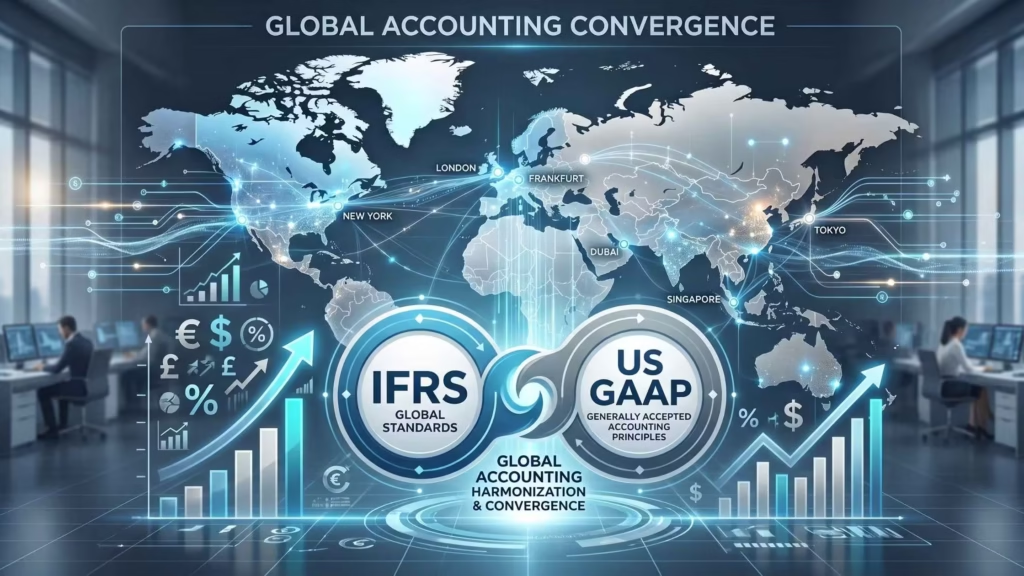
What Is IFRS and GAAP Convergence, and Why Is It Important?
IFRS and GAAP convergence refers to the ongoing process of aligning the International Financial Reporting Standards (IFRS) and U.S. Generally Accepted Accounting Principles (GAAP) to create consistent, comparable, and transparent global accounting standards. In a 2023 update, the International Federation of Accountants reported that over 140 jurisdictions now require or permit IFRS for public company reporting, underscoring the global momentum toward unified standards (source: International Federation of Accountants).
This convergence is critical for U.S. companies operating internationally, multinational investors, and regulators who demand reliable, comparable financial information across borders. It directly impacts how financial statements are prepared, audited, and interpreted—affecting everything from M&A activity to regulatory compliance and investor confidence.
How Has the Convergence of IFRS and GAAP Evolved?
The convergence of IFRS and GAAP has been a long-term project led by the Financial Accounting Standards Board (FASB) in the U.S. and the International Accounting Standards Board (IASB). The main objective is to minimize differences between the two frameworks, ensuring high-quality, globally comparable financial reporting.
- Early 2000s: FASB and IASB formalized the Norwalk Agreement, committing to work toward convergence.
- 2008–2014: Joint projects in areas like revenue recognition, leases, and financial instruments yielded significant progress.
- Recent years: Focus has shifted to maintaining alignment, addressing emerging issues (e.g., sustainability disclosures), and managing regional adoption challenges.
While many areas have been harmonized, differences remain—especially in how certain transactions are recognized and measured. Organizations looking for gaap ifrs convergence often seek clarity on these nuanced distinctions, as they can materially affect financial outcomes and compliance risk.
What Has Changed Recently? Key Developments in IFRS and US GAAP Convergence
Recent years have seen important regulatory and practical updates concerning ifrs and us gaap convergence. According to the U.S. Securities and Exchange Commission (SEC), continued collaboration between FASB and IASB focuses on targeted improvements rather than sweeping overhauls. Key areas of recent activity include:
- Revenue Recognition (ASC 606 & IFRS 15): A joint standard now governs how and when revenue is recognized, making one of the most significant steps in ifrs gaap convergence.
- Leases (ASC 842 & IFRS 16): Both frameworks now require most leases to be reported on the balance sheet, though some differences in detail remain.
- Financial Instruments: Classification, measurement, and impairment standards have been substantially aligned, but divergences persist regarding hedge accounting and credit loss models.
- Emerging Areas: Sustainability reporting and digital assets are on the agenda for further convergence, as regulators respond to evolving business models and stakeholder demands.
Notably, in 2023, the FASB issued new proposals to further align U.S. GAAP with IFRS in areas of accounting for crypto assets and government grants. The SEC has emphasized that companies must stay abreast of these evolving requirements to ensure compliance and avoid enforcement actions.
How Does IFRS Convergence With US GAAP Affect U.S. Companies?
For U.S. businesses, ifrs convergence with us gaap has tangible implications:
- Cross-border Operations: Companies with subsidiaries abroad must reconcile U.S. GAAP and IFRS differences for consolidated reporting.
- Capital Markets Access: Foreign investors and stock exchanges increasingly expect IFRS-compliant disclosures.
- Regulatory Audits: SEC and PCAOB inspections scrutinize compliance with the latest convergence standards, especially in revenue, leases, and financial instruments.
- Internal Controls: Finance teams must update policies, controls, and training to reflect evolving global accounting standards.
Companies evaluating ifrs convergence with us gaap should ensure their teams are well-versed in both frameworks and prepared for ongoing changes.
What Experts Are Saying
Industry leaders and regulatory authorities consistently highlight the importance of staying current with ifrs gaap convergence. According to FASB Chair Richard R. Jones, “Global comparability and transparency in financial reporting remain vital to investor confidence. As new business models emerge, convergence efforts must adapt to ensure relevancy and reliability.” (Source: FASB, 2023)
Manish Gupta, a seasoned finance and business management professional and featured speaker at TheComplyGuide, emphasizes, “Finance leaders must proactively update their knowledge base as standards evolve. The cost of non-compliance is far greater than the investment in expert-led training.”
The consensus among experts is clear: organizations that prioritize compliance, continuous learning, and adaptability are best positioned to thrive in a converging global environment.
Why Is Compliance Training Essential for Global Accounting Standards?
Compliance training is not just about avoiding penalties—it’s about empowering professionals to navigate complex, evolving requirements confidently. According to the Association of International Certified Professional Accountants (AICPA), more than 70% of audit deficiencies in the past year related to misapplication or misunderstanding of global accounting standards.
- Risk Mitigation: Structured training helps prevent errors, regulatory breaches, and reputational harm.
- Operational Efficiency: Well-trained teams streamline financial reporting and audit readiness.
- Strategic Growth: Understanding convergence enables informed decisions in M&A, cross-border expansion, and investment.
Among the most searched compliance topics is global accounting standards training—underscoring the urgent need for practical, expert-led education.
How TheComplyGuide Delivers Expert-Led Compliance Training
TheComplyGuide is a leading provider of live, expert-led compliance webinars and regulatory education for U.S. professionals across finance, accounting, and related sectors. Our programs are developed and delivered by a distinguished panel of regulatory authorities, industry veterans, and thought leaders.
- Expert Faculty: Sessions are led by professionals like Manish Gupta and Jason Dinesen, who possess deep expertise in both U.S. GAAP and IFRS, as well as practical experience in implementing convergence in real-world scenarios.
- Regulatory Insight: Our trainers have served as advisors to standard-setting bodies, ensuring course content is both authoritative and actionable.
- Flexible Delivery: Access live webinars and recorded sessions at your convenience, empowering teams to learn and revisit critical content as needed.
- Tailored Learning: Training can be customized to your organization’s unique risk profile and regulatory exposure.
Individuals interested in ifrs and us gaap convergence will find that TheComplyGuide’s training modules address not only technical differences but also practical implementation, audit preparation, and internal control adjustments.
Common Challenges and Mistakes in IFRS and GAAP Convergence
Organizations frequently encounter obstacles in their convergence journey. Common pitfalls include:
- Inadequate understanding of detailed recognition and measurement differences.
- Overlooking the impact on tax planning and deferred tax calculations.
- Failing to update internal controls and audit processes to reflect new standards.
- Insufficient training for accounting teams and management.
Businesses researching convergence of ifrs and gaap should prioritize ongoing education, regular policy reviews, and proactive engagement with compliance experts to avoid these costly mistakes.
What Are the Practical Steps to Achieve Successful IFRS GAAP Convergence?
For companies seeking to align with global accounting standards and ensure audit readiness, the following steps are recommended:
- Assess Current Practices: Conduct a gap analysis to identify differences between current reporting and converged standards.
- Engage Expert Guidance: Partner with recognized authorities, such as TheComplyGuide’s trainers, for targeted workshops and webinars.
- Update Policies and Procedures: Revise internal controls, accounting manuals, and reporting templates.
- Invest in Ongoing Training: Ensure finance teams have access to the latest guidance and practical insights.
- Monitor Regulatory Updates: Stay informed about proposed and finalized changes by following FASB, IASB, and SEC releases.
Professionals frequently search for ifrs gaap convergence resources to support these steps and ensure sustained compliance.
Comparing IFRS and US GAAP: Key Differences and Areas of Alignment
| Accounting Area | IFRS | US GAAP | Convergence Status |
|---|---|---|---|
| Revenue Recognition | IFRS 15 | ASC 606 | Nearly identical |
| Leases | IFRS 16 | ASC 842 | Mostly aligned |
| Financial Instruments | IFRS 9 | ASC 825/326 | Major progress, some differences |
| Inventory | No LIFO allowed | LIFO permitted | Unresolved |
If your search is for ifrs convergence with us gaap, understanding these nuanced differences and alignments is essential for accurate reporting and compliance.
How TheComplyGuide Supports Your IFRS and GAAP Training Needs
TheComplyGuide’s training solutions are trusted by accounting professionals, controllers, CFOs, and audit teams across the U.S. Our programs cover:
- In-depth analysis of convergence projects and their operational impact
- Practical strategies for implementing new standards
- Case studies from real-world U.S. organizations
- Live Q&A sessions with regulatory experts
- Role-based learning paths for accounting, finance, and audit leaders
All webinars are led by professionals with first-hand regulatory and industry experience. Recordings are available for future reference to maximize learning retention.
To explore current and upcoming sessions, visit our webinar calendar. For tailored training, fill out the contact form or email us at care@thecomplyguide.com. Our team responds promptly to all inquiries.
About TheComplyGuide
TheComplyGuide is a U.S.-based leader in expert-led compliance education for accounting, finance, HR, healthcare, and life sciences. Our mission is to bridge the gap between regulatory expectations and practical implementation, empowering organizations to achieve sustainable compliance and operational excellence.
Our distinguished faculty includes former regulators, Big Four advisors, and industry-recognized trainers such as Manish Gupta and Jason Dinesen. They bring decades of real-world experience to every webinar, ensuring content is relevant, actionable, and aligned with the latest regulatory developments.
Organizations that partner with TheComplyGuide see measurable improvements in audit outcomes, internal controls, and regulatory confidence. Don’t risk falling behind—invest in your team’s knowledge and your organization’s future with our proven training solutions.
Key Takeaways
- IFRS and GAAP convergence is essential for global comparability, transparency, and compliance.
- Recent regulatory updates have further aligned revenue, leases, and financial instruments standards.
- Ongoing training is critical to avoid compliance failures and maximize strategic opportunities.
- TheComplyGuide offers authoritative, expert-led webinars tailored to U.S. professionals’ needs.
- Stay ahead of regulatory change—contact TheComplyGuide to develop a compliance training strategy that delivers results.
Frequently Asked Questions
What is the convergence of IFRS and GAAP and why does it matter?
The convergence of IFRS and GAAP refers to ongoing efforts to align International Financial Reporting Standards (IFRS) and Generally Accepted Accounting Principles (GAAP) to create a more uniform global accounting framework. This movement is crucial as it enhances the comparability, transparency, and reliability of financial statements for stakeholders worldwide, making cross-border investments and global business operations smoother and more efficient.
How has the IFRS and US GAAP convergence initiative progressed in recent years?
The IFRS and US GAAP convergence initiative has led to significant progress in areas such as revenue recognition, leases, and financial instruments. While complete harmonization hasn’t been achieved, both the International Accounting Standards Board (IASB) and the Financial Accounting Standards Board (FASB) continue to work together on key projects. This collaboration has narrowed differences and paved the way for more comparable global accounting standards.
What are the main challenges to IFRS GAAP convergence?
Key challenges to IFRS GAAP convergence include differences in underlying accounting principles, regulatory environments, and cultural approaches to financial reporting. Jurisdictional preferences, political considerations, and the complexity of aligning legacy systems also present barriers. Despite these hurdles, ongoing dialogue and project-based convergence are gradually reducing the gaps.
How does IFRS convergence with US GAAP impact multinational corporations?
IFRS convergence with US GAAP enables multinational corporations to streamline their reporting processes, reduce compliance costs, and facilitate easier consolidation of financial statements across subsidiaries. It also improves comparability for investors and supports cross-border listings, ultimately fostering global business growth and confidence in financial reporting.
What role do global accounting standards play in financial markets?
Global accounting standards, such as IFRS, play a vital role in promoting transparency, consistency, and trust in financial markets. They allow investors, regulators, and other stakeholders to compare financial information across borders effectively, fostering greater investment and capital mobility. The move towards gaap ifrs convergence supports this by aligning major frameworks internationally.
How does TheComplyGuide assist organizations with IFRS and GAAP convergence?
TheComplyGuide offers expert resources, actionable compliance checklists, and tailored guidance to help organizations navigate the complexities of convergence of IFRS and GAAP. From technical comparisons to practical implementation strategies, TheComplyGuide empowers finance professionals to stay ahead of regulatory changes and ensure smooth transitions.
What are best practices for managing the IFRS and GAAP convergence process?
Best practices include staying informed about current developments, conducting gap analyses, training finance teams, and leveraging professional tools like those provided by TheComplyGuide. Engaging in early planning, stakeholder communication, and using standardized templates can help organizations efficiently manage ifrs and us gaap convergence efforts.
How can TheComplyGuide help keep my team updated on global accounting trends?
TheComplyGuide provides timely updates, educational webinars, and insights into global accounting standards, including ifrs gaap convergence news and regulatory changes. Subscribers receive curated alerts and deep dives that support continuous learning and proactive compliance.
Are there resources for comparing IFRS convergence with US GAAP on TheComplyGuide?
Yes, TheComplyGuide offers comprehensive comparison tools, articles, and downloadable guides specifically addressing ifrs convergence with us gaap. These resources simplify complex technical topics and provide actionable steps for compliance, making it easier for organizations to adapt to evolving standards.