
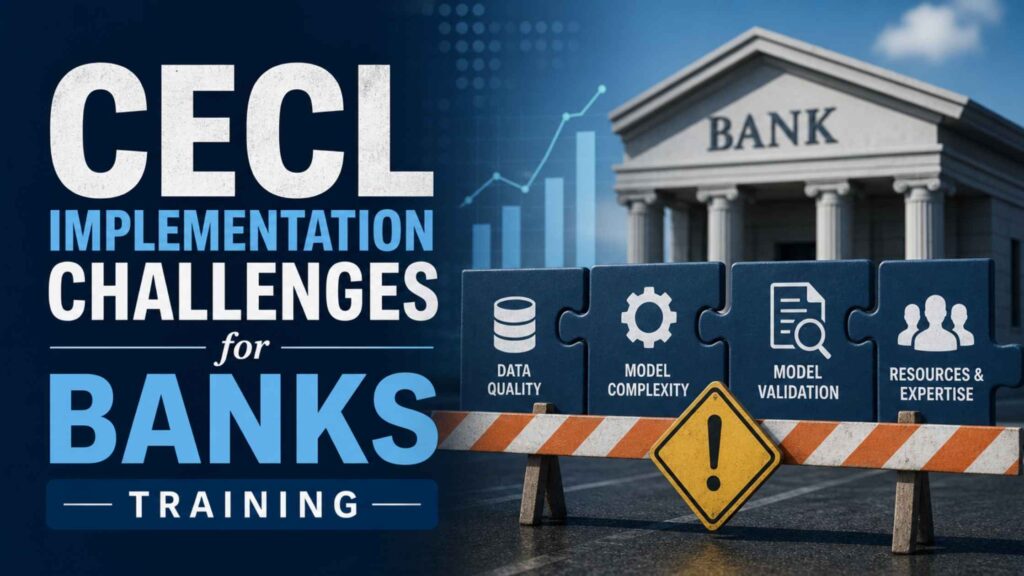
What are the biggest CECL implementation challenges for banks, and how can targeted training transform compliance outcomes? The Current Expected Credit Loss (CECL) standard—effective for all U.S. banks since the 2023 reporting cycle—has redefined how financial institutions estimate credit losses. According to the Federal Reserve, nearly 80% of U.S. banks surveyed in 2023 reported significant operational and compliance hurdles during their CECL transition, citing issues ranging from data quality to modeling complexity and regulatory uncertainty.
This rapidly changing landscape demands more than technical upgrades. It requires robust, expert-led training to ensure your teams can navigate CECL implementation challenges and ongoing compliance issues with confidence and precision. This is where TheComplyGuide delivers unparalleled value.
What Is CECL and Why Does It Matter for Banks?
CECL—mandated by the Financial Accounting Standards Board (FASB) through Accounting Standards Update (ASU) 2016-13—requires banks to estimate lifetime expected credit losses for loans, held-to-maturity securities, and certain other assets. This forward-looking approach replaces the previous “incurred loss” model, aiming to improve financial transparency and risk management.
- Scope: Applies to all financial institutions issuing credit in the U.S., regardless of size.
- Objective: Recognize losses earlier, using historical data, current conditions, and reasonable forecasts.
- Impact: Substantial changes to internal controls, data analytics, financial modeling, and regulatory reporting.
Why Is CECL Training Essential for U.S. Banks?
Training is not simply a matter of compliance—it is a strategic imperative. The complexity of CECL’s requirements, coupled with evolving banking regulations, means that even minor missteps can result in regulatory scrutiny, capital misallocation, and reputational harm. According to the Office of the Comptroller of the Currency, common pitfalls include inadequate documentation, gaps in model validation, and inconsistent risk systems integration.
Organizations looking for CECL implementation challenges often seek structured, expert-led training that addresses:
- Data governance and quality assurance
- Model development and validation
- Integration with existing risk management frameworks
- Internal audit and regulatory expectations
- Ongoing staff competency and communication
Recent Changes in Credit Loss Standards
Previous requirements: The “incurred loss” model recognized credit losses only when probable and estimable—often too late to prevent sudden losses.
Current requirements: The CECL methodology—effective for SEC filers since 2020 and for all other banks since January 2023—demands forward-looking, probability-weighted estimates of losses over the lifetime of assets. This has triggered a need for enhanced data analytics, detailed model documentation, and new internal control processes.
Proposed future requirements: Regulators continue to refine expectations for model risk management and internal audit, with new guidance anticipated from the Federal Reserve and FDIC in late 2024.
Common CECL Implementation Challenges
Banks face a range of obstacles as they adapt to CECL. The most frequently cited cecl implementation challenges include:
- Data Quality and Historical Depth
Many banks lack long-term, granular data across all loan segments. This undermines the reliability of statistical models and increases the risk of regulatory challenge. - Financial Modeling Complexity
CECL requires advanced financial modeling techniques, including scenario analysis, probability-weighted outcomes, and macroeconomic forecasting. Small and mid-sized banks often lack the in-house expertise to build and maintain such models. - Risk Systems Integration
Existing risk systems may not be designed to aggregate data or perform the analytics required under CECL. Integrating disparate IT platforms—while maintaining data integrity and audit trails—is a common stumbling block. - Documentation and Audit Readiness
Regulators expect robust documentation of assumptions, model choices, validation processes, and governance controls. Many banks struggle to produce audit-ready materials that withstand regulatory examination. - Change Management and Staff Training
Effective CECL adoption is not just about systems and models. It relies on skilled personnel who understand both technical and regulatory dimensions. Inadequate training can lead to costly errors and compliance failures.
Compliance Issues Affecting CECL Adoption
Professionals frequently search for compliance issues relating to CECL because regulatory focus has intensified following recent examinations. The FDIC and OCC have both identified common deficiencies in banks’ CECL programs, including:
- Lack of clear governance and board oversight
- Insufficient model risk management practices
- Poorly documented qualitative adjustments
- Inconsistent application of policy across business units
Failure to address these compliance issues can result in enforcement actions, additional capital requirements, and reputational harm. According to recent OCC guidance, banks must demonstrate not only technical compliance but also a culture of risk awareness and continuous improvement.
Strengthening Financial Modeling for CECL
Banks researching financial modeling for CECL face heightened expectations for both sophistication and transparency. Key best practices include:
- Data Enrichment: Supplementing internal loan data with external economic indicators and peer benchmarks
- Scenario Analysis: Building multiple macroeconomic scenarios to test model resilience under stress
- Ongoing Model Validation: Regularly back-testing model outputs against actual loss experience
- Governance: Ensuring independent review and model risk oversight
As noted in recent guidance from the Federal Reserve, “Banks must develop and maintain robust model risk management frameworks to ensure that CECL estimates remain accurate and defensible.”
The Importance of Risk Systems in CECL Compliance
Among the most searched compliance topics is risk systems alignment with CECL requirements. Effective risk systems must:
- Aggregate data from multiple sources
- Support real-time analytics and reporting
- Enable transparent audit trails
- Integrate with model validation and documentation platforms
Banks that fail to modernize their risk systems often face delays, data inconsistencies, and regulatory findings. Regulators emphasize that systems must be scalable and adaptable to future changes in banking regulations.
Expert Insights on CECL Implementation
Dev Strischek, Principal of Devon Risk Advisory Group and a current member of the FASB’s Private Company Council—featured on TheComplyGuide’s Regulatory Experts page—observes: “CECL’s forward-looking approach is a game-changer, but only if institutions invest in training and robust risk management frameworks. The difference between compliance and non-compliance is often organizational readiness and ongoing education.”
The Federal Reserve’s 2023 CECL supervisory update further underscores: “Institutions that prioritize continuous staff training and clear governance structures are better positioned to meet evolving regulatory expectations.”
Industry surveys and recent roundtables continue to highlight the value of targeted training and expert guidance in achieving successful CECL outcomes.
How TheComplyGuide Supports Banks
TheComplyGuide is a U.S.-based leader in live, expert-led compliance webinars designed specifically for banking and financial professionals. Our CECL implementation challenges for banks training is built around:
- Expert Faculty: Sessions led by renowned regulatory experts such as Dev Strischek, who have guided banks through complex risk, credit, and regulatory transitions
- Practical Focus: Action-oriented instruction covering real-world scenarios, model documentation, and regulatory expectations
- Comprehensive Coverage: Modules on data governance, financial modeling, risk systems integration, policy development, and internal audit readiness
- Regulatory Updates: Ongoing briefings on the latest banking regulations, enforcement trends, and best practices
Our training is interactive, U.S.-centric, and designed to equip your team with actionable insights that can be applied immediately. Participants receive access to recorded sessions for future reference, ensuring knowledge retention and ongoing value.
Benefits of Choosing TheComplyGuide for CECL Training
- Unmatched Expertise: Our trainers are seasoned practitioners and regulatory authorities recognized across the U.S. banking landscape.
- Immediate Impact: Attendees gain the skills to navigate regulatory examinations, reduce operational risk, and improve CECL model reliability.
- Flexible Delivery: Join live webinars from anywhere in the U.S., or review recordings at your convenience.
- U.S.-Focused Content: All material is tailored for American banks and regulatory requirements—no generic or international content.
Getting Started With TheComplyGuide
- Visit our Contact Page and fill out the inquiry form.
- Or email us directly at care@thecomplyguide.com.
- A member of TheComplyGuide team will respond in the shortest turnaround time, guiding you through available training options and upcoming sessions.
Every bank’s CECL journey is unique. Let TheComplyGuide help you build a training program that transforms regulatory challenges into opportunities for excellence.
About TheComplyGuide
TheComplyGuide is the U.S. authority on expert-led, sector-specific compliance training. We deliver high-impact webinars and workshops across banking, finance, healthcare, HR, manufacturing, and more. Our faculty includes former regulators, industry thought leaders, and certified professionals who translate complex regulations into actionable business outcomes.
We are trusted by organizations nationwide for our precision, credibility, and commitment to elevating compliance standards. To discover our full suite of banking compliance training or to view our Regulatory Experts, visit TheComplyGuide.com.
Key Takeaways for U.S. Banking Professionals
- CECL implementation challenges are multifaceted—ranging from data and modeling to systems and governance.
- Compliance issues remain a top regulatory concern in 2024, with heightened expectations for documentation and board oversight.
- Financial modeling under CECL demands robust data, scenario analysis, and ongoing validation.
- Modern risk systems are essential for regulatory alignment and operational efficiency.
- Expert-led, U.S.-focused training is the most effective way to build organizational resilience and regulatory confidence.
Don’t let preventable gaps or missed updates expose your bank to risk. Invest in TheComplyGuide’s CECL implementation challenges for banks training and transform compliance into a competitive advantage—starting today.
Frequently Asked Questions
What are the biggest CECL implementation challenges for banks?
The main CECL implementation challenges for banks include collecting and managing large volumes of historical data, developing appropriate models for estimating credit losses, integrating these models into existing risk systems, and ensuring alignment with evolving banking regulations. Many institutions also face skill gaps and resource constraints, making it difficult to execute end-to-end CECL requirements effectively.
How does TheComplyGuide support banks in overcoming compliance issues associated with CECL?
TheComplyGuide offers specialized training programs that address key compliance issues related to CECL, including regulatory expectations, documentation best practices, and audit preparedness. Our courses are designed to keep banking professionals up-to-date with the latest regulatory changes and help them create robust processes for ongoing compliance.
What role does financial modeling play in CECL implementation?
Financial modeling is essential for estimating expected credit losses under CECL. Banks must develop and validate models that incorporate historical data, current conditions, and reasonable forecasts. TheComplyGuide’s training covers key financial modeling techniques and common pitfalls to help institutions build reliable, audit-ready models.
How can banks ensure their risk systems are ready for CECL?
Banks must assess and upgrade their risk systems to handle new data requirements, model outputs, and reporting processes associated with CECL. TheComplyGuide provides guidance on system integration, data automation, and control frameworks to ensure a seamless transition and ongoing system performance.
In what ways do banking regulations impact CECL implementation?
Banking regulations establish the standards and expectations for CECL adoption, including data governance, model validation, and disclosure requirements. Non-compliance can result in regulatory scrutiny and penalties. TheComplyGuide’s training ensures banks are aware of and prepared for these regulatory demands throughout the CECL implementation process.
What specific solutions does TheComplyGuide offer for CECL training?
TheComplyGuide delivers interactive workshops, on-demand e-learning modules, and tailored consulting sessions. Our offerings cover all major aspects of CECL, including data management, model development, risk system integration, and regulatory compliance, ensuring bank teams have the practical knowledge needed for successful implementation.
How does TheComplyGuide help banks manage data challenges around CECL?
Our training provides best practices for data collection, cleansing, and storage necessary for CECL. We guide banks on establishing data governance frameworks and leveraging technology to streamline processes, so teams can focus on analysis and decision-making rather than data wrangling.
Can TheComplyGuide’s training assist with internal audit and board communication regarding CECL?
Yes, our training includes modules on internal audit expectations and effective board communication. We help banks prepare clear documentation and reporting, ensuring that management, boards, and auditors are aligned on CECL processes and outcomes.
Who should attend TheComplyGuide’s CECL implementation training?
Our training is designed for risk managers, finance professionals, compliance officers, model developers, auditors, and executives involved in CECL implementation. Whether your bank is just starting or refining its approach, we ensure your staff is equipped to meet all CECL requirements.