
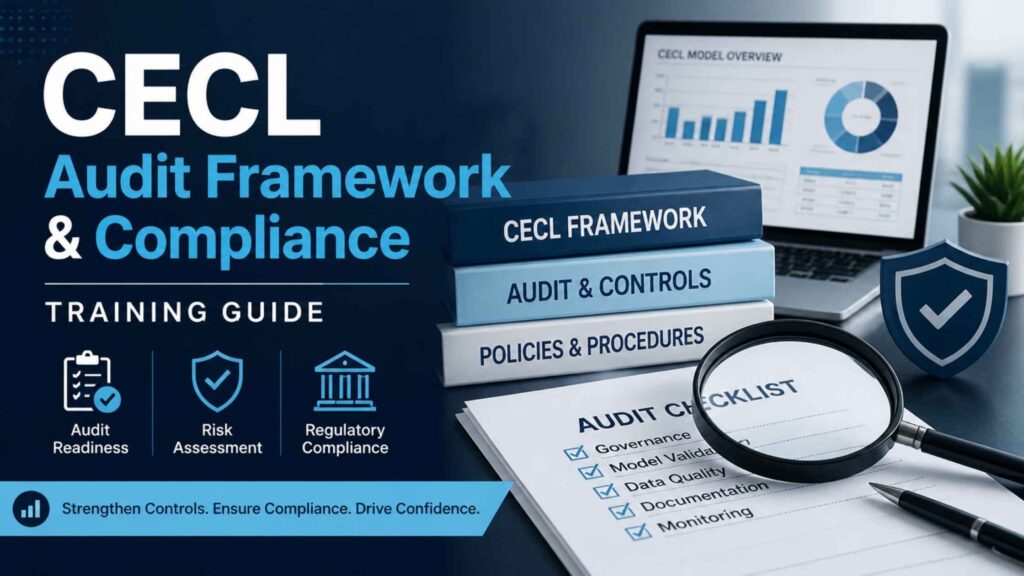
What Is the CECL Audit Framework and Why Does It Matter?
The CECL audit framework establishes the standards and processes for auditing compliance with the Current Expected Credit Losses (CECL) model, a pivotal accounting rule issued by the Financial Accounting Standards Board (FASB) and effective for most U.S. institutions since 2020. According to the Federal Reserve, over 90% of U.S. banks reported significant changes to their credit loss estimation processes as a result of CECL adoption (source: Federal Reserve, 2023). This shift in credit risk accounting directly impacts financial statements, regulatory capital, and risk management practices.
Understanding and implementing a robust CECL audit framework is essential for any financial institution subject to U.S. GAAP. It ensures not only compliance with regulatory mandates but also the integrity of financial reporting and operational resilience. Failing to meet CECL expectations can expose organizations to regulatory scrutiny, reputation risk, and costly remediation.
How Does the CECL Audit Framework Impact Financial Audit Processes?
The CECL model fundamentally changes the way organizations estimate credit losses—from an incurred loss approach to one based on expected losses over the life of financial assets. This requires a transformation in data collection, modeling, internal controls, and documentation, all of which are subject to detailed review during a financial audit.
- Auditors must assess the completeness and accuracy of historical data, segmentation methodologies, and forward-looking assumptions.
- The audit process now places heightened emphasis on model validation, scenario analysis, and governance around estimation methodologies.
- Internal audit teams must coordinate closely with risk, finance, and IT to ensure end-to-end control over CECL processes.
According to the Public Company Accounting Oversight Board (PCAOB), auditors are expected to exercise increased skepticism and rigor when evaluating CECL models due to their complexity and inherent subjectivity.
What Has Changed Recently? Key Regulatory Developments
The CECL standard itself became effective for SEC filers in 2020 and for most other entities in 2023. Since then, several regulatory agencies—including the Federal Reserve, Office of the Comptroller of the Currency (OCC), and Federal Deposit Insurance Corporation (FDIC)—have issued guidance clarifying supervisory expectations for CECL implementation, model risk management, and disclosures.
- Pre-CECL: Losses were recognized only when probable and estimable, often resulting in delayed recognition.
- Current Requirements: Institutions must recognize lifetime expected credit losses upon origination or purchase of financial assets.
- Recent Guidance: Regulators now expect robust documentation of CECL model choices, assumptions, overlays, and governance. There is also increased attention to the transparency and consistency of disclosures in quarterly and annual filings.
- Proposed Changes: Ongoing discussions focus on the standardization of model risk management practices and enhanced regulatory review procedures.
Staying informed of these regulatory developments is critical for maintaining compliance and audit readiness.
What Are the Core Components of a CECL Audit Framework?
A comprehensive CECL audit framework integrates risk assessment, model governance, internal control evaluation, and documentation review. The following components are essential:
- Governance and Oversight: Establish clear lines of responsibility for CECL implementation and ongoing management. This includes senior management and board oversight.
- Model Development and Validation: Document assumptions, segmentation, data sources, and methodologies. Validate models independently and benchmark against industry practices.
- Internal Controls: Implement and test controls over data integrity, model inputs, change management, and reporting processes.
- Documentation and Disclosure: Maintain thorough records supporting credit loss estimates, including rationales for overlays or management adjustments.
- Audit Trail and Evidence: Ensure all key decisions and calculations are traceable and auditable.
Organizations looking for cecl audit framework must ensure these elements are addressed in their policies and procedures.
How Does Compliance Reporting Support CECL and Financial Audit Requirements?
Compliance reporting under CECL requires accurate, timely, and transparent disclosures in both regulatory filings and internal management reports. This supports not only financial audit processes but also broader risk management and regulatory review.
- CECL-related disclosures must align with FASB and SEC requirements, including qualitative and quantitative information about estimation methodologies and changes over time.
- Internal reports inform senior management and the board about CECL impacts on allowance for credit losses and capital adequacy.
- Regulatory submissions must withstand scrutiny from examiners, requiring airtight documentation and clear explanations for any assumptions or adjustments.
Professionals frequently search for compliance reporting best practices that streamline these requirements and support a culture of transparency.
What Role Does Regulatory Review Play in the CECL Audit Lifecycle?
Regulatory review is a critical phase of the CECL audit lifecycle. Federal banking agencies conduct targeted examinations to assess how institutions implement CECL, manage model risk, and maintain compliance with accounting standards.
- Reviews focus on governance, data quality, model validation, and disclosures.
- Examiners evaluate the adequacy of internal controls and the independence of model validation activities.
- Findings can trigger remediation, enforcement actions, or additional reporting requirements.
Anyone researching regulatory review for CECL should prioritize readiness for both scheduled and ad hoc examinations.
How Should Organizations Strengthen Accounting Controls Under CECL?
Robust accounting controls are essential to ensure the accuracy and reliability of CECL estimates and related disclosures.
- Segregate duties across data input, model development, validation, and reporting functions.
- Automate data sources where possible to minimize manual errors.
- Perform regular reconciliations and exception reporting to catch anomalies early.
- Document all controls, workflows, and changes to ensure a clear audit trail.
For organizations evaluating accounting controls, aligning internal policies with industry best practices and regulatory expectations is vital for audit success.
What Experts Are Saying
Dev Strischek, Principal of Devon Risk Advisory Group and a recognized authority on credit risk management, notes, “CECL represents the most significant change in credit loss accounting in decades. Institutions must invest in robust governance, rigorous model validation, and transparent disclosure to satisfy both auditors and regulators.”
The Federal Reserve advises that “Effective CECL implementation is not a one-time project but an ongoing process requiring continuous improvement, documentation, and adaptation to new risks and regulatory expectations.”
According to the American Institute of Certified Public Accountants (AICPA), “Internal auditors play a critical role in evaluating the design and effectiveness of CECL-related controls, especially as external examiners increase their scrutiny of estimation methodologies and financial reporting.”
These perspectives underscore the importance of ongoing training and expert guidance to stay ahead of evolving regulatory and audit standards.
Why Is Expert-Led CECL Compliance Training Essential?
According to a recent industry study, more than 70% of organizations report a measurable reduction in operational risk after adopting structured compliance training programs (source: National Association of Corporate Directors, 2023). As regulatory expectations around CECL continue to evolve, the need for specialized, expert-led training has never been greater.
TheComplyGuide meets this demand by delivering comprehensive CECL training experiences led by distinguished regulatory experts such as Dev Strischek. These sessions are designed to address real-world audit challenges, best practices for compliance reporting, and practical strategies for regulatory review readiness.
- Live, interactive webinars ensure participants gain actionable insights directly from industry leaders.
- On-demand recordings allow attendees to revisit key concepts and reinforce learning.
- Courses are tailored to the needs of U.S. financial institutions and audit professionals.
Unlike generic providers, TheComplyGuide offers domain-specific content developed by professionals who have shaped regulatory policy and led compliance transformations across the financial sector.
How to Prepare for a CECL Audit: Actionable Steps
Preparing for a CECL audit requires a structured, proactive approach. Here are the essential steps:
- Conduct a Gap Analysis: Benchmark current processes against regulatory guidance and industry best practices.
- Update Policies and Procedures: Ensure all CECL-related activities are covered by up-to-date documentation.
- Test Controls: Perform regular testing of key accounting controls to identify and remediate weaknesses.
- Validate Models: Engage independent experts to review and challenge CECL model assumptions and outputs.
- Train Personnel: Invest in ongoing compliance education to keep your team informed of new developments and audit expectations.
- Prepare Documentation: Ensure all estimates, overlays, and management judgments are well-documented and supported.
TheComplyGuide’s webinars and training programs equip organizations with the knowledge, templates, and strategies to execute these steps effectively.
Why Choose TheComplyGuide for CECL Audit Training?
TheComplyGuide is trusted by leading financial institutions for delivering authoritative, practical, and up-to-date compliance training. Our expert panel, including members of FASB’s Credit Losses Transition Resource Group, ensures that every session reflects the latest regulatory thinking and audit expectations.
- Expert-led sessions by former regulators, auditors, and risk management leaders.
- Real-world case studies and exercises tailored to U.S. financial institutions.
- Flexible delivery through live webinars and on-demand recordings.
- Immediate takeaways for improving audit performance and regulatory compliance.
Companies evaluating CECL audit framework training should consider TheComplyGuide’s proven track record, depth of expertise, and commitment to measurable learning outcomes.
How to Access CECL Audit Training from TheComplyGuide
Accessing TheComplyGuide’s expert-led CECL audit training is straightforward:
- Register for a Webinar: Visit our events page to view upcoming CECL compliance webinars and reserve your spot.
- Request a Custom Session: Organizations with unique challenges can request tailored training by filling out our contact form or emailing care@thecomplyguide.com. Our team responds quickly to all inquiries.
- Access Recordings: Paid participants receive access to webinar recordings for on-demand review.
Don’t miss out on the opportunity to strengthen your audit preparedness, reduce compliance risk, and learn directly from the nation’s leading regulatory experts.
About TheComplyGuide
TheComplyGuide is a U.S.-based provider of expert-led compliance training, specializing in finance, banking, HR, life sciences, and regulatory affairs. Our mission is to empower organizations with the knowledge and tools to navigate complex regulatory landscapes, minimize risk, and achieve audit excellence.
With a distinguished faculty of former regulators, policy architects, and industry veterans, TheComplyGuide delivers training that goes beyond theory—offering actionable guidance, real-world insights, and lasting compliance confidence.
For more information or to connect with our experts, visit TheComplyGuide Contact Page or email care@thecomplyguide.com.
Frequently Asked Questions
What is the CECL audit framework and why is it important?
The CECL audit framework refers to the structured approach organizations use to evaluate compliance with the Current Expected Credit Losses (CECL) accounting standard. Its importance lies in helping financial institutions identify potential gaps, ensure readiness for regulatory review, and maintain sound accounting controls. Applying this framework streamlines risk management and supports transparent compliance reporting.
How does TheComplyGuide support financial audit readiness for CECL?
TheComplyGuide provides tailored training and resources to help teams understand CECL requirements, implement best practices, and prepare for a financial audit. Our solutions include detailed process walkthroughs, real-world examples, and documentation templates to ensure all aspects of CECL compliance are covered, reducing audit risk and improving confidence in your financial statements.
What are the key elements of compliance reporting under CECL?
Compliance reporting for CECL entails documenting loss estimation methodologies, model assumptions, management judgments, and control processes. TheComplyGuide’s resources help ensure your reports are structured, clear, and ready for internal and external scrutiny, supporting both transparency and regulatory review.
Does TheComplyGuide help with regulatory review preparation?
Yes, TheComplyGuide offers comprehensive training and audit checklists designed to prepare your organization for regulatory review. Our solutions focus on aligning your documentation, data, and processes with examiner expectations, minimizing surprises and strengthening your overall compliance posture.
What role do accounting controls play in CECL compliance?
Accounting controls are fundamental to CECL compliance. They ensure that assumptions, estimates, and calculations related to expected credit losses are accurate and properly documented. TheComplyGuide provides guidance on establishing, testing, and monitoring accounting controls, reducing the risk of material misstatements and supporting audit readiness.
How can TheComplyGuide’s solutions be integrated into our training programs?
TheComplyGuide offers modular, easy-to-integrate training content suitable for live sessions, e-learning platforms, or hybrid programs. Our materials are designed to align with your existing compliance structure, making it simple to enhance your team’s understanding of the CECL audit framework and related best practices.
What ongoing support does TheComplyGuide provide after initial training?
We offer periodic updates, refresher modules, and access to evolving best practices, ensuring your team stays compliant with new regulatory expectations. Our customer support is readily available to answer questions or provide clarification on CECL, financial audit topics, or compliance reporting.
Can TheComplyGuide assist with documentation for CECL implementation?
Absolutely. TheComplyGuide supplies documentation templates, sample narratives, and detailed checklists to help organizations build comprehensive CECL documentation. This support streamlines the implementation process and simplifies both regulatory review and financial audit preparation.
Is TheComplyGuide suitable for organizations of all sizes?
Yes, our CECL compliance solutions are scalable and adaptable for financial institutions of any size, from community banks to large enterprises. We tailor training and documentation resources to match your team’s needs, resources, and level of CECL audit framework maturity.