
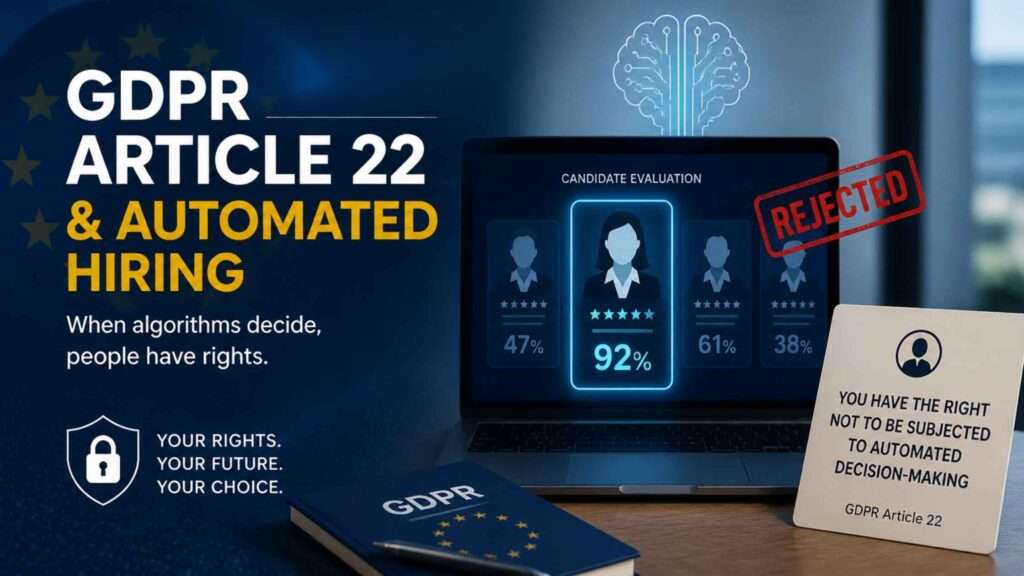
What is GDPR Article 22 and why does it matter for HR professionals in the United States? GDPR Article 22 addresses individuals’ rights regarding automated decision making, including profiling, particularly when such decisions have legal or similarly significant effects. According to a recent survey by the International Association of Privacy Professionals (IAPP), over 60% of multinational organizations have already faced challenges in aligning their hiring technologies with GDPR’s automated decision making provisions (source: IAPP, 2023).
This statistic underscores the urgent need for HR leaders—even in the U.S.—to understand the broad impact of these regulations. As AI-driven recruitment, candidate screening, and employee assessments become standard, the risks of non-compliance extend beyond the European Union and can affect any organization hiring or processing data of EU residents. Ignoring these changes could mean severe legal, financial, and reputational consequences.
What Is GDPR Article 22?
GDPR Article 22 is a critical provision of the European Union’s General Data Protection Regulation (GDPR), granting individuals the right not to be subject to a decision based solely on automated processing—including profiling—that produces legal effects or similarly significant impacts. This means that if your company’s HR processes use algorithms to automatically screen, hire, or reject candidates, those individuals may have the right to:
- Request human intervention in the decision-making process
- Express their point of view or contest the decision
- Be informed about the logic, significance, and consequences of such processing
According to the European Data Protection Board, Article 22 applies not only to EU-based organizations but also to any company offering goods, services, or employment to individuals in the EU—regardless of where the company is based.
How Does Automated Decision Making GDPR Apply to HR?
Automated decision making GDPR requirements significantly affect HR operations, especially in the context of:
- Resume parsing and candidate shortlisting tools
- Pre-employment assessments and psychometric testing
- Automated interview scoring and ranking
- Employee monitoring and performance analytics
For HR professionals, understanding automated decision making GDPR is no longer optional. Even if your organization is U.S.-based, using HR technology tools that process EU resident data can trigger these compliance obligations.
Recent Regulatory Developments
In the past 24 months, the regulatory landscape around AI-driven hiring and employment decisions has evolved rapidly:
- EU AI Act (2024): The European Union adopted the world’s first comprehensive AI law, classifying recruitment AI as “high-risk” and imposing strict transparency, documentation, and human oversight requirements (status: final, implementation begins 2025).
- Enforcement Actions: The French CNIL and German data protection authorities have issued fines and warnings for non-compliance with automated hiring practices, emphasizing the need for meaningful human involvement in decisions.
- Guidance Updates: The European Data Protection Board and U.K. Information Commissioner’s Office have released updated guidance on AI in HR, clarifying when automated decisions require explicit consent and how to fulfill transparency requirements.
U.S. organizations with global operations, or those handling data relating to EU residents, are now expected to demonstrate not just technical compliance but also organizational awareness and training on these issues.
Impact of the EU AI Hiring Law on U.S. Employers
The new EU AI hiring law introduces additional obligations for organizations using AI in their recruitment processes. These include:
- Conducting risk assessments and documenting the decision logic
- Providing candidates with clear, accessible information on how the automated process works
- Ensuring a meaningful opportunity for candidates to request human review
- Implementing robust data protection impact assessments (DPIAs) before deploying or updating AI systems
For businesses researching EU AI hiring law, the message is clear: failure to comply can lead to significant penalties, loss of candidate trust, and exclusion from EU markets.
Relevance of Recruitment Compliance Europe for U.S. HR Teams
Anyone researching recruitment compliance Europe should note that the GDPR, EU AI Act, and local employment laws apply to any organization that:
- Recruits or hires individuals located in the EU
- Processes personal data of EU residents for employment purposes
- Partners with EU-based recruitment agencies or platforms
Even U.S. companies that do not have a physical presence in Europe may be subject to these laws if their hiring activities target EU-based talent.
Key HR Compliance Risks Under GDPR Article 22
HR teams must consider several risk areas:
- Lack of Transparency: Failing to inform candidates how automated decisions are made
- No Human Oversight: Not offering a clear path for human review of “solely automated” decisions
- Improper Consent: Relying on implied or bundled consent for automated screening
- Bias and Discrimination: Using algorithms that may perpetuate or amplify historical inequalities
According to the U.S. Equal Employment Opportunity Commission, automated HR systems are increasingly being scrutinized for their potential to create disparate impacts on protected groups, even when built with “neutral” data.
Practical Steps for U.S. Employers
Every organization that uses or plans to use automated tools in hiring should immediately:
- Map out data flows for all recruitment technologies
- Review and update privacy notices provided to candidates
- Implement procedures for candidates to request human intervention
- Regularly assess algorithms for fairness, accuracy, and bias
- Train HR teams on GDPR Article 22 and emerging AI legal frameworks
These steps are not just best practices—they are now regulatory expectations in global talent markets.
Perspectives from Industry Experts
Regulatory leaders, compliance professionals, and HR thought leaders agree: organizations must move from reactive to proactive compliance on AI and automated hiring.
“GDPR Article 22 is not just a European issue. U.S. HR teams need to understand their exposure and address transparency, fairness, and candidate rights in all automated processes.”
— Johannes Sundlo, HR Professional and AI in HR Expert, featured speaker at TheComplyGuide
“The risks of getting it wrong are not limited to fines. Poorly governed recruitment AI can erode trust, damage employer brand, and result in costly litigation.”
— Diane L. Dee, President, Advantage HR Consulting, TheComplyGuide Speaker
“Effective compliance requires ongoing training, policy adaptation, and a willingness to challenge the assumptions built into hiring algorithms.”
— Margie Faulk, HR Compliance Expert, TheComplyGuide Speaker
This consensus among experts reflects the fast-changing regulatory landscape—and the need for organizations to stay ahead through continuous learning and professional development.
Support for HR Compliance from TheComplyGuide
TheComplyGuide is the trusted authority for U.S. organizations navigating GDPR Article 22, automated decision making GDPR, EU AI hiring law, and recruitment compliance Europe. Our live, expert-led webinars go beyond theoretical compliance. We equip HR professionals with actionable tools to:
- Understand and operationalize GDPR Article 22 requirements
- Audit and improve automated hiring systems for compliance and fairness
- Prepare documentation and policies for regulatory review
- Address bias, transparency, and candidate rights in AI-driven recruitment
- Develop internal protocols for ongoing compliance monitoring
Each session is led by recognized authorities—including Johannes Sundlo, Diane L. Dee, Margie Faulk, and Dr. Susan Strauss—who bring decades of HR compliance experience and real-world insights.
What Makes TheComplyGuide a Reliable Partner?
- Industry-Specific Expertise: Our trainers have led global compliance initiatives and understand the operational realities U.S. employers face.
- Actionable, Up-to-Date Content: We incorporate the latest regulatory updates, enforcement trends, and practical case studies so your team is always ahead.
- Customizable Training: Sessions can be tailored to your organization’s risk profile, recruitment technologies, and international hiring footprint.
- Results-Oriented Approach: Participants leave with checklists, templates, and strategies to implement immediately.
Organizations that partner with TheComplyGuide consistently report greater audit readiness, improved policy clarity, and a measurable reduction in compliance risk.
Getting Started with GDPR and AI Hiring Compliance Training
Securing your organization’s future starts with the right training. To request a demo, schedule a discovery call, or reserve your seat in an upcoming live webinar:
- Fill in the contact form at TheComplyGuide website
- Or email: care@thecomplyguide.com
TheComplyGuide team responds in the shortest turnaround time to ensure you receive the support you need—when you need it.
About TheComplyGuide
TheComplyGuide is a U.S.-based leader in regulatory compliance education for HR, finance, healthcare, and highly regulated sectors. We specialize in live, expert-led webinars and on-demand training, helping organizations achieve lasting compliance, minimize risk, and foster cultures of transparency and accountability. Our programs feature speakers with decades of regulatory and industry experience, ensuring practical, actionable learning for every participant.
Conclusion: The Importance of Timely Compliance
The pace of regulatory change in automated hiring is accelerating. Failing to address GDPR Article 22 and related requirements can lead to missed hiring opportunities, regulatory penalties, and erosion of candidate trust. Organizations that invest in expert-led compliance training gain a measurable edge in risk mitigation, operational integrity, and workforce confidence. Don’t let today’s gaps become tomorrow’s violations—partner with TheComplyGuide for your HR compliance journey.
Frequently Asked Questions
What is GDPR Article 22 and why is it important in hiring?
GDPR Article 22 is a key provision in the General Data Protection Regulation that gives individuals the right not to be subject to decisions based solely on automated processing, including profiling, which produces legal effects or similarly significant impacts. In the context of hiring, this means that candidates have the right to know if automated decision making is used in recruitment, and in many cases, to request human intervention. Understanding this article is crucial for HR and recruiters to ensure they respect candidate rights and achieve recruitment compliance Europe-wide.
How does automated decision making GDPR affect recruitment processes?
Automated decision making GDPR regulations require that when organizations use algorithms or AI to make hiring decisions, they must inform candidates, provide meaningful information about the logic involved, and allow candidates to contest decisions or request human review. This means HR teams need to reassess their recruitment technologies and ensure they have processes in place for transparency and candidate rights.
What is the EU AI hiring law and how does it relate to GDPR Article 22?
The EU AI hiring law is a set of proposed and upcoming regulations that specifically address the use of Artificial Intelligence in employment decisions. It builds on GDPR Article 22 by adding stricter controls, risk assessments, and transparency requirements for AI systems used in recruitment. Organizations must ensure their software and processes comply with both GDPR and the new AI regulations to avoid penalties and protect candidate rights.
How can TheComplyGuide help with recruitment compliance Europe-wide?
TheComplyGuide offers tailored compliance resources, checklists, and practical guides specifically designed for HR and talent acquisition teams across Europe. Our solutions cover GDPR Article 22, automated decision making GDPR, and the EU AI hiring law, helping you confidently implement compliant hiring processes and navigate regulatory changes across all European jurisdictions.
What steps should HR take to ensure compliance with GDPR Article 22?
HR teams should map out where automated decision making occurs in their recruitment process, ensure that candidates are informed about such processing, and provide mechanisms for human review. Documentation, regular audits, and training are also essential. TheComplyGuide offers step-by-step workflows and templates to help you implement these measures efficiently.
Are all automated hiring tools impacted by GDPR Article 22?
Not all tools are affected equally. GDPR Article 22 specifically applies to decisions that are fully automated and have a significant legal or similar effect on the candidate, such as hiring or rejection. Tools that only assist or support human decision making may not fall under these restrictions, but transparency remains best practice. TheComplyGuide can help you assess which of your tools are in scope.
What candidate rights exist under automated decision making GDPR rules?
Candidates have the right to be informed when automated decision making is used, to receive meaningful information about the logic involved, and to request human intervention or contest the decision. TheComplyGuide’s resources help you put these rights into practice and communicate them clearly to applicants.
How do TheComplyGuide’s solutions support ongoing compliance in a changing regulatory environment?
TheComplyGuide provides regularly updated guidance, compliance checklists, and policy templates that reflect the latest changes in GDPR, the EU AI hiring law, and local recruitment compliance Europe requirements. Our platform also offers alerts and expert Q&A to help you stay ahead of new regulations and enforcement trends.
What are the penalties for non-compliance with GDPR Article 22 in recruitment?
Non-compliance with GDPR Article 22 can lead to significant fines of up to €20 million or 4% of annual global turnover, whichever is higher. It can also damage your organization’s reputation and candidate trust. Using TheComplyGuide’s step-by-step resources helps minimize your risk and demonstrate good faith compliance to regulators.