
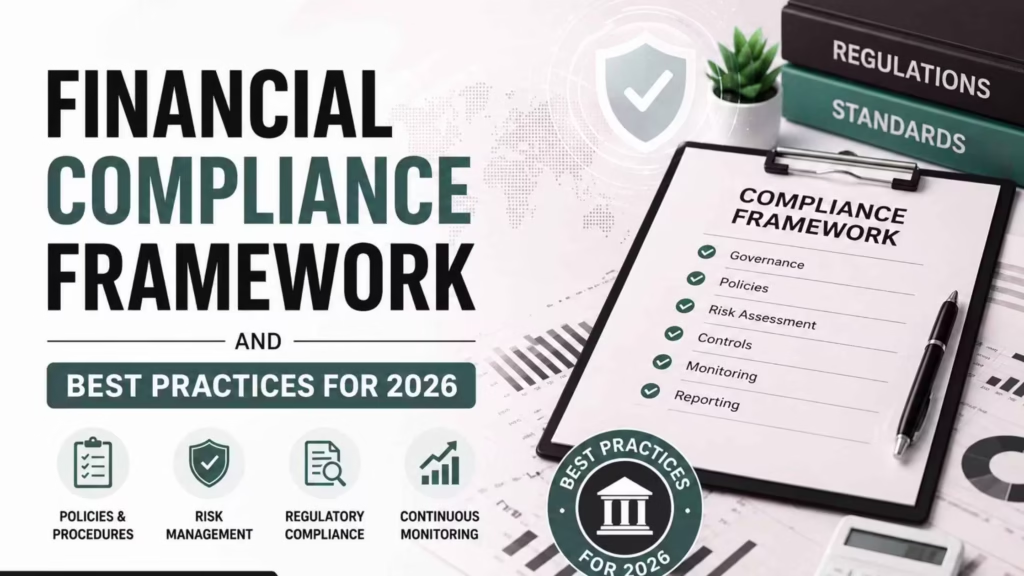
What Is the Financial Compliance Framework in 2026?
The financial compliance framework for U.S. institutions in 2026 is a comprehensive, risk-based approach that aligns internal controls, policies, and training with evolving regulatory expectations. According to a recent survey by the American Bankers Association, 84% of U.S. financial institutions reported a significant reduction in compliance violations after implementing robust, expert-led compliance programs (American Bankers Association, 2024).
A financial compliance framework is essential to safeguard against regulatory penalties, reputational damage, and operational disruptions. The framework integrates regulatory requirements from bodies like the Federal Reserve, Office of the Comptroller of the Currency (OCC), and the Financial Crimes Enforcement Network (FinCEN), ensuring organizations remain resilient amid a dynamic regulatory landscape.
How Has the Financial Compliance Landscape Changed Recently?
What has changed recently in financial compliance? In the past 24 months, U.S. regulators have intensified scrutiny of anti-money laundering (AML) controls, data privacy, cyber risk, and consumer protection standards. The Anti-Money Laundering Act of 2020 has seen phased implementation, with additional obligations on beneficial ownership reporting, risk assessments, and independent testing. The Consumer Financial Protection Bureau (CFPB) has updated its guidance on fair lending and UDAAP (Unfair, Deceptive, or Abusive Acts or Practices), while the Securities and Exchange Commission (SEC) has ramped up enforcement on cybersecurity disclosure and ESG (Environmental, Social, and Governance) reporting.
In 2025, the OCC released new expectations for risk management, emphasizing real-time transaction monitoring and expanded third-party risk oversight. These developments require banks and financial service providers to update their compliance framework for financial institutions to address both legacy and emerging risks.
- Previous requirements: Focused on periodic AML audits and limited privacy training.
- Current requirements: Mandate continuous monitoring, expanded data breach response, and enhanced onboarding due diligence.
- Proposed future requirements: Include AI-driven risk modeling, stricter ESG disclosures, and real-time regulatory reporting, with phased implementation expected through 2027.
What Are the Core Elements of a Compliance Framework for Financial Institutions?
A compliance framework for financial institutions must address regulatory compliance, risk management, internal controls, and ongoing training. The core elements include:
- Governance Structure: Clear lines of authority, escalation protocols, and board oversight.
- Risk Assessment: Regular analysis to identify and prioritize risks relevant to banking, lending, payments, and investments.
- Policies and Procedures: Documentation aligned to the latest regulatory requirements and business operations.
- Ongoing Training: Annual, role-based training for all employees, with expert-led sessions for high-risk functions.
- Monitoring and Testing: Continuous monitoring of transactions and periodic independent compliance testing.
- Reporting and Remediation: Prompt reporting of suspicious activities and implementation of corrective actions.
Organizations looking for a compliance program for financial institutions should ensure their framework is dynamic, allowing for rapid adaptation to regulatory changes and emerging threats such as cyberattacks or fraud schemes.
Why Is Proactive Financial Compliance Management Critical?
Financial compliance management is not just about meeting regulatory minimums. It is about fostering a culture of integrity, trust, and accountability throughout the organization. According to the Financial Industry Regulatory Authority (FINRA), institutions with proactive compliance management systems are 40% less likely to face enforcement actions or costly remediation projects (FINRA, 2023).
Proactive management enables institutions to:
- Detect compliance gaps before they escalate into violations.
- Reduce operational and reputational risk.
- Respond swiftly to regulatory changes and enforcement trends.
- Demonstrate good faith efforts during regulatory examinations.
Anyone researching financial compliance management should consider the need for continuous education, regular risk assessments, and a dedicated compliance structure finance team to oversee and enforce standards.
What Are the Financial Compliance Best Practices for 2026?
Financial compliance best practices for 2026 emphasize a risk-based, data-driven, and technology-enabled approach. These best practices include:
- Risk-Based Controls: Prioritize high-risk areas such as AML, cyber risk, and third-party vendors.
- Data Analytics: Use real-time analytics to monitor transactions and detect outliers or suspicious activity.
- Integrated Technology: Leverage automated monitoring tools and AI to enhance detection and reporting.
- Continuous Training: Mandate annual, expert-led training for all staff, tailored to specific roles and risk profiles.
- Incident Response Readiness: Maintain up-to-date playbooks for regulatory reporting, data breaches, and fraud incidents.
- Regulatory Horizon Scanning: Stay ahead of emerging regulations by tracking agency publications and industry developments.
Companies evaluating financial compliance best practices should benchmark their programs against leading industry standards and regulators’ current expectations.
What Do Effective Financial Compliance Programs Look Like?
Financial compliance programs are structured, documented processes designed to ensure ongoing adherence to regulatory obligations, internal policies, and ethical standards.
A robust program includes:
- Clear compliance policies and procedures, updated for the latest regulations.
- Initial and ongoing training, delivered by recognized regulatory experts.
- Automated controls for high-risk activities, including sanctions screening and transaction monitoring.
- Periodic independent testing and validation of controls.
- Formalized escalation and reporting channels for potential violations.
- Detailed documentation to demonstrate compliance to regulators.
Individuals interested in financial compliance programs should prioritize programs that are adaptable, scalable, and led by subject matter experts with proven regulatory experience.
What Experts Are Saying
“Financial institutions that proactively invest in compliance training and technology are best positioned to withstand regulatory scrutiny,” says Doug Keipper, a Certified Anti-Money Laundering Specialist and Vice President, BSA/AML Officer at BankSouth. “Ongoing education and robust controls are now non-negotiable for sustainable compliance.”
Carolyn Troiano, a leading FDA compliance consultant and TheComplyGuide expert, emphasizes, “A compliance structure finance approach should integrate governance, risk, and compliance functions to provide real-time oversight and early warning on emerging threats.”
These perspectives are echoed by the U.S. Department of the Treasury, which notes in its 2024 guidance that “financial institutions must demonstrate not only compliance but also a culture of compliance, evidenced by leadership engagement, documented procedures, and continuous improvement.”
TheComplyGuide’s expert trainers, including Doug Keipper and Carolyn Troiano, bring decades of practical, regulatory, and enforcement experience to every training session, ensuring that attendees receive actionable insights and current best practices.
How TheComplyGuide Delivers Compliance Excellence
TheComplyGuide is a leading U.S.-based provider of expert-led, industry-specific compliance education. Our regulatory experts have served as government regulators, policy architects, and compliance officers at top U.S. institutions.
Our financial compliance management programs are designed to translate complex regulatory expectations into practical, actionable steps. Each training event is tailored to the specific needs of financial institutions, focusing on current enforcement trends, risk mitigation, and operational excellence.
- Live and On-Demand Webinars: Participate in interactive, instructor-led sessions or access recordings at your convenience.
- Role-Based Learning: Courses tailored for compliance officers, risk managers, frontline staff, and executives.
- Expert Instructors: Trainers like Doug Keipper and Carolyn Troiano bring real-world insights and proven expertise in U.S. banking, AML, and regulatory compliance.
- Immediate Application: Every session includes actionable checklists, tools, and case studies to support real-world implementation.
Organizations looking for a compliance framework for financial institutions will find TheComplyGuide’s programs uniquely positioned to address today’s regulatory challenges and tomorrow’s emerging risks.
How to Access TheComplyGuide’s Financial Compliance Training
Getting started with TheComplyGuide is simple and efficient. To enroll in an upcoming webinar or request a custom compliance program for your team:
- Contact us: Fill out the form at thecomplyguide.com/contact/ or email care@thecomplyguide.com.
- Quick response: TheComplyGuide team responds in the shortest turnaround time to ensure your compliance needs are met promptly.
- Comprehensive support: Access post-webinar recordings for future reference and ongoing compliance readiness.
Don’t let regulatory gaps put your institution at risk. Invest in training that delivers measurable results, builds a culture of compliance, and positions your organization as a leader in financial integrity.
About TheComplyGuide
TheComplyGuide is a U.S.-based compliance education provider specializing in live and on-demand training for financial, healthcare, HR, and life sciences organizations. Our expert-led programs are trusted by banks, credit unions, and regulated financial service providers nationwide.
All training is delivered by recognized regulatory authorities with decades of experience, ensuring your team receives the highest caliber of compliance education available.
To learn more about our expert trainers, visit our Regulatory Experts page.
Frequently Asked Questions
What is a financial compliance framework and why is it important for 2026?
A financial compliance framework is a structured set of policies, procedures, and controls designed to help organizations comply with regulatory requirements and industry standards. For 2026, evolving global regulations and digital finance trends make such frameworks essential to manage risks, ensure transparency, and avoid costly penalties. TheComplyGuide helps institutions build robust compliance structures tailored to emerging requirements, ensuring sustainability and growth.
How does TheComplyGuide support the compliance framework for financial institutions?
TheComplyGuide delivers comprehensive solutions that streamline the compliance framework for financial institutions. Our platform provides up-to-date regulatory intelligence, automated risk assessments, workflow management, and reporting tools. This ensures institutions can efficiently align their operations with both local and global compliance obligations, while reducing manual workload and human error.
What are some financial compliance best practices for 2026?
Key financial compliance best practices for 2026 include adopting a risk-based approach, automating compliance monitoring, integrating AI-driven analytics, regular staff training, and ensuring transparent documentation. TheComplyGuide’s solutions are designed to help institutions implement these practices seamlessly, keeping them ahead of regulatory changes and industry expectations.
How can organizations develop effective financial compliance programs?
Effective financial compliance programs require a clear understanding of regulatory requirements, risk assessment, policies tailored to business operations, and ongoing monitoring. TheComplyGuide assists organizations by offering modular program templates, regulatory updates, and automated tools that make developing and maintaining compliance programs both efficient and scalable.
What makes a compliance program for financial institutions successful?
A successful compliance program for financial institutions is proactive, adaptable, and embedded within the organizational culture. It includes thorough risk assessments, clear reporting lines, regular audits, and responsive policies. TheComplyGuide provides digital solutions that foster these elements, enabling institutions to stay compliant and resilient in a rapidly changing regulatory landscape.
How does financial compliance management benefit from automation?
Automation in financial compliance management reduces manual errors, accelerates data collection, and ensures timely reporting. With TheComplyGuide’s automated workflows and monitoring tools, organizations gain real-time insights, improve audit readiness, and can focus resources on more strategic compliance initiatives rather than repetitive tasks.
What is a compliance structure finance and how does it apply to modern institutions?
Compliance structure finance refers to the systematic organization of compliance functions within financial operations, ensuring every product and transaction adheres to regulations. In modern institutions, this means integrating compliance checks throughout the product lifecycle. TheComplyGuide helps organizations design and implement these structures, minimizing risk and enhancing operational efficiency.
How does TheComplyGuide keep financial institutions ahead of regulatory changes?
TheComplyGuide leverages regulatory intelligence and AI-powered monitoring to deliver real-time updates on new and evolving requirements. Our clients receive proactive alerts, recommended actions, and resources to update their compliance protocols before regulations are enforced, ensuring ongoing readiness and peace of mind.
Can TheComplyGuide’s solutions be tailored to unique business models or cross-border operations?
Absolutely. TheComplyGuide offers configurable modules and multilingual support, making it easy to tailor compliance frameworks for financial institutions with diverse business models or international operations. Our team works closely with clients to ensure solutions address specific regulatory environments and operational nuances.