
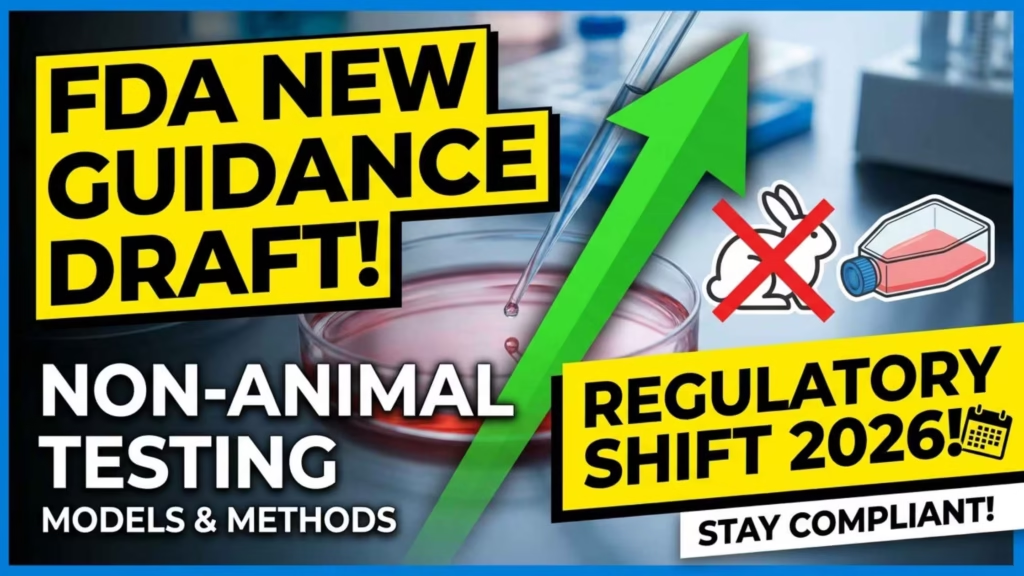
What Is the FDA Non-Animal Testing Guidance Draft?
The FDA non-animal testing guidance draft, released for public comment in early 2024 by the Food and Drug Administration, marks a pivotal regulatory shift in U.S. drug and device testing. According to the Food and Drug Administration, approximately 90% of drugs that pass animal tests fail in human trials, highlighting the urgent need for more predictive, ethical, and innovative testing paradigms. This draft guidance outlines new expectations for the use of alternative scientific methods, signaling the FDA’s intention to move away from default animal testing by 2026 in favor of validated non-animal approaches.
The draft guidance is not yet final. However, it provides a clear roadmap for both sponsors and laboratories on how to prepare for this transformative period. The FDA’s position represents a response to evolving scientific capabilities and growing ethical concerns voiced by both the public and scientific communities.
Why Is This Regulatory Shift So Important?
The FDA non-animal testing guidance draft is a direct response to scientific and ethical imperatives. For decades, animal models have been the regulatory standard. Yet, advances in cell-based assays, computational modeling, and microphysiological systems have outpaced regulatory adoption. According to a 2023 FDA report, integrating alternative testing methods can improve predictive accuracy and reduce unnecessary animal use, resulting in better patient safety outcomes.
- It aligns regulatory science with the latest innovations
- It reduces the ethical burden of animal use in research
- It increases the likelihood of human-relevant results
- It responds to legislative changes, such as the FDA Modernization Act 2.0
What Has Changed Recently?
The regulatory landscape around non-animal testing has evolved rapidly over the past two years. Previous FDA guidance typically required animal studies as a default, with alternative approaches accepted only in exceptional circumstances. However, the FDA non-animal testing guidance draft, issued in January 2024, reflects several key changes:
- Legislative Reform: The FDA Modernization Act 2.0, signed into law in December 2022, removed the statutory mandate for animal tests in drug development, authorizing the FDA to accept validated non-animal data.
- Regulatory Science Advancements: The FDA has launched pilot programs to evaluate organ-on-chip and in vitro models, and released updated criteria for the validation and acceptance of alternative methods.
- Guidance Draft Release: The draft guidance, open for public comment until late 2024, details how sponsors can submit non-animal data, what validation criteria must be met, and how the FDA will review such submissions.
Expected implementation of finalized guidance is scheduled for 2026, with a transition period for early adopters. This transition gives industry stakeholders the opportunity to align their compliance and R&D strategies with new FDA expectations.
How Will the Draft Guidance Affect Compliance?
Professionals frequently search for FDA non-animal testing guidance draft compliance strategies as they prepare to overhaul their preclinical protocols. The upcoming shift will require organizations to:
- Identify and validate alternative testing methods FDA recognizes as scientifically sound
- Update internal standard operating procedures (SOPs) and training modules
- Engage with FDA early via pre-submission meetings to discuss non-animal methodologies
- Document justification for chosen approaches, especially when using in vitro or computational models
Animal testing replacement compliance will be a critical metric for regulatory inspection readiness. Failure to adapt to the new expectations may lead to delays in product approval or increased scrutiny during FDA audits.
What Are Alternative Testing Methods FDA Recognizes?
For organizations looking for alternative testing methods FDA acceptance, the draft guidance specifies several categories:
- In Vitro Assays: These include cell-based and tissue-based tests that replicate key aspects of human biology.
- Microphysiological Systems: Organ-on-chip platforms that simulate human organ function at microscale.
- Computational Modeling: In silico approaches, such as predictive toxicology or pharmacokinetic modeling.
- Non-Animal Trial Frameworks: Integrated strategies combining multiple non-animal data sources to meet regulatory endpoints.
Each alternative must be scientifically validated and, where possible, supported by published consensus or standards (e.g., OECD guidelines). The FDA encourages early discussion of novel methods with regulatory reviewers.
What Are the New In Vitro Testing Regulations US Stakeholders Should Know?
In vitro testing regulations US now reflect a more flexible, science-driven approach. The FDA’s draft guidance outlines:
- Requirements for method validation, reproducibility, and relevance to human biology
- Use of reference compounds and positive/negative controls
- Documentation standards for laboratory procedures and data integrity
- Expectations for Good Laboratory Practice (GLP) compliance
These changes require close collaboration between research, regulatory, and quality teams. TheComplyGuide’s expert-led webinars provide in-depth walkthroughs of both the technical requirements and the compliance strategies for these new regulations.
How Are FDA Drug Testing Innovations Shaping the Future?
FDA drug testing innovations are transforming preclinical development across the U.S. life sciences sector. The draft guidance encourages the adoption of:
- High-throughput screening technologies
- Advanced 3D culture systems
- Genetically engineered cell lines that mirror human disease states
- Artificial intelligence and machine learning to predict toxicity and efficacy
These innovations are not only reducing reliance on animal models but also enabling more precise, patient-relevant data to support FDA submissions.
What Are the Ethical and Regulatory Implications?
Ethical testing regulations FDA are now at the forefront of regulatory science advancements US. The FDA’s latest position recognizes the ethical imperative to minimize animal use wherever scientifically appropriate. Regulatory authorities emphasize:
- Transparency in justification for animal use when alternatives exist
- Active pursuit of validated non-animal models
- Alignment with international standards and harmonization
According to the National Institutes of Health and the FDA’s Office of Science, organizations that proactively adopt non-animal trial frameworks are more likely to achieve regulatory acceptance and public trust.
What Experts Are Saying
Leading regulatory experts agree that the FDA non-animal testing guidance draft is a necessary and overdue evolution. Dr. Namandjé Bumpus, FDA’s Chief Scientist, recently stated, “Embracing science-driven alternatives is critical to improving drug development and patient safety in the 21st century.” The sentiment is echoed by industry thought leaders and TheComplyGuide’s own expert faculty.
David Nettleton, recognized FDA compliance specialist and a featured speaker at TheComplyGuide, notes: “The new FDA guidance is not just about replacing animal tests, but about upgrading our entire approach to regulatory science. Companies need specialized training to ensure their non-animal data meets evolving FDA expectations.”
Carolyn Troiano, FDA compliance consultant, underscores, “Transitioning to alternative testing methods FDA will require robust documentation, data integrity, and internal controls. Training now is the best strategy for long-term regulatory success.”
These insights highlight the consensus: organizations that invest in early, expert-led compliance education are best positioned to lead in the new era of drug and device development.
How Can TheComplyGuide Help You Prepare?
Companies evaluating animal testing replacement compliance must act now to avoid future regulatory setbacks. TheComplyGuide offers a unique advantage:
- Expert-led, U.S.-centric webinars tailored to FDA guidance and compliance
- Training delivered by industry veterans, former regulators, and policy architects
- Live Q&A and discussion of real-world case studies
- Access to recorded sessions for ongoing reference and team training
- Actionable checklists, templates, and compliance toolkits developed by recognized experts
Our regulatory science advancements US training modules equip your team with strategies to implement non-animal trial frameworks, validate alternative methods, and stay audit-ready. Each session is designed for U.S. stakeholders, reflecting the latest FDA and legislative developments.
TheComplyGuide is trusted by leading pharmaceutical, biotechnology, and device companies to deliver compliance education that makes a measurable difference. Our results-driven approach ensures you meet both the letter and spirit of new FDA expectations.
To request a demo, schedule a discovery call, or register for an upcoming webinar:
- Visit: TheComplyGuide Contact Page
- Email: care@thecomplyguide.com
TheComplyGuide team responds in the shortest turnaround time to support your organization’s compliance journey.
What Sets TheComplyGuide Apart?
TheComplyGuide is a U.S.-based compliance training provider specializing in regulatory updates for life sciences, healthcare, and highly regulated industries. Our expert panel includes former FDA officials, regulatory compliance strategists, and leading scientists. We deliver high-quality, actionable training that addresses the most urgent compliance gaps in today’s dynamic regulatory environment.
- Compliance isn’t optional—it’s foundational.
- Our programs help you avoid operational risks, legal penalties, and reputational harm.
- We offer tailored, modular, and interactive training—live and on-demand—to fit your organization’s needs.
Don’t let preventable compliance gaps turn into tomorrow’s violations. Invest in expert-led training that elevates your organization’s regulatory confidence.
About TheComplyGuide
TheComplyGuide is a leading provider of expert-led compliance education in the United States. Specializing in FDA, healthcare, HR, finance, and regulatory training, TheComplyGuide empowers organizations to navigate complex regulatory landscapes with confidence. Our mission is to deliver the most up-to-date, actionable compliance knowledge—helping U.S. businesses protect their people, reputation, and bottom line.
To learn how TheComplyGuide can support your compliance journey, explore our full range of offerings at TheComplyGuide.com.
Frequently Asked Questions
What is the FDA non-animal testing guidance draft and why is it important?
The FDA non-animal testing guidance draft is a proposed regulatory document set to take effect in 2026, which outlines the FDA’s evolving approach to reducing or eliminating animal-based studies in favor of scientifically advanced alternatives. This draft is significant because it signals a major regulatory shift towards more ethical, efficient, and innovative testing approaches for drug development and safety assessments. It encourages the adoption of validated non-animal methods and sets the stage for the future of ethical drug evaluation in the United States.
How do alternative testing methods FDA recognizes differ from traditional animal tests?
Alternative testing methods FDA supports often include in vitro assays, organ-on-chip technologies, and computational models. Unlike traditional animal studies, these methods can provide human-relevant data, are often faster, and can be more cost-effective. They also align with growing ethical concerns around animal welfare, and the FDA is increasingly prioritizing these alternatives as reliable sources for safety and efficacy data.
What steps should companies take to ensure animal testing replacement compliance?
To achieve animal testing replacement compliance, companies should first review the latest FDA guidance and assess which animal tests can be replaced by validated alternatives. Engaging with expert consultancies such as TheComplyGuide can streamline the process, as they provide tailored compliance strategies, risk assessments, and help prepare robust evidence packages for FDA submission. Ongoing staff training and close monitoring of regulatory updates are also crucial for maintaining compliance.
How does TheComplyGuide assist with in vitro testing regulations US requirements?
TheComplyGuide specializes in supporting organizations through the complexities of in vitro testing regulations US authorities enforce. Their services include regulatory gap analysis, assistance with study design, documentation support, and communication with the FDA. By leveraging their deep expertise, clients can confidently implement in vitro approaches, ensuring submissions meet the highest regulatory standards.
What are some recent FDA drug testing innovations connected to non-animal methods?
Recent FDA drug testing innovations include the adoption of microphysiological systems (such as organ-on-chip), high-throughput in vitro assays, and advanced computational toxicology. These approaches are being integrated into the regulatory review process, reflecting the agency’s commitment to modernizing drug testing and reducing reliance on animal models wherever possible.
How do new ethical testing regulations FDA is proposing impact drug development?
New ethical testing regulations FDA is advancing aim to minimize animal use by mandating consideration of validated non-animal methods first. This impacts drug development timelines and strategies by requiring earlier integration of alternative models, fostering ethical innovation, and potentially expediting the approval process for products that demonstrate safety and efficacy through modern, humane science.
What regulatory science advancements US stakeholders should be aware of?
Regulatory science advancements US industry leaders should note include the FDA’s increased acceptance of non-animal data, evolving standards for method validation, and the integration of artificial intelligence in safety assessment. Staying informed about these changes is essential for compliance and for leveraging the latest scientific breakthroughs in product development.
What are non-animal trial frameworks, and how do they fit into the new FDA guidance?
Non-animal trial frameworks are structured approaches that replace or supplement animal testing with validated alternative models, such as in vitro or in silico techniques. The new FDA guidance encourages these frameworks to be used wherever possible, providing clear pathways for their validation and regulatory acceptance, and helping sponsors transition to modern, ethical research methods.
How can TheComplyGuide help my organization transition to non-animal testing?
TheComplyGuide offers end-to-end support for organizations transitioning to non-animal testing, from initial readiness assessments to strategy development, staff training, regulatory submission preparation, and ongoing compliance monitoring. Their team stays ahead of regulatory trends and provides actionable guidance to ensure your organization is fully aligned with the 2026 FDA non-animal testing guidance draft.