
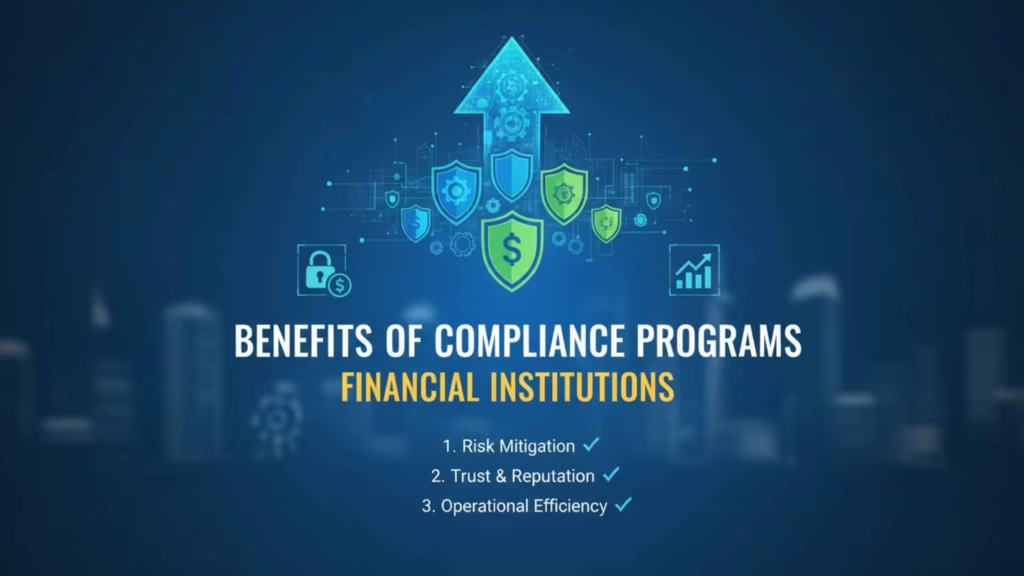
What Are Compliance Programs and Why Are They Critical for Financial Institutions?
Compliance programs are formal frameworks that help financial institutions identify, manage, and mitigate regulatory, operational, and reputational risks. They ensure that organizations operate within the boundaries of federal, state, and industry regulations. According to the Federal Reserve, over 90% of major U.S. financial institutions have enhanced their compliance programs following increased regulatory scrutiny and enforcement actions since 2022. This focus is a direct response to a rapidly evolving regulatory environment and the rising costs of non-compliance, which the American Bankers Association estimates to be in the billions annually.
For financial institutions, the benefits of compliance program adoption are not just about avoiding penalties. They underpin trust, enable sustainable growth, and reinforce stakeholder confidence. In this article, we reveal the practical advantages of robust compliance programs, recent regulatory developments, and expert perspectives—while demonstrating how TheComplyGuide helps U.S. organizations achieve compliance excellence.
How Do Compliance Programs Reduce Risk in Financial Institutions?
Compliance programs minimize legal, financial, and reputational risk by ensuring policies, procedures, and employee behaviors align with regulatory expectations. Among the most searched compliance topics is benefits of compliance program, as organizations seek to understand how a structured approach leads to measurable reductions in violations and enforcement actions.
- Regulatory Risk: Compliance programs keep institutions aligned with Bank Secrecy Act (BSA), Anti-Money Laundering (AML), Office of Foreign Assets Control (OFAC), and other federal mandates. This alignment reduces the likelihood of fines and consent orders.
- Operational Risk: Strong compliance cultures decrease the probability of internal fraud, data breaches, and process failures, according to the Office of the Comptroller of the Currency (OCC).
- Reputational Risk: Proactive compliance demonstrates a commitment to ethical conduct, preserving customer trust and investor confidence.
The net effect is a resilient organization, better prepared for internal audits, regulatory examinations, and external scrutiny.
What Has Changed Recently in U.S. Financial Regulations?
The past 24 months have seen sweeping changes in the compliance landscape for financial institutions:
- FinCEN’s AML Act Implementation (2021–2024): The Anti-Money Laundering Act of 2020 triggered a wave of new requirements around beneficial ownership, risk assessments, and whistleblower protections. The Financial Crimes Enforcement Network (FinCEN) has released final and proposed rules that demand updated compliance training and enhanced monitoring for suspicious activity.
- Heightened Focus on Fair Lending: The Consumer Financial Protection Bureau (CFPB) has increased enforcement against discriminatory lending practices. Financial institutions must now document fair lending efforts more rigorously and demonstrate compliance with the Equal Credit Opportunity Act (ECOA).
- Cybersecurity Expectations: The Federal Financial Institutions Examination Council (FFIEC) updated its cybersecurity assessment tools in 2023. Financial institutions are required to implement stronger controls and employee training around cyber threats.
These changes mean that the benefits of a compliance program extend far beyond mere box-ticking—they now encompass dynamic risk management, continuous employee education, and agile response to regulatory change.
What Are the Benefits of Compliance Program Adoption in Financial Institutions?
Organizations looking for compliance program benefits often want clear, actionable outcomes. Here is how structured compliance programs deliver value:
- Reduced Regulatory Penalties: According to the OCC, banks with mature compliance programs face 45% fewer enforcement actions than those with inadequate controls.
- Operational Efficiency: Standardized procedures and automated compliance reporting benefits streamline audits, reduce manual errors, and improve data quality.
- Enhanced Customer Trust: Transparent compliance practices reassure customers and partners, supporting long-term business relationships.
- Improved Decision-Making: Real-time compliance monitoring provides management with data-driven insights for strategic planning.
- Competitive Advantage: Institutions that proactively manage compliance are better positioned to introduce new products, expand into new markets, and respond to regulatory changes.
The compliance benefits accrue across the organization, impacting everything from risk management to profitability.
What Are the Financial Benefits of Proactive Compliance?
For financial institutions, the financial benefits of proactive compliance are substantial. According to a 2023 American Bankers Association survey, every $1 invested in compliance saves an average of $3 in potential penalties, operational disruption, and remediation costs.
- Lower Cost of Capital: Strong compliance reduces perceived risk, leading to better credit ratings and lower borrowing costs.
- Insurance Premium Savings: Insurers offer favorable rates to institutions with robust compliance protocols.
- Reduced Litigation: Fewer regulatory breaches translate to fewer lawsuits and settlements.
- Resource Optimization: Automated compliance tools and streamlined processes free up staff time for revenue-generating activities.
Compliance is not just a cost center—it is a driver of sustainable growth and profitability.
How Does Expert-Led Compliance Training Make a Difference?
According to a recent industry study, more than 70% of organizations report a measurable reduction in operational risk after adopting structured compliance training programs. As regulatory frameworks grow more complex, the difference between superficial training and expert-led, industry-specific compliance education becomes profound.
TheComplyGuide delivers live, expert-led webinars designed for U.S. financial institutions. Our trainers include renowned regulatory experts like Doug Keipper, who has over two decades of experience as a BSA/AML Officer, and Dr. Michael C. Redmond, a cyber security SME with extensive banking sector credentials. These authorities have shaped regulatory policy, led enforcement actions, and helped institutions pass rigorous federal audits.
- Real-World Scenarios: Training is anchored in practical case studies and recent enforcement actions—not hypothetical risks.
- Interactive Learning: Courses are live and encourage real-time Q&A, ensuring critical issues are addressed on the spot.
- Ongoing Access: Participants retain access to recordings for future reference, ensuring knowledge retention and continuous improvement.
For professionals searching for benefits of regulatory compliance, TheComplyGuide’s courses translate complex regulations into actionable, memorable lessons.
What Experts Are Saying
Regulatory leaders and industry consultants consistently emphasize the transformative impact of compliance programs on organizational resilience:
“Effective compliance training goes beyond checking a box—it creates a culture of accountability and ethical decision-making. The best programs are those that adapt to regulatory change and empower employees at every level.”
— Doug Keipper, Vice President, BSA/AML Officer, BankSouth
“Institutions that invest in compliance education not only reduce their risk of enforcement, but also build trust with customers and partners. Continuous learning is the cornerstone of compliance excellence.”
— Dr. Michael C. Redmond, Cyber Security SME and former Bank of New York Business Continuity Manager
TheComplyGuide curates its expert panel to ensure that every session reflects the latest regulatory thinking and practical insights.
What Are the Practical Steps for Implementing a Strong Compliance Program?
Anyone researching compliance program benefits should consider the following steps to maximize program effectiveness:
- Conduct a Risk Assessment: Identify and prioritize compliance risks across business lines.
- Develop Written Policies: Create clear procedures for regulatory obligations, reporting, and escalation.
- Establish Oversight Structures: Assign responsibility for compliance at the executive and board levels.
- Deliver Expert-Led Training: Use specialized courses, such as those offered by TheComplyGuide, to ensure staff understand their role in compliance.
- Monitor and Audit: Continuously evaluate program effectiveness and respond to regulatory changes.
- Document and Report: Maintain detailed records of compliance activities and training completions for easy auditability.
Organizations that follow these steps are better equipped to demonstrate compliance, pass audits, and respond quickly to new regulatory requirements.
Why Choose TheComplyGuide for Compliance Training?
TheComplyGuide is a U.S.-based compliance education provider specializing in live, expert-led webinars tailored for regulated industries. Our programs are developed and delivered by recognized authorities with decades of first-hand regulatory and enforcement experience.
- Real-World Authority: Our trainers—like Doug Keipper and Dr. Michael C. Redmond—have shaped compliance policy at major banks and regulatory agencies.
- Current Content: Training is updated to reflect the latest federal, state, and industry guidance.
- Flexible Delivery: Attend live, interact with experts, and access recordings for ongoing learning.
- Immediate Application: Our training is practical, actionable, and directly relevant to U.S. financial institutions.
Getting started is simple. To request a demo or schedule a discovery call, visit our Contact Page or write to care@thecomplyguide.com. TheComplyGuide team responds with the shortest possible turnaround time.
About TheComplyGuide
TheComplyGuide is a leading provider of compliance education for U.S. organizations in banking, finance, life sciences, HR, and beyond. We offer live, expert-led webinars and on-demand sessions featuring a distinguished panel of regulatory authorities, former government officials, and industry strategists. Our mission is to empower professionals with the knowledge and tools they need to thrive in a rapidly changing regulatory environment.
Conclusion: Why Compliance Cannot Wait
In today’s regulatory climate, the benefits of compliance program adoption are too important to ignore. From risk reduction and operational efficiency to the financial benefits of proactive compliance, modern financial institutions cannot afford to fall behind. Compliance is foundational to trust, growth, and long-term sustainability.
Don’t let preventable risks turn into tomorrow’s violations. Invest in expert-led compliance training with TheComplyGuide and build a resilient, future-ready organization.
Frequently Asked Questions
What are the key benefits of compliance program implementation in financial institutions?
Implementing a compliance program in financial institutions offers a wide range of advantages, including stronger risk management, improved operational efficiency, and enhanced reputation. The benefits of compliance program integration extend to ensuring adherence to evolving regulations, reducing the risk of costly fines, and building trust with clients and partners. Proactive compliance also helps streamline internal processes, making audits and reporting far easier.
How can TheComplyGuide help maximize the benefits of a compliance program?
TheComplyGuide offers tailored compliance solutions designed specifically for financial institutions. Our expert team assists with the implementation, monitoring, and continuous improvement of compliance programs, ensuring our clients fully realize the benefits of a compliance program. With our support, institutions can stay ahead of regulatory changes, automate key tasks, and foster a culture of integrity and transparency.
What compliance program benefits have financial institutions observed in practice?
Institutions with robust compliance programs experience fewer regulatory breaches, reduced legal costs, and quicker response times to regulatory changes. Other compliance program benefits include improved employee awareness, stronger data protection, and more reliable compliance reporting, all of which contribute to long-term financial health and business sustainability.
Why is regulatory compliance important for financial organizations?
The benefits of regulatory compliance go far beyond avoiding penalties. Compliance ensures organizations can operate legally, maintain their licenses, and protect client assets. It also fosters trust with stakeholders, reduces fraud risk, and helps prevent reputational damage. TheComplyGuide helps organizations stay compliant efficiently and confidently.
What are the compliance benefits for stakeholders and customers?
Compliance benefits stakeholders and customers by providing assurance that the institution operates ethically and transparently. Clients enjoy higher standards of data protection, while investors and partners are reassured by the institution’s commitment to responsible business practices. TheComplyGuide’s solutions help reinforce these benefits, building stronger relationships and confidence across the board.
Are there any financial benefits of proactive compliance programs?
Absolutely. The financial benefits of proactive compliance include reduced risks of heavy regulatory fines, lower legal and operational costs, and improved resource allocation. By identifying and addressing compliance issues before they escalate, institutions often save significant expenses over time. TheComplyGuide’s proactive approach helps clients achieve these savings while strengthening overall compliance posture.
How does TheComplyGuide support compliance reporting benefits?
TheComplyGuide streamlines compliance reporting processes, making it easier for financial institutions to generate accurate, timely, and audit-ready reports. This not only reduces the administrative burden but also enhances transparency and readiness for regulatory reviews. Our automation tools and advisory support ensure institutions fully realize compliance reporting benefits with less effort and risk.
Can compliance programs give organizations a competitive edge?
Yes, a well-implemented compliance program can be a strategic asset. By demonstrating a strong commitment to compliance and ethical standards, financial institutions can differentiate themselves, attract more customers, and form stronger partnerships. TheComplyGuide empowers organizations to use their compliance programs as a foundation for sustainable growth and market leadership.