
What Is the CECL Accounting Standard and Why Does It Matter?
The Current Expected Credit Loss (CECL) accounting standard is a transformative change issued by the Financial Accounting Standards Board (FASB) that reshapes how U.S. financial institutions estimate credit losses. According to FASB, the transition to CECL has impacted over 10,000 institutions, with the intent to create timelier and more forward-looking loss recognition in financial reporting compared to legacy incurred loss models.
CECL requires organizations to estimate expected credit losses over the life of financial assets, not just those that have already incurred losses. This shift is designed to enhance transparency and accuracy in financial statements—a critical factor for investors, regulators, and the public. Failure to comply can result in significant regulatory scrutiny, reputational risk, and even monetary penalties as enforcement actions ramp up in the wake of new standards.
For professionals searching for CECL accounting standard training, understanding the practical impact of this shift is essential. Organizations must now navigate an evolving landscape of compliance requirements, modeling techniques, and disclosure expectations—making expert-led education a necessity, not a luxury.
How Has the CECL Standard Changed Financial Reporting?
CECL fundamentally changes the approach to estimating credit losses for financial assets measured at amortized cost, including loans, debt securities, and trade receivables. Under prior guidance, organizations recognized losses only when they became probable. The CECL model, however, mandates that institutions estimate and report all expected credit losses from the time the asset is originated.
- Forward-Looking Estimates: Requires use of reasonable and supportable forecasts to estimate future losses.
- Increased Documentation: Demands robust documentation of assumptions and modeling methodologies.
- Greater Disclosure: Expands disclosure requirements in financial reporting to enhance transparency for stakeholders.
According to the Federal Reserve, the CECL implementation is “one of the most significant changes to bank accounting in decades,” with major implications for regulatory capital and earnings volatility.
What Has Changed Recently?
The CECL accounting standard was initially issued by the FASB in 2016, with staggered effective dates based on institution size and type. Public business entities were required to adopt CECL for fiscal years beginning after December 15, 2019. All other entities, including credit unions and smaller banks, were required to implement CECL for fiscal years beginning after December 15, 2022.
- Previous Requirements: Losses were recognized when probable and estimable.
- Current Requirements: All expected credit losses must be estimated and recognized at origination.
- Recent Developments: FASB has issued clarifications on acceptable estimation methods, including the use of historical loss experience, current conditions, and reasonable forecasts.
Regulatory agencies such as the Office of the Comptroller of the Currency (OCC) and the Federal Deposit Insurance Corporation (FDIC) have issued supervisory guidance emphasizing the importance of robust model validation, governance, and internal controls for institutions under CECL.
What Is the Credit Loss Model and How Does It Apply Under CECL?
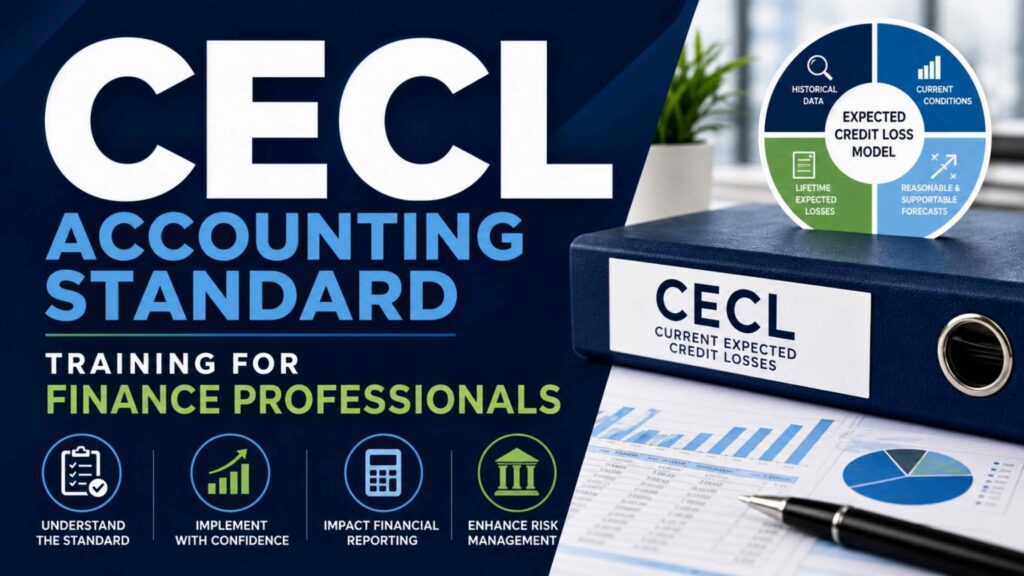
The credit loss model under CECL is designed to be more comprehensive and forward-looking than previous approaches. Instead of focusing only on incurred losses, organizations must estimate the full lifetime expected credit loss of an asset using historical experience, current conditions, and reasonable forecasts.
- Historical Experience: Analyze past loss data to inform future expectations.
- Current Conditions: Consider macroeconomic trends, borrower creditworthiness, and portfolio characteristics.
- Reasonable and Supportable Forecasts: Integrate projections about future economic conditions and their impact on credit risk.
Organizations looking for credit loss model expertise recognize that CECL compliance is not just about technical calculations but also about building the internal capacity to manage, document, and defend these models to regulators and auditors.
How Does CECL Impact Banking Compliance?
CECL’s impact on banking compliance is profound. Financial institutions must now align their risk management, audit, and regulatory reporting processes with new expectations from federal banking agencies. Key compliance areas affected include:
- Capital Planning: Increased volatility in loan loss reserves affects capital ratios.
- Regulatory Reporting: New disclosures required for regulatory filings and investor communications.
- Model Risk Management: Enhanced expectations for model risk governance, validation, and ongoing monitoring.
According to the OCC, institutions must demonstrate not only the accuracy of their CECL models but also the ability to explain and support their assumptions to examiners. For organizations pursuing banking compliance, ongoing training and access to regulatory experts are essential to maintaining readiness.
What Are the Latest FASB Rules and Regulatory Expectations?
FASB rules governing CECL set the standard for credit loss estimation. The core expectation is that organizations use a methodology that is reasonable, supportable, and well-documented. Recent FASB guidance has clarified that there is no single prescribed model—institutions may use loss-rate methods, probability of default techniques, or discounted cash flow models, provided the approach is appropriate for their portfolio.
- Documentation: Institutions must maintain thorough documentation of their modeling choices, data sources, and assumptions.
- Model Validation: Regular validation and back-testing are required to ensure ongoing accuracy.
- Disclosure: Expanded footnote disclosures in financial statements detailing methodologies, assumptions, and sensitivity to changes.
Professionals frequently search for FASB rules updates and compliance best practices to stay ahead of regulatory expectations. TheComplyGuide’s CECL webinars are designed to deliver this expertise directly from recognized industry leaders.
What Experts Are Saying
According to Martin J. “Dev” Strischek, Principal of Devon Risk Advisory Group and member of FASB’s Private Company Council, “CECL is not just an accounting requirement—it’s a risk management imperative. Institutions that invest in robust model governance and staff training are far better positioned to weather regulatory scrutiny and economic volatility.”
The Federal Reserve has also noted that “the single most important factor in successful CECL implementation is a well-trained workforce that understands both the technical requirements and operational implications.”
Industry leaders emphasize that organizations should view CECL as an opportunity to strengthen their risk frameworks and drive more proactive financial decision-making.
Why Do Finance Professionals Need Specialized CECL Training?
Specialized training on the CECL accounting standard is critical for several reasons:
- Complexity of Modeling: CECL introduces new modeling approaches, data management requirements, and validation expectations.
- Regulatory Scrutiny: Examiners expect organizations to justify their methodology and provide transparent documentation.
- Operational Impact: Accurate credit loss estimation directly affects capital planning, earnings forecasts, and investor confidence.
Continuing education ensures that finance and accounting professionals keep pace with regulatory developments, avoid costly mistakes, and maintain the highest standards of professionalism.
How to Prepare for CECL: Action Steps for Compliance
To ensure compliance and readiness, organizations should take the following steps:
- Assess Current Processes: Review existing credit loss estimation procedures and identify gaps.
- Engage in Expert-Led Training: Participate in specialized CECL training from recognized authorities, such as those offered by TheComplyGuide.
- Strengthen Model Governance: Establish clear roles, responsibilities, and documentation trails for all modeling activities.
- Validate and Monitor: Implement procedures for regular model validation and scenario analysis.
- Enhance Disclosure Practices: Update financial reporting protocols to meet expanded CECL disclosure requirements.
TheComplyGuide’s CECL webinars empower finance teams to implement these steps with confidence.
Why Choose TheComplyGuide for CECL Training?
TheComplyGuide is the trusted authority for expert-led compliance training in the United States. Our CECL training is developed and delivered by leaders who help shape industry standards and regulatory policy.
- Expert Faculty: Trainers like Martin J. “Dev” Strischek bring years of direct CECL and risk management experience, bridging the gap between regulatory expectation and real-world implementation.
- Current Content: Our webinars reflect the latest FASB updates, federal guidance, and examiner focus areas.
- Actionable Insights: Each session equips professionals with practical tools, templates, and guidance to ensure readiness.
- Flexible Access: Access live and on-demand webinars, plus recordings for future review.
Unlike generic online courses, TheComplyGuide’s programs are built around live, paid webinar events led by real regulatory experts—ensuring attendees can ask questions and learn directly from practitioners who have shaped the industry.
What Sets TheComplyGuide Apart?
TheComplyGuide is a leading U.S.-based compliance education provider specializing in high-impact, expert-led training for regulated industries. Our mission is to empower organizations to meet compliance challenges with clarity, confidence, and competence.
Our unique approach includes:
- Distinguished Faculty: Courses and webinars led by former regulators, policy makers, and compliance strategists.
- Proven Results: Over 70% of organizations report measurable improvement in risk posture within six months of participating in TheComplyGuide training.
- Comprehensive Support: Access to follow-up resources, course materials, and ongoing regulatory updates.
How to Access CECL Training with TheComplyGuide
Getting started with TheComplyGuide is simple. To request a demo, schedule a discovery call, or inquire about upcoming CECL webinars:
- Visit: TheComplyGuide Contact Page
- Email: care@thecomplyguide.com
Our team responds promptly to all inquiries and can help you identify the right training solution for your organization’s needs.
About TheComplyGuide
TheComplyGuide is a premier provider of regulatory compliance education, offering live and on-demand training for finance, banking, healthcare, HR, and life sciences professionals across the United States. Our programs are developed by recognized experts, ensuring that every course delivers actionable insights grounded in the latest regulatory guidance.
For more about our expert-led training and services, visit www.thecomplyguide.com.
Frequently Asked Questions
What is the CECL accounting standard and why does it matter for finance professionals?
The CECL accounting standard, short for Current Expected Credit Loss, is a set of guidelines issued by the FASB that changes how financial institutions estimate credit losses for financial reporting. CECL requires earlier recognition of potential credit losses, which impacts loan loss reserves, risk management, and overall financial statements. For finance professionals, understanding CECL is crucial to ensuring accurate and compliant reporting, as well as effective risk assessment in lending and investment activities.
How does TheComplyGuide help organizations implement the CECL credit loss model?
TheComplyGuide offers specialized CECL accounting standard training designed to help finance teams understand and apply the credit loss model required by the standard. Our courses cover the foundations of CECL, model development, data requirements, and scenario analysis, providing practical tools to calculate expected credit losses and integrate them into financial reporting processes.
What topics are included in TheComplyGuide’s CECL training for finance professionals?
Our CECL training covers a wide range of relevant topics, including the theoretical background of the credit loss model, regulatory expectations, quantitative and qualitative factors in credit risk assessment, data collection and documentation best practices, and alignment with FASB rules. The training also includes hands-on case studies and real-world examples tailored for banking compliance and audit requirements.
Who should attend CECL accounting standard training from TheComplyGuide?
Our training is ideal for finance professionals, accountants, risk managers, auditors, and executives in banks, credit unions, and financial institutions who are involved in financial reporting, loan portfolio management, and compliance. Anyone responsible for implementing or overseeing CECL-related processes will benefit from our comprehensive approach.
How do TheComplyGuide’s solutions support banking compliance with CECL and FASB rules?
TheComplyGuide provides up-to-date training, resources, and consulting services that address both the technical and operational aspects of the CECL accounting standard. Our solutions are designed to help institutions align their internal controls, documentation, and processes with banking compliance requirements and FASB rules, minimizing regulatory risk and ensuring audit readiness.
What makes TheComplyGuide’s CECL training unique compared to other providers?
TheComplyGuide stands out due to its focus on hands-on, practical learning tailored for finance professionals. Our trainers are industry experts who combine regulatory insights with real-world experience. We use case studies and interactive modules to address specific challenges in financial reporting, banking compliance, and CECL model implementation.
Can TheComplyGuide assist with ongoing CECL compliance and updates?
Yes, TheComplyGuide offers ongoing support and refresher training to ensure your team stays current on CECL accounting standard updates, changes in FASB rules, and evolving regulatory expectations. We also provide custom advisory services to address unique challenges as they arise within your organization.
How can I get started with TheComplyGuide’s CECL training and solutions?
Getting started is easy—simply contact TheComplyGuide through our website to request more information or schedule a demo. Our team will assess your needs and recommend the best training modules or consulting solutions to ensure your organization’s success with the CECL accounting standard and credit loss model implementation.