
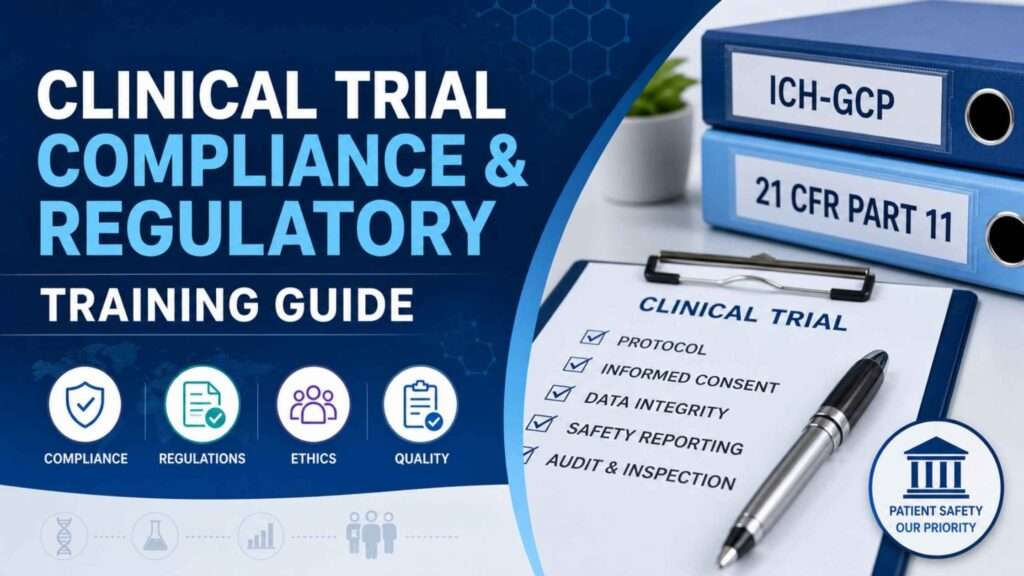
What Is Clinical Trial Compliance, and Why Does It Matter?
Clinical trial compliance is the cornerstone of ethical, legal, and operational success in pharmaceutical and medical research. According to the U.S. Food and Drug Administration (FDA), over 15% of clinical trials are delayed or terminated each year due to compliance or regulatory issues, leading to significant financial and reputational risk for sponsors and researchers (FDA Bioresearch Monitoring Program, 2023).
For organizations conducting or supporting clinical research, mastering compliance is not optional—it’s essential for patient safety, data integrity, and commercial viability. The regulatory landscape is constantly evolving as new rules, guidance documents, and enforcement priorities emerge from agencies like the FDA, National Institutes of Health (NIH), and the Office for Human Research Protections (OHRP).
TheComplyGuide provides authoritative, expert-led training designed to help your team confidently navigate these requirements and avoid the pitfalls that can jeopardize both trials and organizational reputation.
How Have Research Regulations Changed Recently?
In recent years, research regulations governing clinical trials have experienced significant shifts in response to emerging science, global harmonization efforts, and high-profile enforcement actions.
- Revised Common Rule (45 CFR 46): The revised Federal Policy for the Protection of Human Subjects requires new informed consent standards, enhanced data protections, and broader requirements for single IRB review of multi-site trials. These provisions became effective in 2018, but ongoing guidance and clarifications continue to reshape operational expectations.
- FDA Guidance Updates: The FDA has released multiple new and draft guidances since 2023 addressing electronic records and signatures (21 CFR Part 11), data integrity, decentralized trials, and expanded access protocols. The agency has also increased its focus on Diversity Plans and subject recruitment to ensure equity in trial populations.
- International Trends: The implementation of the EU Clinical Trials Regulation (Regulation (EU) No 536/2014) and growing alignment with ICH E6(R3) Good Clinical Practice guidelines are influencing U.S. trial sponsors with global operations.
Previous requirements often focused on paperwork and procedural compliance. Today, regulators expect proactive risk management, robust digital systems, and demonstrable participant protection at every stage.
Organizations looking for clinical trial compliance must keep abreast of these changes to avoid costly disruptions, warning letters, or trial suspensions.
What Are the Key Elements of FDA Trials Compliance?
FDA trials compliance is built upon statutory requirements (the Food, Drug, and Cosmetic Act, 21 CFR Parts 50, 54, 56, 312, and 812), official guidance, and agency expectations.
- Informed Consent: Sponsors must ensure that consent documents meet federal standards and that participants are fully informed of risks, benefits, and alternatives.
- Institutional Review Board (IRB) Approval: Studies involving human subjects must receive initial and ongoing ethics approval from an accredited IRB.
- Data Integrity: Sponsors and investigators must maintain complete, accurate, and auditable records, increasingly using validated electronic systems (see 21 CFR Part 11).
- Safety Reporting: Serious adverse events must be promptly reported according to FDA timelines and standards.
- Monitoring & Auditing: The FDA expects ongoing monitoring to ensure protocol adherence and participant safety, with robust audit trails and CAPA (Corrective and Preventive Action) processes.
Expert David Nettleton, FDA compliance specialist and a leading authority on computer system validation, emphasizes, “Technology is now at the heart of trial compliance. Sponsors must ensure electronic systems are validated and data is protected throughout the trial lifecycle.”
Anyone researching FDA trials should recognize that compliance is not just about passing inspections—it’s about embedding quality at every step.
How Does Ethics Approval Fit Into the Regulatory Landscape?
Ethics approval is a foundational requirement for all human subject research in the United States. According to the OHRP, no clinical trial involving human subjects may begin without documented approval from a registered IRB, and ongoing review is mandatory for the duration of the study.
The process ensures that trials protect the rights, welfare, and safety of participants. Recent guidance from both OHRP and FDA stresses the importance of diversity, equity, and inclusion in recruitment and consent practices.
- Ethics approval must be obtained before enrolling the first subject.
- Material protocol amendments require new or updated IRB review.
- Sponsors must maintain records and provide prompt updates to the IRB regarding adverse events or unanticipated problems.
As Dr. Ginette Collazo, CEO of Human Error Solutions, observes, “Ethics committees today are not just reviewing paperwork—they expect evidence that organizations have built a culture of integrity and continuous improvement.”
For individuals interested in ethics approval, understanding both the formal requirements and the evolving expectations around participant engagement is critical.
What Is Pharma Compliance, and Why Is It Essential?
Pharma compliance encompasses the broad range of U.S. laws, regulations, and industry codes governing pharmaceutical research, development, manufacturing, and marketing. It includes not only clinical trial compliance, but also requirements from the FDA, Drug Enforcement Administration (DEA), Department of Justice (DOJ), and industry bodies such as PhRMA and BIO.
Among the most searched compliance topics is pharma compliance, as enforcement actions and whistleblower lawsuits have led to billions in fines for noncompliance in recent years.
- Clinical research: GCP, informed consent, and IRB oversight.
- Manufacturing: Good Manufacturing Practice (GMP), product quality, and recall procedures.
- Marketing: Truthful promotion, transparency in payments, and anti-kickback requirements.
- Data Privacy: HIPAA, 21 CFR Part 11, and data protection for trial subjects.
Carolyn Troiano, FDA compliance consultant, notes, “Pharma compliance failures often start with small oversights in documentation or training. Comprehensive, expert-led education is essential to prevent costly errors.”
Organizations looking for pharma compliance education must ensure that training is not only up-to-date, but also anticipates new rules and enforcement trends.
What Are the Common Pitfalls in Clinical Trial Compliance?
- Insufficient or outdated training for staff and investigators.
- Inadequate documentation or incomplete data trails.
- Delayed or missing safety reports.
- Overreliance on manual processes without proper system validation.
- Neglecting the evolving expectations around diversity, equity, and inclusion.
The FDA and other agencies have repeatedly cited these issues in enforcement actions and warning letters. Proactive, continual education is the best defense.
How Can TheComplyGuide Help Organizations Master Compliance?
TheComplyGuide stands apart by offering live, expert-led webinars and training sessions designed specifically for the U.S. regulatory environment. Our programs are developed and delivered by a distinguished network of regulatory specialists, former FDA inspectors, and compliance strategists.
- Expert trainers: Professionals like David Nettleton (computer system validation), Carolyn Troiano (FDA compliance), and Dr. Ginette Collazo (human reliability) bring decades of first-hand regulatory experience.
- Authoritative content: Training is updated promptly to reflect the latest FDA guidance, OHRP rules, and industry best practices.
- Flexible access: Live webinars are available for direct interaction, with recordings provided for ongoing reference.
- Practical focus: Real-world examples, case studies, and actionable checklists ensure knowledge can be applied immediately.
- Broad coverage: From protocol design to data submission, adverse event reporting to site audits, TheComplyGuide’s offerings span every stage of the trial lifecycle.
If your search is for clinical trial compliance education that goes beyond checklists and enables true operational excellence, TheComplyGuide is your trusted partner.
To learn more or schedule a session, complete the contact form or email care@thecomplyguide.com. Our team responds with the shortest possible turnaround.
What Experts Are Saying About Compliance Training
Industry leaders and regulatory officials consistently emphasize the importance of ongoing, expert-led education:
“A culture of compliance starts with education. Every staff member must understand their responsibilities—and the consequences of noncompliance.”
— Food and Drug Administration (FDA) Office of Regulatory Affairs, 2023
“Investing in high-quality, interactive compliance training is one of the most effective ways to reduce risk and demonstrate a commitment to patient safety and data integrity.”
— Society for Clinical Research Sites (SCRS), 2024
“Organizations that make compliance part of day-to-day operations—not just an annual event—see better outcomes and fewer enforcement issues.”
— David Nettleton, FDA Compliance Specialist, TheComplyGuide Regulatory Expert
How to Get Started with TheComplyGuide’s Training
- Identify your needs: Assess your organization’s regulatory exposure and training gaps.
- Explore our offerings: Review our upcoming webinars and expert profiles on our Regulatory Experts page.
- Connect with us: Submit your requirements via the contact form or email care@thecomplyguide.com.
- Access your training: Join live sessions, access recordings, and equip your team for compliance success.
Your organization’s reputation and operational success depend on staying ahead of complex regulatory requirements. TheComplyGuide delivers the clarity, confidence, and expertise you need—when and where you need it most.
About TheComplyGuide
TheComplyGuide is a U.S.-based leader in expert-led compliance education, specializing in live, interactive webinars for organizations across regulated sectors. Our distinguished panel of regulatory experts brings decades of real-world experience in FDA, clinical research, life sciences, HR, finance, and more.
Our mission is to empower organizations to meet and exceed regulatory expectations through high-impact, up-to-date training that drives operational excellence, risk reduction, and a culture of integrity.
To discover how TheComplyGuide can strengthen your compliance program, visit our homepage or reach out directly for a personalized consultation.
Frequently Asked Questions
What is clinical trial compliance, and why is it important?
Clinical trial compliance refers to adhering strictly to protocols, guidelines, and all applicable laws throughout the clinical research process. It ensures participant safety, data integrity, and the validity of study results. Non-compliance can lead to regulatory penalties, invalidated data, and potential harm to participants.
How does TheComplyGuide help organizations meet research regulations?
TheComplyGuide offers comprehensive training modules and resources that break down complex research regulations into clear, actionable steps. Our solutions include up-to-date regulatory guidance, interactive e-learning, and real-world scenarios to help teams understand and comply with local and international research requirements.
What topics are covered in TheComplyGuide’s Clinical Trial Compliance & Regulatory Training Guide?
Our training guide covers a wide range of topics, including Good Clinical Practice (GCP), FDA trials submissions, documentation standards, participant privacy, informed consent, ethics approval processes, and navigating global pharma compliance requirements.
Does your training address FDA trials and their specific requirements?
Yes, TheComplyGuide provides detailed modules focused on FDA trials, helping teams understand IND and NDA submissions, safety reporting, monitoring, and the critical steps needed to ensure compliance with FDA expectations for clinical research in the United States.
How does TheComplyGuide support sites and sponsors in achieving ethics approval?
We offer step-by-step guidance on preparing documentation, submitting applications, and responding to Institutional Review Boards (IRBs) or Ethics Committees. Our resources clarify best practices and common pitfalls to streamline the ethics approval process for your studies.
What makes TheComplyGuide’s approach to pharma compliance unique?
Our approach blends regulatory expertise with practical, interactive training. We address pharma compliance not just from a regulatory standpoint, but also provide actionable strategies for implementation, risk mitigation, and continuous improvement tailored to the pharmaceutical industry.
Is TheComplyGuide suitable for both new and experienced clinical research professionals?
Absolutely. Our content is designed to accommodate all experience levels, from those new to clinical trial compliance to seasoned professionals needing a regulatory update or refresher.
Are your training modules updated to reflect the latest changes in research regulations?
Yes, TheComplyGuide continuously monitors regulatory changes and updates our modules accordingly. We ensure that all training reflects the most current standards in clinical trial compliance and regulatory expectations worldwide.
How can I get started with TheComplyGuide’s Clinical Trial Compliance & Regulatory Training Guide?
Simply visit our website to explore our training options, request a demo, or contact our team for a tailored solution. Whether you’re an individual, a sponsor, or a research organization, TheComplyGuide can help streamline your compliance journey.