
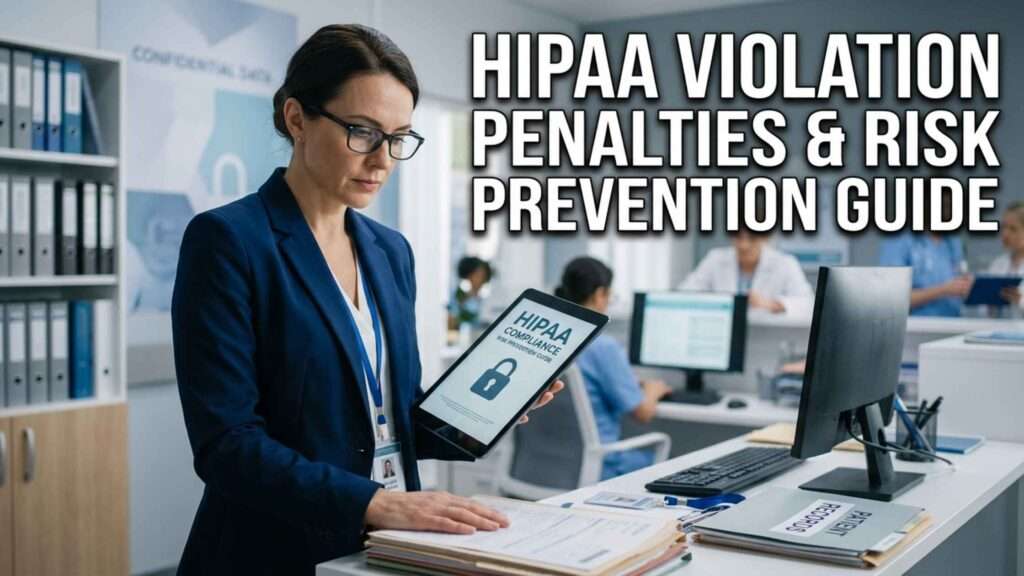
What Are HIPAA Violation Penalties?
HIPAA violation penalties are financial and administrative consequences imposed on organizations and individuals who fail to comply with the Health Insurance Portability and Accountability Act (HIPAA). According to the U.S. Department of Health and Human Services (HHS), over $135 million in HIPAA-related fines were levied between 2019 and 2023, with average settlements per incident exceeding $1.2 million in some high-profile cases. These figures highlight the critical importance of understanding and preventing violations.
HIPAA, enforced by the HHS Office for Civil Rights (OCR), protects the privacy, security, and integrity of protected health information (PHI). Penalties for non-compliance range from corrective action plans to multi-million-dollar settlements, depending on the severity and intent of the violation.
How Are Healthcare Fines Imposed?
Healthcare fines are imposed following the investigation of a breach or non-compliance event. The OCR uses a tiered penalty structure, assessing factors such as the organization’s response, harm caused, and previous compliance history. Penalties can be civil or criminal, with some cases leading to personal liability for executives.
- Tier 1: Unknowing violations—fines from $127 to $63,973 per violation (2024 adjusted figures, per HHS guidance).
- Tier 2: Reasonable cause—fines from $1,280 to $63,973 per violation.
- Tier 3: Willful neglect (corrected)—fines from $12,794 to $63,973 per violation.
- Tier 4: Willful neglect (uncorrected)—minimum $63,973 per violation, up to $1,919,173 per year.
Criminal penalties may include fines and imprisonment for egregious violations, especially when PHI is knowingly misused for personal gain or malicious intent.
What Has Changed Recently?
In recent years, HIPAA enforcement has intensified. The OCR has prioritized investigations into ransomware attacks, unauthorized access by insiders, and delayed breach notifications. In 2023, new guidance was issued emphasizing faster breach reporting and the need to implement robust cybersecurity protections.
- 2022-2023: Increased scrutiny of third-party vendors and business associates.
- 2023: Updated guidance on the use of tracking technologies on healthcare websites and mobile apps.
- Ongoing: Proposed rulemaking to strengthen patient access rights and data interoperability.
Organizations must stay current with these developments to avoid costly penalties and reputational damage.
What Are the Main Compliance Risks?
Compliance risks in healthcare revolve around threats to patient data, improper disclosures, and inadequate safeguards. Among the most searched compliance topics is hipaa violation penalties, reflecting growing concern among executives and IT leaders.
- Unauthorized Access: Employees or third parties viewing PHI without a legitimate need.
- Insufficient Security: Outdated systems and weak passwords increase the risk of cyberattacks.
- Poor Training: Lack of awareness leads to accidental disclosures or mishandling of sensitive data.
- Delayed Breach Response: Failing to notify affected individuals or the OCR within the required timeline.
- Inadequate Vendor Oversight: Business associates may introduce vulnerabilities if not properly vetted and monitored.
Healthcare organizations must proactively address these compliance risks to protect both patients and their own operations.
What Are Common Audit Failures?
Audit failures are frequent contributors to regulatory actions. According to the OCR, the most common audit failures include inadequate risk assessments, missing or outdated policies, and failure to provide timely breach notifications.
- Risk Assessment Gaps: Not performing or updating mandatory risk analyses.
- Policy Shortcomings: Lacking clear procedures for handling PHI or responding to incidents.
- Access Log Oversights: Not monitoring or reviewing access to PHI.
- Breach Notification Delays: Missing the 60-day reporting requirement.
These audit failures can result in significant healthcare fines and costly remediation efforts.
What Are Real-World Case Studies of HIPAA Violations?
Case studies provide valuable lessons on the consequences of non-compliance. For example, in 2023, a major hospital system paid $3 million in penalties after a cyberattack exposed over 100,000 patient records. The OCR found that the organization lacked effective risk analysis and failed to implement appropriate safeguards, despite repeated warnings.
In another case, a small physician practice was fined $100,000 for refusing to provide patients with timely access to their health records, highlighting the need to respect patient rights under the HIPAA Privacy Rule.
These case studies illustrate that both large and small organizations are at risk if compliance is not prioritized.
How Can Organizations Prevent HIPAA Violations?
Preventing HIPAA violations requires a proactive, multi-layered approach. TheComplyGuide recommends the following steps, based on both regulatory guidance and industry best practices:
- Conduct Comprehensive Risk Assessments: Regularly review your security posture and identify vulnerabilities in systems and processes.
- Implement Strong Policies and Procedures: Establish clear protocols for accessing, using, and sharing PHI.
- Train All Staff: Provide ongoing, expert-led HIPAA compliance training to staff, contractors, and business associates.
- Monitor and Audit: Use technical tools to track access to PHI and quickly detect suspicious activity.
- Respond Rapidly to Incidents: Have a written breach response plan and test it regularly.
- Vet and Manage Vendors: Ensure business associates sign agreements and comply with HIPAA requirements.
These actions dramatically reduce compliance risks and help organizations avoid costly penalties.
How Can TheComplyGuide Help With HIPAA Compliance?
TheComplyGuide is a leading provider of expert-led compliance training for healthcare organizations across the United States. Our courses are developed by recognized authorities in regulatory affairs, including attorneys, former regulators, and specialists with decades of hands-on experience.
Our HIPAA webinars are designed to be practical, interactive, and tailored to the needs of U.S. healthcare professionals. Sessions cover real-world scenarios, recent enforcement trends, and actionable strategies for risk reduction. Recordings are available for registered participants, ensuring knowledge is always accessible.
- Live and On-Demand Sessions: Flexible access to the latest compliance insights.
- Case-Based Learning: In-depth analysis of audit failures and case studies.
- Led by Regulatory Experts: Learn from professionals like Paul R. Hales, J.D.—a renowned HIPAA attorney—and Carolyn Troiano, a leading FDA compliance consultant.
- Customizable Training: Choose sessions relevant to your organization’s risk profile.
Organizations looking for hipaa violation penalties training that is current, practical, and authoritative will find TheComplyGuide’s offerings unmatched in depth and relevance.
To explore upcoming HIPAA compliance webinars or to schedule custom sessions, visit our Contact Page or email care@thecomplyguide.com. Our team responds swiftly to all inquiries.
What Experts Are Saying
Regulatory leaders emphasize the importance of continuous education and risk management. According to the HHS Office for Civil Rights, “Organizations that invest in regular HIPAA training and proactive risk assessments are far less likely to face significant enforcement actions.”
Paul R. Hales, J.D., a featured expert at TheComplyGuide, notes, “Clear policies alone are not enough—staff must understand and practice HIPAA compliance every day. Effective training is the foundation for a compliant culture.”
Carolyn Troiano, FDA Compliance Consultant, adds, “Audit failures often stem from a disconnect between written procedures and real-world practice. Bridging this gap is where expert-led training makes the difference.”
These insights reinforce why organizations must move beyond checklists and invest in deep, practical education.
Why Timely Action Matters
Delaying HIPAA compliance training exposes organizations to escalating healthcare fines and reputational harm. Regulators are increasingly unforgiving of preventable compliance risks, especially as cyber threats and privacy concerns grow.
Proactive education, robust policies, and real-world drills are the best defense against costly penalties and operational disruption.
About TheComplyGuide
TheComplyGuide is a US-based compliance education provider specializing in regulatory training for highly regulated industries, including healthcare. Our programs are developed and delivered by a distinguished panel of regulatory experts, former government officials, and industry thought leaders. We are committed to equipping healthcare organizations with the knowledge and confidence to meet evolving compliance obligations.
To learn more about our upcoming HIPAA webinars, expert speakers, or to request a demo, visit our Contact Page or email care@thecomplyguide.com.
Frequently Asked Questions
What are the common HIPAA violation penalties for healthcare organizations?
HIPAA violation penalties can range from monetary fines to criminal charges, depending on the severity and intent of the violation. Civil penalties are divided into four tiers, with fines ranging from $100 to $50,000 per violation, and an annual maximum of $1.5 million. More serious or willful neglect can result in criminal penalties, including imprisonment. Staying up to date with HIPAA requirements is crucial to avoid these steep healthcare fines.
How can TheComplyGuide help reduce compliance risks related to HIPAA?
TheComplyGuide offers expert resources, practical tools, and tailored training to help organizations identify and address compliance risks. From policy templates to interactive staff training and ongoing support, TheComplyGuide makes it easier for healthcare organizations to meet all HIPAA obligations and avoid costly violations.
What types of healthcare fines have organizations faced for HIPAA violations?
Healthcare fines for HIPAA noncompliance have ranged from a few thousand dollars to millions, depending on the impact and number of affected individuals. Fines often result from data breaches, lack of staff training, improper disposal of records, or failing to conduct regular risk assessments. The Office for Civil Rights (OCR) regularly publishes case studies highlighting these penalties and the compliance gaps that led to them.
Are there real-world case studies showing the impact of HIPAA violations?
Yes, numerous case studies document the consequences of HIPAA violations, including significant financial penalties, reputational harm, and operational disruptions. TheComplyGuide analyzes these real-world examples to help clients understand common pitfalls and develop effective prevention strategies.
What are the most frequent causes of audit failures during HIPAA assessments?
The most common causes of audit failures include lack of documented policies, insufficient employee training, inadequate risk assessments, and missing breach notification procedures. TheComplyGuide provides templates, checklists, and ongoing audit support to help organizations avoid these pitfalls and pass compliance reviews confidently.
What preventative steps can organizations take to avoid HIPAA penalties?
To avoid HIPAA violation penalties, organizations should conduct regular risk assessments, implement robust policies and procedures, train all staff on HIPAA requirements, and monitor for potential breaches. TheComplyGuide offers a step-by-step compliance framework, making ongoing prevention simple and effective for organizations of all sizes.
How does TheComplyGuide’s compliance program differ from other solutions?
TheComplyGuide’s program is designed for both simplicity and depth. It provides user-friendly materials, personalized support, and up-to-date resources. Unlike generic compliance tools, TheComplyGuide offers actionable insights based on current regulations, audit failures, and industry case studies, ensuring healthcare entities remain protected and proactive.
What kind of training does TheComplyGuide offer?
TheComplyGuide provides interactive HIPAA training modules, real-world scenarios, and regular compliance updates. Training is designed to engage staff at all levels, ensuring everyone understands their responsibilities and how to minimize compliance risks in daily operations.